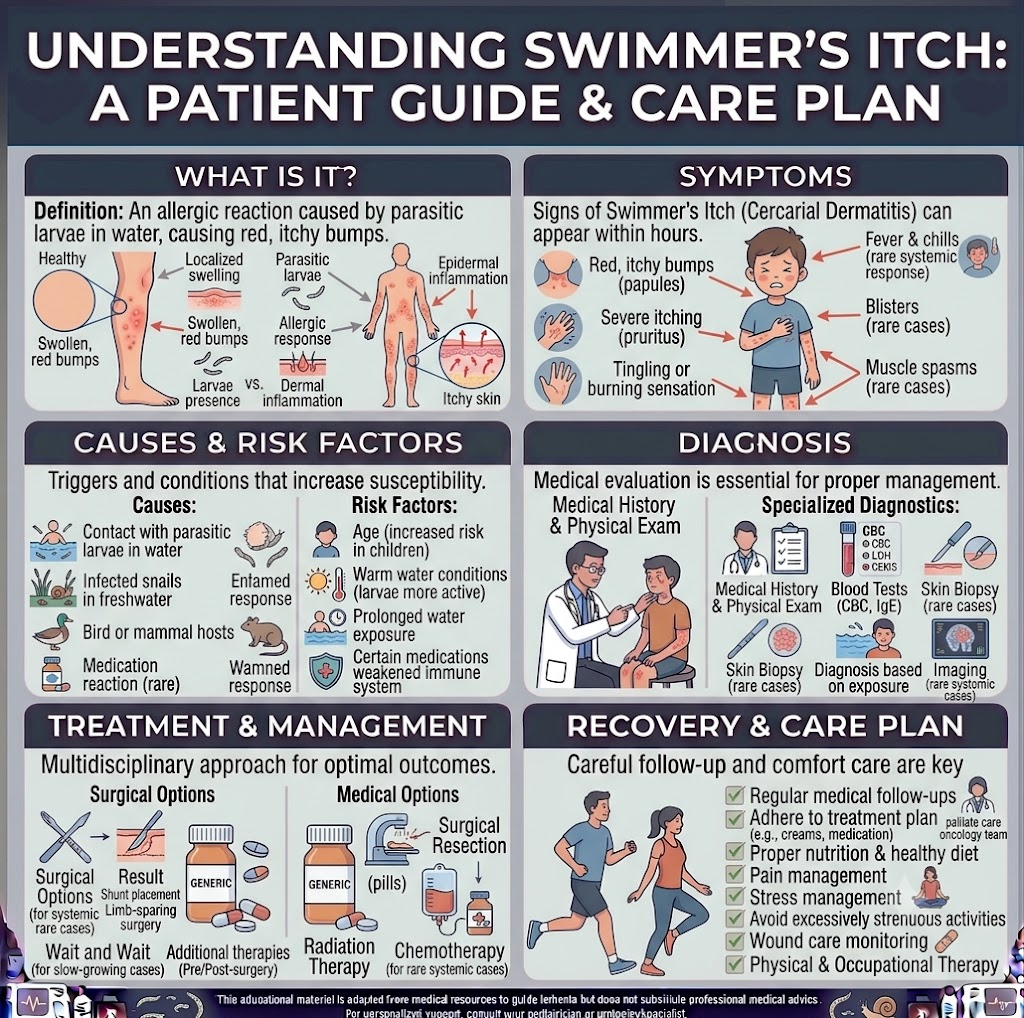
Swimmer's itch, also known as cercarial dermatitis, is a temporary, itchy rash that can appear after swimming or wading in outdoor water bodies, most commonly freshwater lakes and ponds, but sometimes saltwater too. It's caused by a reaction to microscopic parasites that live in the water. These tiny creatures typically infect certain animals like waterfowl (ducks, geese) and snails, but can accidentally burrow into human skin. While they cause an allergic reaction and an itchy rash, they cannot survive in people and quickly die. The rash usually clears on its own within a few days, but there are ways to manage the itching in the meantime.
Understanding the Condition
Swimmer's Itch: Understanding and Managing the Itchy Rash
Understanding the Condition
Common Symptoms
Itchy Rash: The primary symptom is an itchy rash that may look like small, red bumps, similar to pimples, or sometimes small blisters. The intensity of the itching can vary from mild to severe.
Timing of Appearance: Symptoms can begin very quickly, within minutes of leaving the water, or may take up to two days to appear after swimming or wading in contaminated water.
Rash Location: The rash typically appears on skin areas that were exposed to the water and not covered by swimwear, wetsuits, or waders.
Before your visit, be prepared to describe when and where you were in the water, how long ago the rash appeared, and a detailed description of your symptoms, including the severity of itching. Note if you have noticed any pus or if you have a fever. It's also helpful to mention if you have a history of swimmer's itch or other allergic reactions. Avoid scratching the rash excessively before your appointment, as this can alter its appearance and make diagnosis more challenging.
Book a doctor visit near me
During your visit, the doctor will ask about your recent swimming or wading history, when your symptoms started, and the appearance of the rash. They will visually inspect the affected skin to confirm the characteristic appearance of swimmer's itch and rule out other potential skin conditions such as insect bites, allergic reactions, or bacterial infections. In rare cases, if the diagnosis is unclear or a secondary bacterial infection is suspected due to excessive scratching, a small skin sample (biopsy) or a swab might be taken for microscopic examination or culture, though this is uncommon for typical swimmer's itch.
Colloidal Oatmeal Baths: Soaking in a bath with colloidal oatmeal can help soothe itchy skin. (Duration: 15-20 minutes, once or twice daily until symptoms improve.)
Oral Antihistamines: Non-drowsy oral antihistamine tablets can help reduce the body's allergic response and alleviate itching. (Duration: Take as directed on the product label, usually once daily until symptoms subside.)
Monitor for Infection Signs: Keep an eye on the rash for any signs of bacterial infection, such as increasing redness, warmth, swelling, pus discharge, or fever. If these symptoms develop, seek medical attention promptly.
Consultation Guide
Swimmer's itch, also known as cercarial dermatitis, is a temporary, itchy rash that can appear after swimming or wading in outdoor water bodies, most commonly freshwater lakes and ponds, but sometimes saltwater too. It's caused by a reaction to microscopic parasites that live in the water. These tiny creatures typically infect certain animals like waterfowl (ducks, geese) and snails, but can accidentally burrow into human skin. While they cause an allergic reaction and an itchy rash, they cannot survive in people and quickly die. The rash usually clears on its own within a few days, but there are ways to manage the itching in the meantime.
Increased Sensitivity: Each time you are exposed to the parasites that cause swimmer's itch, your body's immune system may become more sensitive, potentially leading to a stronger reaction and a more intense rash with subsequent exposures.
Consultation Guide
Which Specialist to Meet
Initially, you should consult your primary care provider if you develop a persistent rash after swimming. If the rash lasts more than a week, worsens significantly, or shows signs of infection (like pus), your primary care provider might refer you to a dermatologist, a doctor who specializes in skin conditions.
Preparations Before Your Visit
Swimmer's itch is typically diagnosed by a healthcare provider based on a physical examination of the rash and a discussion of your recent activities, particularly any exposure to outdoor water. Specific laboratory tests are generally not needed, as the parasites that cause the rash quickly die in human skin and cannot be easily detected.
Diagnostic Procedures
What to Expect
Treatment Options
Cool Compresses: Apply cool, damp cloths to the affected areas to help reduce itching and inflammation. (Duration: As needed for relief, typically for 10-20 minutes several times a day.)
Baking Soda Paste: Mix baking soda with a small amount of water to form a paste and apply it directly to the itchy spots. (Duration: Apply as needed for relief, letting it dry on the skin.)
Over-the-Counter Medications
Anti-Itch Creams and Lotions: Topical creams containing corticosteroids or anti-itch ingredients like menthol or pramoxine can help relieve itching. (Duration: Apply as directed on the product label, typically 2-4 times daily for several days.)
Prescription Medications
Stronger Topical Treatments: If over-the-counter options are insufficient, your doctor might prescribe a stronger topical corticosteroid cream to reduce severe itching and inflammation. (Duration: As prescribed by your doctor, typically for up to a week.)
Antibiotics: If intense scratching leads to a secondary bacterial skin infection, your doctor may prescribe oral or topical antibiotics. (Duration: As prescribed by your doctor, typically 7-10 days for oral antibiotics.)
Prevention & Long-Term Wellbeing
Prevention
Choose Swimming Spots Carefully: Avoid swimming or wading in areas where swimmer's itch is known to be a problem, where warning signs are posted, or in marshy areas where snails (which host the parasites) are common.
Rinse and Dry Immediately: After leaving the water, thoroughly rinse any exposed skin with clean, fresh water and then vigorously dry yourself with a towel. This helps remove the parasites before they can burrow into the skin.
Avoid Feeding Waterfowl: Do not feed ducks, geese, or other birds on piers or near swimming areas, as these animals carry the parasites that contribute to the life cycle of swimmer's itch.
Change Swimwear Promptly: Remove wet swimwear soon after exiting the water to prevent prolonged contact with any potential parasites.
Managing Complications and Long-Term Wellbeing
Avoid Scratching: Resist the urge to scratch the rash. Excessive scratching can break the skin, leading to open sores and increasing the risk of secondary bacterial infections.
Tags & Topics
Notice an error or need an update?
Help us keep medical information accurate. Report incorrect info or suggest an edit.


