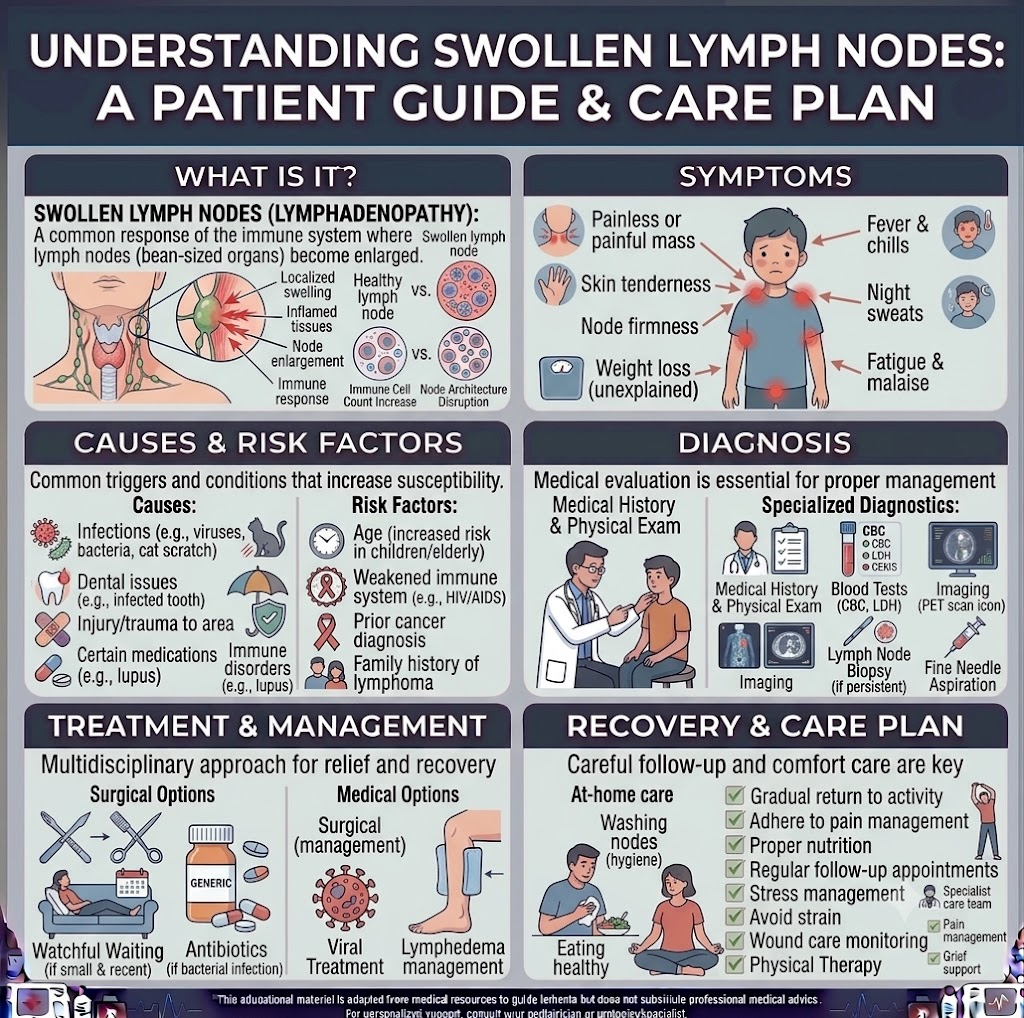
Swollen lymph nodes, also known as swollen glands, are a common sign that your body is fighting off an infection or illness. Lymph nodes are small, bean-shaped organs that are part of your immune system. They act as filters, trapping harmful substances like viruses, bacteria, and other germs before they can spread. While often felt in visible areas like the neck, under the chin, armpits, and groin, lymph nodes are also located deep inside the body, such as in the mesentery (a fold of tissue holding intestines in place). Most often, swelling occurs due to common infections. In rare cases, more serious conditions like cancer can be the cause.
Understanding the Condition
Swollen Lymph Nodes: Understanding Causes, Symptoms, and Care
Understanding the Condition
Common Symptoms
Noticeable Lumps: The most apparent symptom is the presence of small, palpable lumps under the skin, commonly in the neck, under the chin, armpits, or groin. These lumps can range in size from a pea to a kidney bean or larger.
Tenderness and Pain: Swollen lymph nodes can be tender or painful to the touch, especially if the swelling is due to an acute infection or inflammation.
Associated Symptoms: Depending on the underlying cause, other symptoms may accompany swollen lymph nodes, such as fever, night sweats, unexplained weight loss, fatigue, sore throat, or cough. Mesenteric lymphadenitis, a condition where lymph nodes in the abdomen swell, can cause abdominal pain.
Consultation Guide
Which Specialist to Meet
Before your doctor's visit, prepare a detailed list of your symptoms, including when they started, how they've changed, and any associated discomfort. Bring a comprehensive list of all medications, supplements, and allergies. Be ready to discuss your medical history, recent travel, and any potential exposures to illnesses. Writing down any questions you have can also be helpful.
Book a doctor visit near me
A chest X-ray is a rapid imaging test that uses a small dose of radiation to create pictures of your heart, lungs, blood vessels, airways, and the bones of your chest and spine. It helps doctors detect problems like infections (e.g., pneumonia), fluid buildup, or other abnormalities within the chest area that might be linked to your symptoms.
Rest: Allowing your body adequate rest helps conserve energy, enabling your immune system to more effectively fight off the underlying infection or illness. (Duration: Until symptoms improve and energy levels return to normal)
Anti-inflammatory Pain Relievers: Over-the-counter medications can be used to help manage pain, tenderness, and fever associated with swollen lymph nodes. (Duration: As needed for symptom relief, following dosage instructions)
Self-Monitoring and Awareness: Be attentive to your body and promptly report any new or changing lumps, tenderness, or unusual symptoms associated with your lymph nodes to your healthcare provider for evaluation.
Consultation Guide
Swollen lymph nodes, also known as swollen glands, are a common sign that your body is fighting off an infection or illness. Lymph nodes are small, bean-shaped organs that are part of your immune system. They act as filters, trapping harmful substances like viruses, bacteria, and other germs before they can spread. While often felt in visible areas like the neck, under the chin, armpits, and groin, lymph nodes are also located deep inside the body, such as in the mesentery (a fold of tissue holding intestines in place). Most often, swelling occurs due to common infections. In rare cases, more serious conditions like cancer can be the cause.
You should initially consult your primary care provider. Depending on the suspected cause of your swollen lymph nodes, they may refer you to a specialist such as an infectious disease specialist, an ear, nose, and throat (ENT) doctor, a hematologist (blood disorders), an oncologist (cancer specialist), or a surgeon.
Preparations Before Your Visit
Antibiotics: If a bacterial infection is identified as the cause of the swollen lymph nodes, specific medications will be prescribed to kill the bacteria and clear the infection. (Duration: Typically 7-14 days, strictly as directed by your doctor)
Antiviral Medications: For certain viral infections that cause lymph node swelling, specific antiviral medications may be considered to help manage the infection. (Duration: Varies by virus and severity, as directed by your doctor)
Treatment of Underlying Condition: The primary approach is to treat the root cause of the swollen lymph nodes. This could involve managing an autoimmune disease, addressing another type of infection, or treating allergic reactions. (Duration: Varies widely, depending on the nature and duration of the underlying condition)
Lymph Node Biopsy: If the cause of the swelling remains unclear after other tests, or if cancer is suspected, a small piece or the entire lymph node may be surgically removed for a detailed examination by a pathologist. (Duration: One-time procedure for diagnostic purposes)
Practice Good Hygiene: Regular and thorough handwashing, especially before eating and after using the restroom or being in public places, helps prevent the spread of infections that can cause lymph node swelling.
Stay Up-to-Date on Vaccinations: Ensuring you receive recommended vaccinations can protect against common viral and bacterial infections, such as measles, mumps, rubella, and influenza, which can lead to swollen lymph nodes.
Regular Medical Check-ups: If you have a chronic medical condition that can cause persistent or recurrent lymph node swelling, regular follow-up appointments with your doctor are important for monitoring your health and managing the condition.
Diagnostic Procedures
What to Expect
You will typically stand or sit in front of an X-ray machine, and a technologist will guide you into the correct position. You may be asked to hold your breath for a few seconds to ensure clear images. This is a painless procedure, usually completed within a few minutes. You will need to remove any jewelry or metal objects from your chest area before the scan.
Complete Blood Count (CBC)
A complete blood count (CBC) is a common blood test that measures various components of your blood, including red blood cells, white blood cells (which fight infection), and platelets (which help with clotting). This test provides valuable insights into your overall health and can help identify a wide range of conditions, such as anemia, active infections, or certain blood disorders like leukemia.
What to Expect
A healthcare professional will draw a small sample of blood, typically from a vein in your arm, using a sterile needle. You might feel a brief pinch or sting as the needle is inserted. The blood sample is collected in a test tube and then sent to a laboratory for analysis. The entire process of drawing blood is quick, usually taking only a few minutes.
CT Scan (Computed Tomography Scan)
A CT scan is an advanced imaging technique that combines multiple X-ray images taken from different angles to create detailed, cross-sectional views (like 'slices') of bones, blood vessels, and soft tissues inside your body. It provides much more detail than a standard X-ray and is used to diagnose injuries, pinpoint the location and size of infections or tumors, or guide medical procedures.
What to Expect
You will lie still on a motorized table that slides into a large, donut-shaped machine. The machine will rotate around you, taking numerous X-ray images. You may hear humming or clicking sounds during the scan. For some CT scans, a contrast dye might be injected into a vein to enhance the visibility of certain structures; if used, you might experience a warm flush or a metallic taste. The scan can take from a few minutes to about half an hour, depending on the body area being examined.
A needle biopsy is a procedure where a thin needle is used to remove a small sample of cells or a piece of tissue from a suspicious area, such as an enlarged lymph node. This sample is then sent to a pathology laboratory for microscopic examination. This test helps doctors accurately diagnose or rule out conditions like infection, inflammation, or various types of cancer.
What to Expect
The procedure usually begins with the area of the swollen lymph node being numbed with a local anesthetic. Your doctor may use an ultrasound or CT scan in real-time to precisely guide the needle to the target area. A long, thin needle is then inserted to collect the sample. You might feel some pressure or a brief, sharp sensation, but due to the anesthetic, it should not be overtly painful. The procedure can take 15 to 60 minutes, and afterward, you may experience some mild soreness or bruising at the biopsy site.
Treatment Options
Warm Compresses: Applying a warm, moist cloth or compress to the swollen area can help reduce discomfort and promote circulation, which may aid in healing. (Duration: As needed, several times a day for short periods)
Medications
Surgical Removal of Affected Nodes: In cases where cancer involves the lymph nodes, surgical removal of the affected nodes may be a component of the broader cancer treatment plan, often alongside other therapies. (Duration: One-time procedure as part of comprehensive cancer treatment)
Prompt Treatment of Infections: Seeking timely medical attention for any new infections can prevent them from becoming severe or leading to prolonged or significant lymph node enlargement.
Prevention & Long-Term Wellbeing
Prevention
Maintain a Healthy Lifestyle: A balanced diet rich in nutrients, regular physical activity, and adequate sleep are crucial for supporting a robust immune system that can effectively fight off infections.
Long-Term Monitoring
Tags & Topics
Notice an error or need an update?
Help us keep medical information accurate. Report incorrect info or suggest an edit.


