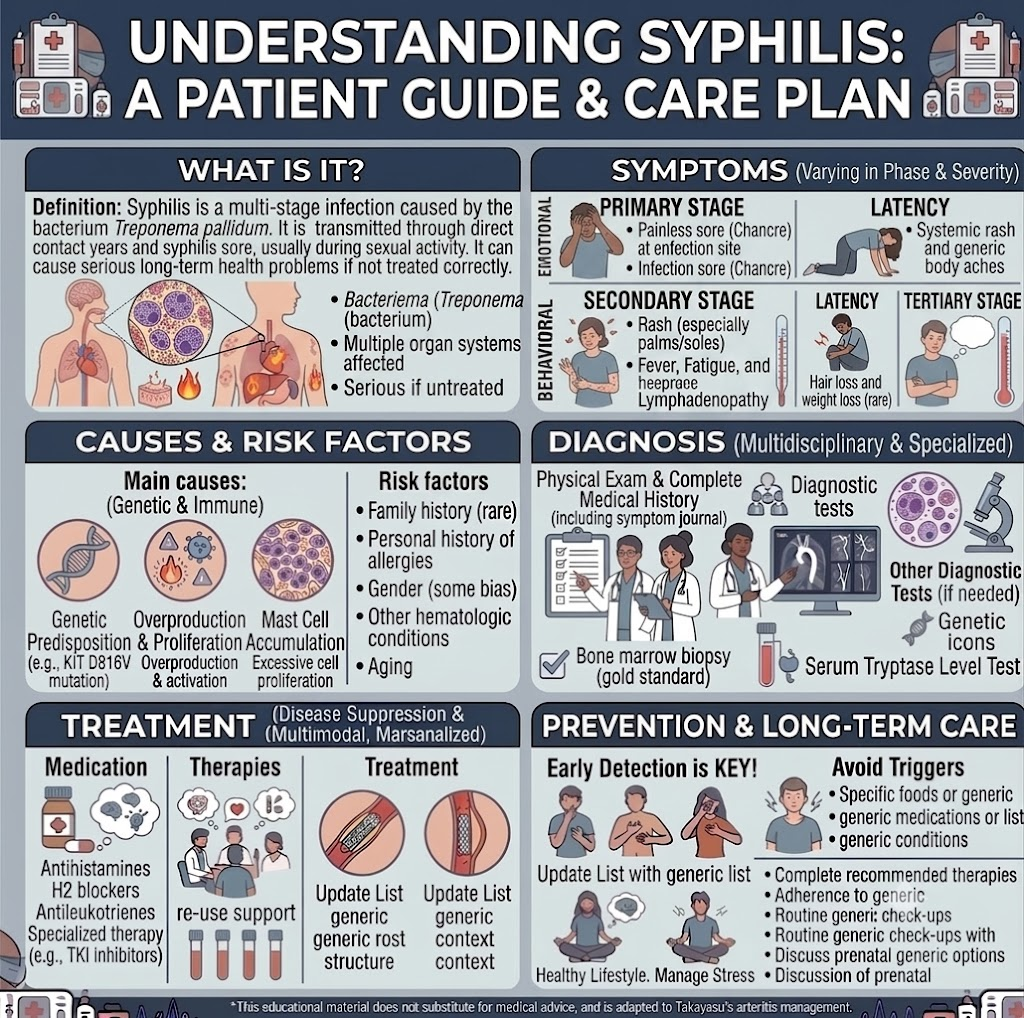
Syphilis is a serious infection caused by bacteria. It primarily spreads through sexual contact, though it can also be passed from a pregnant individual to their baby. The infection often begins with a painless sore and can remain in the body without symptoms for years. If left untreated, syphilis can lead to severe damage to vital organs like the heart and brain, potentially becoming life-threatening. Early syphilis is curable, often with a simple course of medication. Prompt testing and treatment are crucial to prevent long-term complications and stop its spread.
Understanding the Condition
Understanding Syphilis: A Comprehensive Guide
Understanding the Condition
Syphilis is a serious infection caused by bacteria. It primarily spreads through sexual contact, though it can also be passed from a pregnant individual to their baby. The infection often begins with a painless sore and can remain in the body without symptoms for years. If left untreated, syphilis can lead to severe damage to vital organs like the heart and brain, potentially becoming life-threatening. Early syphilis is curable, often with a simple course of medication. Prompt testing and treatment are crucial to prevent long-term complications and stop its spread.
Common Symptoms
Secondary Syphilis: This stage may develop as the chancre heals or a few weeks later. The main symptom is a rash that often isn't itchy and can appear rough, red, or reddish-brown. It might be so faint it's hard to see and commonly starts on the body's trunk, eventually spreading to the limbs, palms of the hands, and soles of the feet. Along with the rash, some individuals may experience general flu-like symptoms such as fever, swollen lymph glands, sore throat, headaches, muscle aches, fatigue, and sometimes patchy hair loss. These symptoms usually go away without treatment, but the infection is still present.
Latent Syphilis: After the primary and secondary stages, syphilis can enter a 'latent' or hidden stage, where there are no visible signs or symptoms for years. The bacteria remain in the body, and the infection can still progress to later stages if not treated. Early latent syphilis is when the infection has been present for less than a year, while late latent syphilis means it's been present for a year or more.
Neurosyphilis and Ocular Syphilis: Syphilis can spread to the brain or spinal cord at any stage of the infection, leading to 'neurosyphilis.' This can cause symptoms like meningitis (inflammation of the brain and spinal cord lining), confusion, personality changes, memory loss, vision problems, and paralysis. When syphilis affects the eyes, it's called 'ocular syphilis' and can result in eye pain, redness, sensitivity to light, and vision changes, including blindness.
Consultation Guide
Which Specialist to Meet
You should consult a healthcare professional as soon as you suspect you might have syphilis or if you've been exposed. This could be your primary care doctor, an infectious disease specialist, a dermatologist (for skin concerns), or an OB/GYN (for pregnant individuals).
Preparations Before Your Visit
Before your appointment, be ready to discuss any symptoms you've noticed, when they started, and any sexual contact you've had, including the number of partners. List all medications, supplements, and illicit drugs you use. Prepare a list of questions for your doctor. Being open and honest is important for an accurate diagnosis and effective treatment.
Book a doctor visit near me
Consultation Guide
Primary Syphilis: The first sign of syphilis is usually a small, firm, and often painless sore called a chancre (pronounced SHANG-kur). This sore appears at the site where the bacteria entered the body, commonly on the genitals, rectum, or mouth, about three weeks after contact. Many people don't notice the chancre because it's painless and may be hidden. It typically heals on its own within 3 to 6 weeks, even without treatment, but the infection remains in the body.
Tertiary (Late) Syphilis: If left untreated, syphilis can advance to this severe stage, which can occur 10 to 30 years after the initial infection. Tertiary syphilis can cause widespread, serious damage to the brain, nerves, eyes, heart, blood vessels, liver, bones, and joints. This damage can lead to paralysis, blindness, deafness, mental health issues, heart problems, and even death.
A healthcare professional will draw a small sample of blood, usually from a vein in your arm, using a needle. The process is quick and generally causes only a brief pinch or sting. The blood sample is then sent to a lab for analysis.
Fluid Sample from a Sore
If you have a chancre (sore), a doctor may take a small sample of fluid from it. This sample can be examined under a special microscope (darkfield microscopy) to directly look for the syphilis bacteria.
The doctor will gently rub or swab the surface of the sore to collect a small amount of fluid. This procedure is usually painless or causes only minor discomfort. The fluid is then immediately examined in a lab.
Diagnostic Procedures
These are the most common tests for syphilis. Blood tests detect antibodies that your immune system produces to fight the syphilis bacteria. There are two main types: screening tests (like RPR or VDRL) and confirmatory tests (like FTA-ABS or TP-PA). Screening tests are often used for general detection, and if positive, a confirmatory test is done to confirm the infection.
What to Expect
What to Expect
Spinal Fluid Test (Lumbar Puncture)
This test is performed if your doctor suspects neurosyphilis, meaning the infection may have spread to your brain or spinal cord. It involves collecting a sample of cerebrospinal fluid (CSF) that surrounds your brain and spinal cord to check for the presence of syphilis bacteria.
What to Expect
You will typically lie on your side with your knees pulled toward your chest, or sit and lean forward. The doctor will numb an area on your lower back. A thin needle is then carefully inserted between two vertebrae (bones) in your spine to collect a small amount of CSF. You might feel some pressure. The procedure takes about 30-45 minutes, and you may need to rest afterward to prevent a headache.
Practice Safe Sex or Abstinence: The most effective way to prevent syphilis is to avoid sexual contact (abstinence). If you are sexually active, reduce your risk by being in a long-term, mutually monogamous relationship with a partner who has been tested and is free of syphilis. Get tested for syphilis and other sexually transmitted infections (STIs) before starting a new sexual relationship.
Use Latex Condoms Correctly: Condoms can significantly lower your risk of getting or spreading syphilis, but only if they completely cover all syphilis sores. Other forms of birth control do not protect against syphilis.
Avoid Alcohol and Illicit Drugs: Excessive alcohol consumption or the use of illicit drugs can impair judgment, increasing the likelihood of engaging in unsafe sexual practices.
Breastfeed with Caution if Sores are Present: If you have syphilis sores on your breasts, the infection can be passed to your baby during breastfeeding if the baby or pumping equipment touches a sore. It's recommended to pump or hand-express milk from the affected breast until the sores heal. Discard any milk pumped if the pump has touched a sore.
Partner Notification: If you are diagnosed with syphilis, it's crucial to inform your sexual partners so they can get tested and treated. Health departments can assist with discreet partner notification without revealing your identity, helping to prevent further spread.
Long-Term Monitoring and Support
Post-Treatment Follow-Up: After completing syphilis treatment, your doctor will recommend follow-up blood tests at specific intervals (e.g., 6, 12, and 24 months) to ensure the infection has been successfully treated and that your body's immune response is declining appropriately. This is especially important for individuals treated for later stages of syphilis or those with neurosyphilis/ocular syphilis.
Retesting for Re-infection: Being cured of syphilis does not make you immune. You can become infected again if you have contact with a syphilis sore from an infected person. Regular testing is advised if you continue to engage in high-risk sexual behaviors.
Screening for Other STIs: Having syphilis increases your risk of contracting other sexually transmitted infections, including HIV. Your doctor may recommend testing for other STIs.
Support and Education: Understanding syphilis and its prevention is key to long-term wellbeing. Discuss any concerns about sexual health, risk reduction, and testing with your healthcare provider.
Treatment Options
Medications
Antibiotic Injections: For early syphilis (primary, secondary, or early latent), a single dose of a long-acting injectable antibiotic is typically sufficient to cure the infection. For later stages of syphilis (late latent or tertiary), treatment requires multiple doses of the same injectable antibiotic given over several weeks. This extended treatment ensures the medication reaches all parts of the body. (Duration: One injection for early syphilis; multiple injections over 1 to 3 weeks for later stages.)
Intravenous Antibiotics: If syphilis has spread to the brain, spinal cord (neurosyphilis), or eyes (ocular syphilis), treatment involves a specific type of antibiotic given directly into a vein. This method ensures high levels of the medication reach the affected areas to combat the infection effectively. (Duration: Typically, daily intravenous doses for 10 to 14 days.)
Alternative Antibiotics: For individuals who are allergic to the standard antibiotic treatment, alternative antibiotic medications can be prescribed. The choice and duration of these alternatives will depend on the stage of syphilis and the individual's allergies, and may involve oral medications. (Duration: Varies depending on the alternative medication and stage of syphilis, ranging from 10 days to several weeks.)
Consider Preventative Medication: For individuals at higher risk of acquiring syphilis, such as men who have sex with men and transgender women, a specific antibiotic taken within three days of sexual activity may be an option to lower the risk of infection. Discuss this prevention strategy with your healthcare provider.
Prevention & Long-Term Wellbeing
Prevention
Tags & Topics
Notice an error or need an update?
Help us keep medical information accurate. Report incorrect info or suggest an edit.


