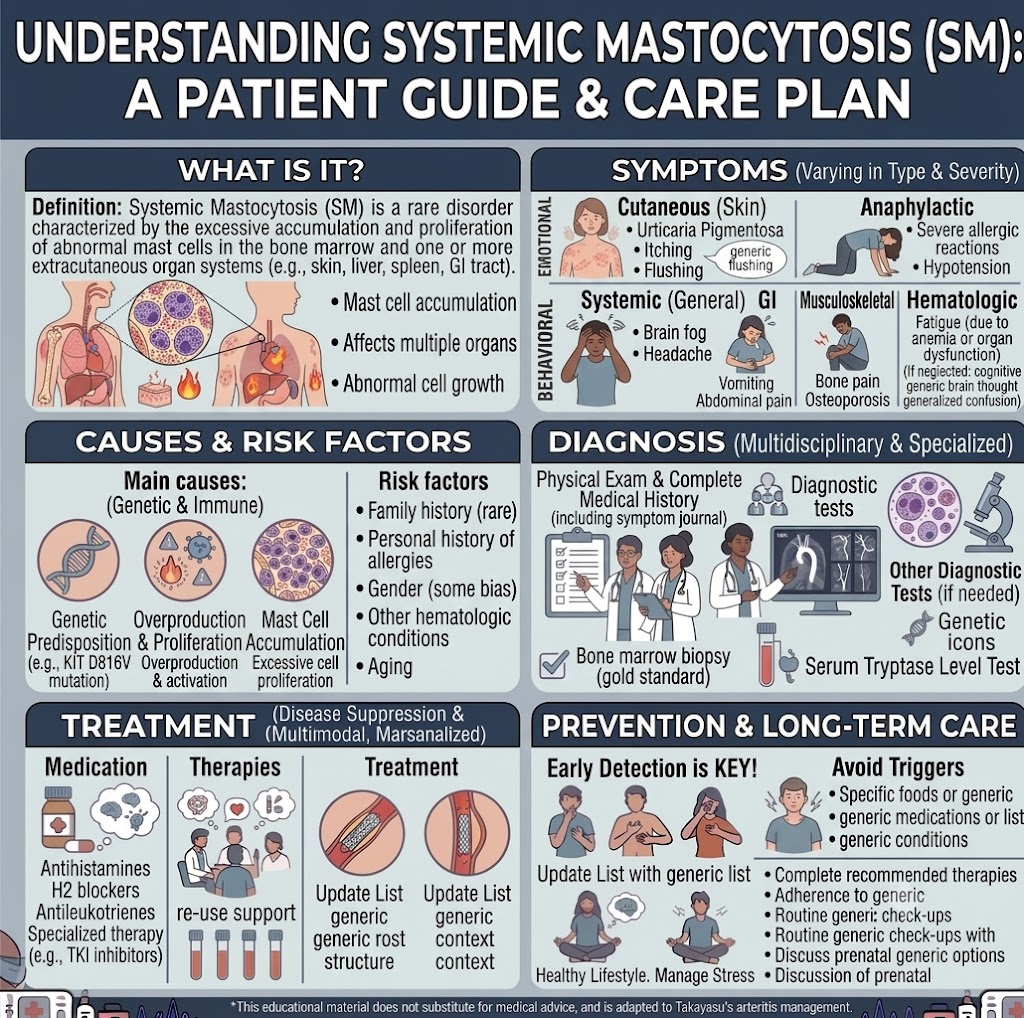
Systemic mastocytosis is a rare disorder characterized by an abnormal accumulation of mast cells in the body's tissues and organs. Mast cells are key players in your immune system, helping to protect you from illness. However, in systemic mastocytosis, an excess of these cells gathers in areas like the skin, bone marrow, and digestive tract. When stimulated by certain triggers, these cells release massive amounts of chemicals like histamine, resulting in severe, allergy-like symptoms, inflammation, and potential organ damage.
Understanding the Condition
Understanding Systemic Mastocytosis
Understanding the Condition
Systemic mastocytosis is a rare disorder characterized by an abnormal accumulation of mast cells in the body's tissues and organs. Mast cells are key players in your immune system, helping to protect you from illness. However, in systemic mastocytosis, an excess of these cells gathers in areas like the skin, bone marrow, and digestive tract. When stimulated by certain triggers, these cells release massive amounts of chemicals like histamine, resulting in severe, allergy-like symptoms, inflammation, and potential organ damage.
Common Symptoms
Skin Reactions: Frequent flushing (redness and warmth of the skin), intense itching, or raised, red bumps known as hives.
Cardiovascular and Neurological Symptoms: Dizziness, fainting episodes, persistent headaches, and an irregular or abnormally fast heartbeat.
Respiratory Issues: A stuffy nose, shortness of breath, or a high-pitched whistling sound when breathing out (wheezing).
Digestive Problems: Abdominal pain, severe diarrhea, nausea, vomiting, or persistent upset stomach.
Bone and Muscle Discomfort: Aching or deep pain within the bones and muscles, often accompanied by severe, chronic exhaustion.
Mental and Emotional Changes: Increased feelings of anxiety, irritability, depression, or difficulty concentrating and thinking clearly (brain fog).
Consultation Guide
Which Specialist to Meet
You should consult with a hematologist (a specialist in blood disorders) or an allergist/immunologist (a specialist in immune system disorders). These experts work together to manage the systemic nature of this condition.
Preparations Before Your Visit
Before your visit, keep a detailed diary of your symptoms and potential triggers (such as specific foods, temperatures, stress, or medications). Bring a complete list of your current medications, vitamins, and supplements, as well as any questions you have.
Book a doctor visit near me
Antihistamines and Mast Cell Stabilizers: Daily medications that block histamine receptors or prevent mast cells from releasing chemical triggers. These manage itching, flushing, and digestive upset. (Duration: Typically required as a lifelong, daily preventive therapy to control chronic symptoms.)
Consultation Guide
A healthcare provider will draw blood from a vein in your arm, which takes just a few minutes and may cause a brief pinch. For the urine test, you will be asked to collect all your urine over a 24-hour period in a special container provided by the clinic.
Bone Marrow Biopsy and Aspirate
Because excess mast cells can weaken bone tissue, this specialized, low-dose X-ray measures your bone mineral density to screen for osteoporosis or bone thinning.
Diagnostic Procedures
Blood and Urine Tests
These tests measure the levels of mast-cell-related chemicals in your system, particularly an enzyme called tryptase, as well as histamine metabolites.
What to Expect
This is the definitive test for diagnosing systemic mastocytosis. It involves taking a small sample of the liquid bone marrow and a tiny piece of the bone itself to check for abnormal clusters of mast cells.
What to Expect
You will lie on your side or stomach. The doctor will numb the skin and the surface of your hipbone with a local anesthetic. A specialized needle is then inserted into the bone to extract the sample. You may feel a brief, sharp pulling sensation and some deep pressure, but the procedure is performed quickly under sterile conditions.
This test analyzes your cells (usually from blood or bone marrow samples) for a specific mutation in the KIT gene, which is present in the vast majority of people with systemic mastocytosis.
What to Expect
This is typically done using the blood sample already collected during your initial blood tests or using the bone marrow sample. There is no additional discomfort beyond the initial sample collection.
Bone Density Scan (DXA)
What to Expect
You will lie flat on a padded table while a scanner passes over your body. It is completely painless, non-invasive, and takes about 10 to 20 minutes.
Regular Blood Counts: Undergo scheduled blood tests to monitor your blood counts, liver function, and overall organ health to catch any silent progression of the disease early.
Treatment Options
Medications
Targeted Therapies: Advanced medications designed to block the signals from the mutated KIT gene, slowing down the production and accumulation of mast cells. (Duration: Taken continuously as long-term maintenance therapy, monitored closely by your specialist.)
Emergency Epinephrine: A self-injectable medication used to quickly reverse severe, life-threatening allergic reactions (anaphylaxis). (Duration: Carried at all times for immediate use during acute, severe allergic emergencies.)
Surgical and Advanced Medical Procedures
Surgical Removal of the Spleen (Splenectomy): In rare, severe cases where the spleen becomes excessively enlarged and begins destroying healthy blood cells, it may be surgically removed. (Duration: A one-time surgical procedure requiring lifelong follow-up monitoring and vaccinations to prevent post-surgery infections.)
Medication Caution: Always consult your specialist before taking new over-the-counter or prescription drugs, as certain pain relievers, anesthetics, and contrast dyes can trigger severe mast cell release.
Insect Bite Protection: Wear protective clothing and use insect repellent when outdoors, as venomous stings are highly common triggers for severe reactions in individuals with mastocytosis.
Routine Bone Health Checks: Get regular bone density scans as recommended by your doctor to detect early signs of bone loss and initiate bone-strengthening therapies.
Prevention & Long-Term Wellbeing
Prevention and Lifestyle Management
Trigger Avoidance: Identify and steer clear of personal triggers, which commonly include extreme heat or cold, rapid temperature shifts, alcohol, and skin friction.
Tags & Topics
Notice an error or need an update?
Help us keep medical information accurate. Report incorrect info or suggest an edit.


