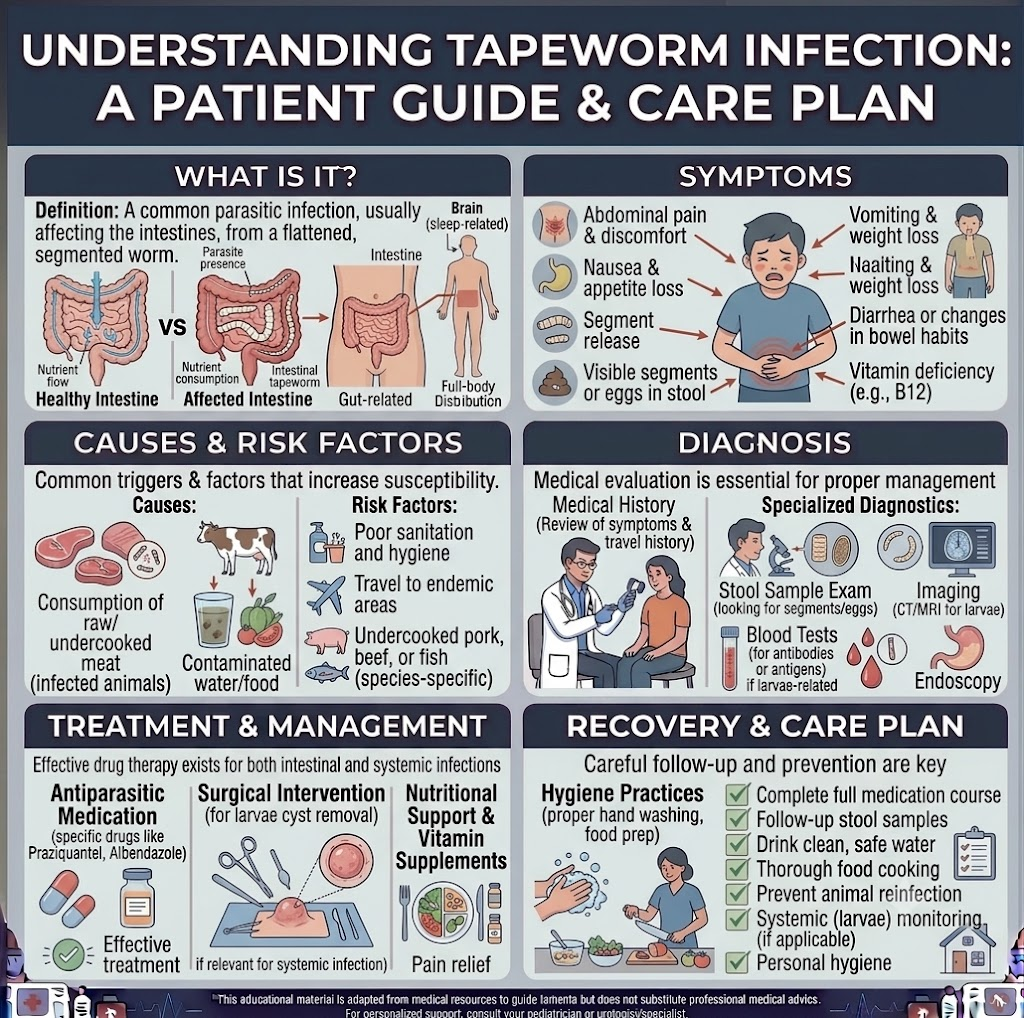
A tapeworm is a type of parasite that can live inside the human body. There are two main forms of infection: an adult tapeworm living and feeding in the intestines, or younger, inactive forms called larval cysts that can survive in other body parts. Intestinal tapeworm infections often cause mild or no symptoms, though some people experience stomach pain or diarrhea. However, larval cysts can lead to serious health problems, especially if they develop in vital organs like the brain, liver, lungs, heart, or eyes. Intestinal infections are usually contracted by eating undercooked meat or fish containing larval cysts. Larval cyst infections in humans typically occur from consuming tapeworm eggs found in contaminated food, water, or feces. Treatment involves anti-parasitic medications, and sometimes surgery to remove cysts.
Understanding the Condition
Tapeworm Infection: Understanding, Symptoms, and Prevention
Understanding the Condition
A tapeworm is a type of parasite that can live inside the human body. There are two main forms of infection: an adult tapeworm living and feeding in the intestines, or younger, inactive forms called larval cysts that can survive in other body parts. Intestinal tapeworm infections often cause mild or no symptoms, though some people experience stomach pain or diarrhea. However, larval cysts can lead to serious health problems, especially if they develop in vital organs like the brain, liver, lungs, heart, or eyes. Intestinal infections are usually contracted by eating undercooked meat or fish containing larval cysts. Larval cyst infections in humans typically occur from consuming tapeworm eggs found in contaminated food, water, or feces. Treatment involves anti-parasitic medications, and sometimes surgery to remove cysts.
Common Symptoms
Intestinal Tapeworm Infection Symptoms: Symptoms depend on the number and type of tapeworms. Some people have no symptoms at all. When symptoms do occur, they may include: upset stomach or nausea, stomachache or abdominal pain, not wanting to eat (loss of appetite), loose stools, unexplained weight loss, hunger pains, or cravings for salty food.
Larval Cyst Infection Symptoms: Symptoms depend entirely on where the cysts are located in the body. If cysts are in the brain, symptoms might include headaches, seizures, or confusion. In other organs like the liver or lungs, they could cause pain, lumps, or difficulty with organ function. Symptoms can appear years after the initial infection.
Consultation Guide
Which Specialist to Meet
Before your visit, be prepared to discuss your symptoms in detail, including when they started and how severe they are. Inform your doctor about any recent travel history, dietary habits (especially consumption of raw or undercooked meats or fish), and potential exposure to contaminated water or areas with poor sanitation. No specific dietary or medication preparations are typically required before your initial appointment.
Book a doctor visit near me
Symptomatic Treatment: Other medications may be used to manage symptoms caused by the infection or treatment, such as pain relievers for discomfort, anti-seizure medications for brain cysts, or corticosteroids to reduce inflammation around cysts. (Duration: As needed to control symptoms, potentially long-term for chronic issues or during the recovery phase.)
Monitoring for Larval Cyst Infections: For larval cyst infections, especially those affecting critical organs, long-term medical follow-up and periodic imaging studies (like CT or ultrasound) may be necessary to monitor the cysts' condition, assess treatment effectiveness, and manage any ongoing symptoms or potential complications.
Consultation Guide
You will be asked to stand or lie in various positions, and an X-ray machine will be positioned to capture images of the targeted body part. You will need to remain still for a few seconds during the brief exposure to ensure clear images. You may be asked to remove any jewelry or clothing containing metal. The procedure is very fast and typically causes no discomfort.
Diagnostic Procedures
Start by consulting your primary care doctor. Depending on the type and location of the infection, you may be referred to specialists such as an infectious disease doctor, a gastroenterologist (for intestinal issues), a neurologist (for brain cysts), or a surgeon.
Preparations Before Your Visit
This is a primary test for diagnosing an intestinal tapeworm infection. It involves analyzing stool samples to look for tapeworm eggs, larvae, or segments of the adult worm.
What to Expect
You will receive special containers and instructions to collect several stool samples over a few days at home. It's important to follow these instructions precisely for accurate results. The collected samples are then returned to a lab for microscopic examination. This procedure is non-invasive and painless.
For larval cyst infections, blood tests can detect antibodies produced by your immune system in response to the tapeworm parasite. These antibodies indicate past or present exposure to the parasite.
What to Expect
A healthcare professional will draw a small sample of blood, typically from a vein in your arm. You might feel a brief pinch or sting as the needle is inserted. The blood sample is collected in a tube and sent to a laboratory for analysis. This is a quick and routine procedure.
CT Scan (Computed Tomography Scan)
A CT scan uses specialized X-ray equipment and computer processing to generate detailed cross-sectional images (like 'slices') of bones, blood vessels, and soft tissues inside the body. It provides more intricate details than standard X-rays and is highly effective for identifying and locating larval cysts in organs such as the brain, liver, or lungs.
What to Expect
You will lie on a motorized table that slides into a large, doughnut-shaped scanner. You may hear humming or clicking sounds during the scan. You might be asked to hold your breath for short periods. Sometimes, a contrast dye is given intravenously or orally to enhance the clarity of the images. The procedure is painless and usually takes between 10 to 30 minutes.
Ultrasound (Sonography)
Ultrasound uses high-frequency sound waves to create real-time pictures of internal body structures. This imaging technique is often used to detect and assess cysts in soft tissues and organs like the liver, kidneys, or within the abdomen, particularly for conditions where sound waves can travel well.
What to Expect
You will lie on an examination table. A clear gel is applied to your skin over the area to be examined. A small handheld device called a transducer is then gently moved across the gel-covered skin. The transducer emits and receives sound waves, which are converted into images on a monitor. You may feel a slight pressure from the transducer, but the procedure is generally painless. Some ultrasound exams may require specific preparation, such as fasting or having a full bladder.
An X-ray is a quick, painless imaging test that uses a small amount of radiation to create pictures of the structures inside your body, most notably bones. While less detailed for soft tissues, X-rays can sometimes reveal calcified cysts or larger abnormalities, depending on their location and density.
What to Expect
Anti-Parasitic Drugs: Specific medications are prescribed to kill adult tapeworms in the intestines or larval cysts in other parts of the body. The type of medication chosen depends on the specific tapeworm species and the location of the infection. (Duration: Typically a single dose or a course lasting several days to a few weeks. Follow-up stool tests are often performed to confirm that the parasite has been eliminated.)
Treat Infected Animals: If you have pets, particularly dogs, ensure they receive regular deworming treatments and are promptly treated if they are diagnosed with tapeworms, to prevent potential human exposure.
Follow-up Care for Intestinal Infections: After treatment for intestinal tapeworms, your doctor will likely recommend follow-up stool tests to confirm that the parasite has been completely eliminated from your system.
Treatment Options
Medications
Cyst Removal Surgery: For large larval cysts or those located in critical areas such as the brain or eyes, surgery may be necessary to physically remove the cyst and relieve pressure on organs. (Duration: A one-time procedure. Recovery time varies significantly depending on the cyst's location, size, and the complexity of the surgery.)
Therapies
Prevention & Long-Term Wellbeing
Prevention
Practice Excellent Hand Hygiene: Wash your hands thoroughly with soap and water for at least 20 seconds, especially after using the toilet, before eating, and before and after handling food.
Cook Meats and Fish Thoroughly: Avoid eating raw or undercooked meat and fish. Use a meat thermometer to ensure safe internal temperatures: cook whole meats and fish to at least 145°F (63°C) and let rest for three minutes; cook ground meat to at least 160°F (71°C). Freezing meat and fish at -4°F (-20°C) or below for 7 days can also kill larval cysts.
Wash Produce and Utensils: Rinse all fruits and vegetables under running water before eating, peeling, or preparing them. Thoroughly wash cutting boards, knives, and other kitchen utensils with soapy water after they come into contact with raw meats or unwashed produce.
Ensure Safe Water and Sanitation: Drink clean, safe water. In regions with questionable water quality or poor sanitation, avoid consuming tap water or uncooked foods that may have been washed in unsafe water. Promote proper sewage and human waste disposal to prevent environmental contamination.
Tags & Topics
Notice an error or need an update?
Help us keep medical information accurate. Report incorrect info or suggest an edit.


