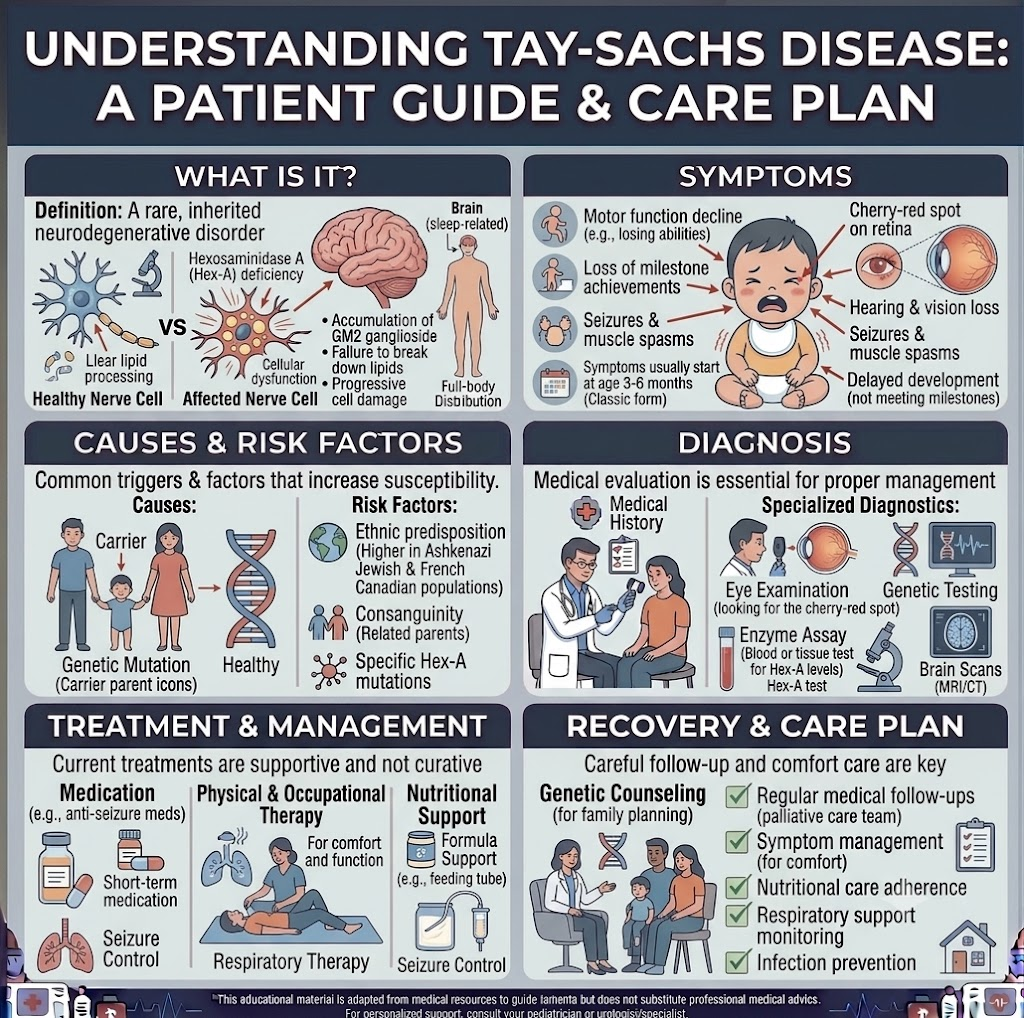
Tay-Sachs disease is a rare, severe genetic condition passed from parents to their children. It occurs when the body lacks a crucial enzyme that helps break down specific fatty substances called gangliosides. Without this enzyme, these fats build up to harmful levels, particularly in the brain and spinal cord, severely damaging nerve cells. This damage leads to a progressive decline in physical and mental abilities. The most common and severe form, infantile Tay-Sachs, typically shows symptoms between 3 to 6 months of age, leading to rapid deterioration and a short lifespan. Less common forms, juvenile and late-onset/adult, have a slower progression and vary in severity, with symptoms appearing later in childhood or adulthood. Due to its genetic nature, individuals with a family history or from certain ethnic groups are strongly advised to consider genetic testing and counseling if planning a family.
Understanding the Condition
Tay-Sachs Disease: Understanding a Rare Genetic Condition
Understanding the Condition
Tay-Sachs disease is a rare, severe genetic condition passed from parents to their children. It occurs when the body lacks a crucial enzyme that helps break down specific fatty substances called gangliosides. Without this enzyme, these fats build up to harmful levels, particularly in the brain and spinal cord, severely damaging nerve cells. This damage leads to a progressive decline in physical and mental abilities. The most common and severe form, infantile Tay-Sachs, typically shows symptoms between 3 to 6 months of age, leading to rapid deterioration and a short lifespan. Less common forms, juvenile and late-onset/adult, have a slower progression and vary in severity, with symptoms appearing later in childhood or adulthood. Due to its genetic nature, individuals with a family history or from certain ethnic groups are strongly advised to consider genetic testing and counseling if planning a family.
Common Symptoms
Infantile Form: Signs typically appear between 3 to 6 months of age, progressing rapidly. Symptoms include: "Cherry-red" spots in the eyes (visible during an eye exam), an exaggerated startle response to sudden noises, loss of previously acquired motor skills (such as turning over, crawling, or sitting up), progressive muscle weakness leading to paralysis, difficulties with movement and coordination, vision loss progressing to blindness, hearing loss progressing to deafness, severe problems with swallowing, loss of mental functions leading to unresponsiveness to surroundings, and abnormal growth in head size (progressive macrocephaly).
Juvenile Form: Symptoms appear later in childhood and progress more slowly than the infantile form, allowing individuals to live into their teenage years. These may include similar but less severe neurological issues, motor skill regression, speech difficulties, and behavioral changes.
Late-Onset/Adult Form: This rare form presents in adulthood, with symptoms that are typically milder and progress very slowly. These can include muscle weakness, balance and coordination problems, speech difficulties, and sometimes psychiatric symptoms.
Consultation Guide
Which Specialist to Meet
Gather detailed information about your family's medical history, especially any known genetic conditions or neurological disorders. Make a comprehensive list of all symptoms noticed, including when they first appeared and how they have changed or progressed. Write down any questions or concerns you have for the doctor to ensure all your queries are addressed. Bring copies of any previous test results or medical records relevant to the symptoms.
Book a doctor visit near me
The doctor will conduct a thorough physical check-up, ask questions about symptoms, and perform simple tests of balance, coordination, and reflexes. An ophthalmologist (eye doctor) will use special lights and lenses to examine the back of the eye, which is non-invasive and painless.
Regular Medical Monitoring: Ongoing check-ups with a medical team are essential to manage symptoms, prevent complications, and adjust care plans as the disease progresses.
Home Adaptations: Modifying the home environment to improve accessibility, safety, and comfort as mobility and other abilities decline.
Caregiver Support and Respite: Providing resources and opportunities for caregivers to rest and recharge is vital to prevent burnout and ensure sustained care quality.
Emotional and Psychological Support: Access to counseling or therapy for both the affected individual (if age-appropriate) and family members to cope with the emotional toll of the disease.
Consultation Guide
This includes Chorionic Villus Sampling (CVS), where a small tissue sample from the placenta is taken, usually between 10 to 13 weeks of pregnancy, possibly causing cramping. Alternatively, Amniocentesis involves removing a small amount of amniotic fluid, typically between 15 to 20 weeks, which might cause brief sharp pain or pressure.
Diagnostic Procedures
To discuss concerns about Tay-Sachs disease, you should primarily consult with a pediatrician (for children), a neurologist (specializing in brain and nerve disorders), or a genetic counselor and medical geneticist (specialists in inherited conditions). These experts can help diagnose the condition, explain genetic risks, and guide treatment options.
Preparations Before Your Visit
Physical and Neurological Examination
A doctor will assess overall health, reflexes, muscle tone, and developmental milestones. An eye exam may reveal a characteristic "cherry-red" spot on the retina, a hallmark sign of the infantile form.
What to Expect
Blood Test (Enzyme Assay)
This test measures the level of beta-hexosaminidase A enzyme activity in white blood cells. A significantly low or absent level confirms the enzyme deficiency.
What to Expect
A small amount of blood will be drawn from a vein, usually in your arm. This is a quick process, similar to any routine blood draw, involving a brief pinch or sting.
Genetic Testing (DNA Analysis)
This test directly looks for specific changes (mutations) in the HEXA gene, which is responsible for producing the beta-hexosaminidase A enzyme. This confirms the diagnosis and can identify carriers.
What to Expect
A blood sample is typically used, though a saliva sample can also be collected. The process is simple and non-invasive, with results taking several weeks.
If there is a family history or both parents are identified as carriers, prenatal tests can diagnose Tay-Sachs disease in an unborn baby.
What to Expect
Genetic Counseling and Testing: For individuals with a family history of Tay-Sachs or those from high-risk ethnic groups, carrier screening is highly recommended before or during pregnancy. This allows for informed family planning decisions.
Preimplantation Genetic Diagnosis (PGD): For carrier couples undergoing in vitro fertilization (IVF), PGD can test embryos for the Tay-Sachs gene mutation before implantation, selecting only unaffected embryos.
Long-Term Wellbeing and Support
Palliative and Hospice Care: Focuses on providing comfort, managing pain, and improving the quality of life for the individual and support for their family throughout the disease's progression.
Support Groups: Connecting with other families facing similar challenges can provide emotional support, practical advice, and a sense of community.
Treatment Options
Medications
Seizure Control: Various medications are used to prevent or reduce the frequency and severity of seizures. (Duration: Ongoing, for as long as seizures are present.)
Pain and Muscle Spasm Relief: Medications can help manage pain, muscle stiffness, and involuntary movements. (Duration: As needed, can be long-term.)
Respiratory Support Medications: Medications to help clear airways or manage respiratory infections. (Duration: As needed, can be long-term.)
Therapies
Physical Therapy: Helps maintain flexibility, reduce muscle stiffness, and prevent contractures (permanent tightening of muscles or joints). (Duration: Regular, ongoing sessions, several times a week.)
Occupational Therapy: Focuses on adapting daily activities to maintain function and independence as much as possible, as well as providing sensory stimulation. (Duration: Regular, ongoing sessions.)
Speech and Swallowing Therapy: Addresses difficulties with communication and swallowing, which can help prevent choking and improve nutritional intake. (Duration: Regular, ongoing sessions.)
Respiratory Support: Includes techniques to keep airways clear and, if necessary, devices to assist breathing. (Duration: Ongoing, as required by the individual's condition.)
Prevention & Long-Term Wellbeing
Nutritional Support: Specialized diets or the use of feeding tubes to ensure adequate nutrition and hydration, especially as swallowing becomes difficult. (Duration: Ongoing, potentially lifelong.)
Gastrostomy Tube (G-tube) Placement: A feeding tube surgically inserted directly into the stomach to provide nutrition and hydration when swallowing becomes unsafe or impossible. (Duration: One-time procedure, for long-term use.)
Tracheostomy: In rare, severe cases of respiratory failure, a tube may be surgically placed into the windpipe to aid breathing. (Duration: One-time procedure, for long-term use.)
Prevention and Risk Management
Tags & Topics
Notice an error or need an update?
Help us keep medical information accurate. Report incorrect info or suggest an edit.


