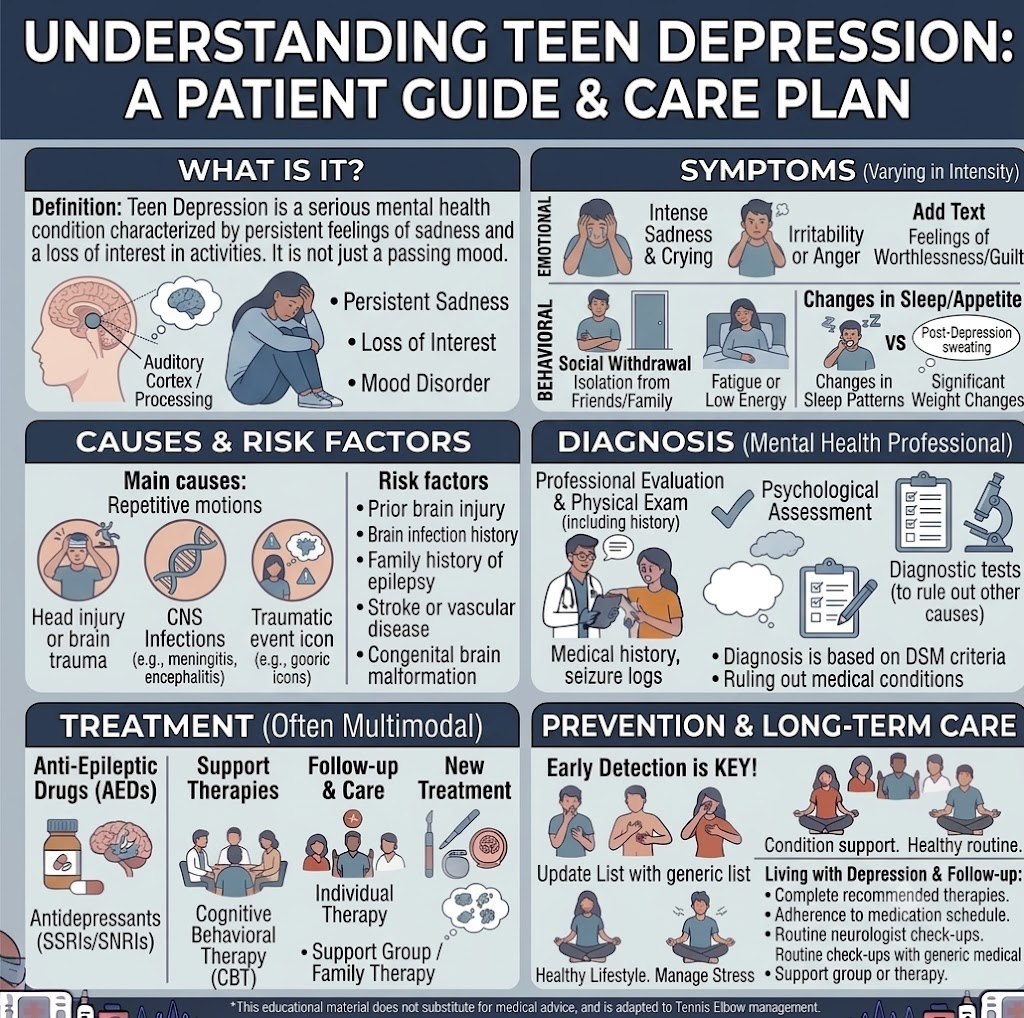
Teen depression is a serious mental health condition affecting teenagers, causing lasting feelings of sadness and a significant loss of interest in daily activities. It impacts a teenager's thoughts, feelings, and behaviors, potentially leading to emotional, functional, and physical difficulties. While depression can affect anyone, its symptoms may appear differently in teens compared to adults. Factors like peer pressure, academic stress, and body changes are common challenges for teens, but for some, these 'lows' are persistent signs of depression. This condition is not a sign of weakness and cannot be overcome by willpower alone; it requires professional attention and treatment. With appropriate care, such as medication and counseling, most teenagers experience significant improvement.
Understanding the Condition
Teen Depression: Understanding, Symptoms, and Support
Understanding the Condition
Teen depression is a serious mental health condition affecting teenagers, causing lasting feelings of sadness and a significant loss of interest in daily activities. It impacts a teenager's thoughts, feelings, and behaviors, potentially leading to emotional, functional, and physical difficulties. While depression can affect anyone, its symptoms may appear differently in teens compared to adults. Factors like peer pressure, academic stress, and body changes are common challenges for teens, but for some, these 'lows' are persistent signs of depression. This condition is not a sign of weakness and cannot be overcome by willpower alone; it requires professional attention and treatment. With appropriate care, such as medication and counseling, most teenagers experience significant improvement.
Common Symptoms
Persistent Sadness: Including unexplained crying spells or a deep feeling of unhappiness.
Irritability and Anger: Frequent frustration or anger, even over minor issues.
Hopelessness or Emptiness: A profound sense that things won't get better or a feeling of being hollow.
Loss of Interest: No longer finding pleasure in usual activities, hobbies, or sports.
Social Withdrawal: Avoiding family and friends, or experiencing increased conflict in relationships.
Low Self-Esteem: Feelings of worthlessness, excessive guilt, or harsh self-criticism.
Sensitivity to Rejection: Extreme reactions to perceived criticism or failure, often needing constant reassurance.
Cognitive Difficulties: Trouble thinking, concentrating, remembering things, or making decisions.
Bleak Outlook: A constant sense that life and the future are grim and without hope.
Thoughts of Self-Harm: Frequent thoughts of death, dying, or suicide, which require immediate attention.
Consultation Guide
Which Specialist to Meet
Before the visit, prepare a list of your teen's symptoms, including when they started and how severe they are. Note any significant life changes, family medical history of mental health conditions, and any medications or supplements your teen is currently taking. Encourage your teen to be open about their feelings, but also be ready to share your observations.
Book a doctor visit near me
A mental health professional will conduct a thorough interview with your teenager and, with the teen's consent (depending on age), potentially with you. This involves discussing symptoms, medical history, family history of mental health issues, social environment, and academic performance. Standardized questionnaires or rating scales may also be used to assess symptom severity.
A doctor may perform a physical exam and order lab tests, such as blood work, to rule out other medical conditions that could cause similar symptoms (e.g., thyroid problems, vitamin deficiencies). While these tests don't diagnose depression directly, they help ensure symptoms aren't due to an underlying physical illness.
Psychotherapy (Talk Therapy): This involves talking with a mental health professional to understand issues, emotions, and behaviors. It teaches healthy coping skills for challenging situations. Various types exist, tailored to individual needs. (Duration: Can range from a few months to a year or more, depending on the individual and severity of symptoms.)
Cognitive Behavioral Therapy (CBT): A structured type of talk therapy that helps identify and change negative thinking patterns and behaviors. It often involves 'homework' assignments to practice new skills in daily life. CBT is highly effective for depression and other mental health conditions. (Duration: Often involves 12-20 sessions, but can be longer based on individual progress.)
Complementary Approaches
Adhere to Treatment Plans: If professional treatment is recommended, ensure your teenager continues with it, even after symptoms improve. This consistent care helps prevent a relapse of depressive symptoms.
Open Communication: Maintain an open and supportive environment at home where your teen feels comfortable discussing their feelings and challenges without judgment.
Consultation Guide
The physical exam is similar to a routine check-up, assessing overall health. For lab tests, a blood sample will typically be drawn from a vein in your arm, which is a quick procedure and usually causes only minor discomfort.
Diagnostic Procedures
Clinical Assessment and Interview
What to Expect
During the session, the doctor or therapist will ask a series of questions about your teen's feelings, thoughts, behaviors, sleep patterns, appetite, and energy levels. They will listen carefully and take notes. The goal is to understand the full picture of your teen's experience. It’s important to be as honest and open as possible to help the professional make an accurate diagnosis.
Physical Examination and Lab Tests
What to Expect
Treatment Options
If you suspect your teenager is struggling with depression, consult a primary care physician (such as a pediatrician or family doctor) who can conduct an initial assessment and provide referrals. Specialists include psychologists (who provide counseling and therapy), psychiatrists (medical doctors who can prescribe medication and provide therapy), or other licensed mental health counselors.
Preparations Before Your Visit
Medications
Antidepressant Medications: These medications work by balancing brain chemicals that affect mood. While effective, close monitoring by a doctor is crucial, especially at the start of treatment, due to potential side effects like increased anxiety or agitation. The benefits often outweigh the risks, but informed discussion with your doctor is essential. These medications carry a strong warning about a rare risk of increased suicidal thoughts and behavior in individuals under 25, although actual suicide is not seen in studies, and some research suggests overall suicide rates decrease with appropriate use. Regular follow-up appointments are vital. (Duration: Typically several months to years, with ongoing evaluation by a doctor.)
Therapies
Acupuncture: An ancient technique involving the insertion of very thin needles into specific body points. It's often used for pain management but is increasingly explored for overall well-being, including stress. Western views suggest it stimulates nerves and muscles, boosting natural painkillers, while traditional views focus on balancing energy flow. (Duration: Treatment length varies based on individual needs and condition being addressed; often involves multiple sessions over weeks or months.)
Prevention & Long-Term Wellbeing
Stress Management and Resilience: Encourage your teenager to develop healthy ways to manage stress, build resilience, and boost self-esteem. This helps them better cope with life's challenges as they arise.
Prioritize Self-Care: Promote a healthy sleep routine, balanced nutrition, regular physical activity, and responsible, moderate use of electronics. These practices are fundamental to mental and physical health.
Foster Social Connections: Encourage building and maintaining friendships and seeking social support, especially during difficult times. Strong social bonds are a protective factor against depression.
Early Intervention: Seek professional help at the earliest signs of emotional distress or behavioral changes. Addressing problems promptly can prevent depression from becoming more severe.
Tags & Topics
Notice an error or need an update?
Help us keep medical information accurate. Report incorrect info or suggest an edit.


