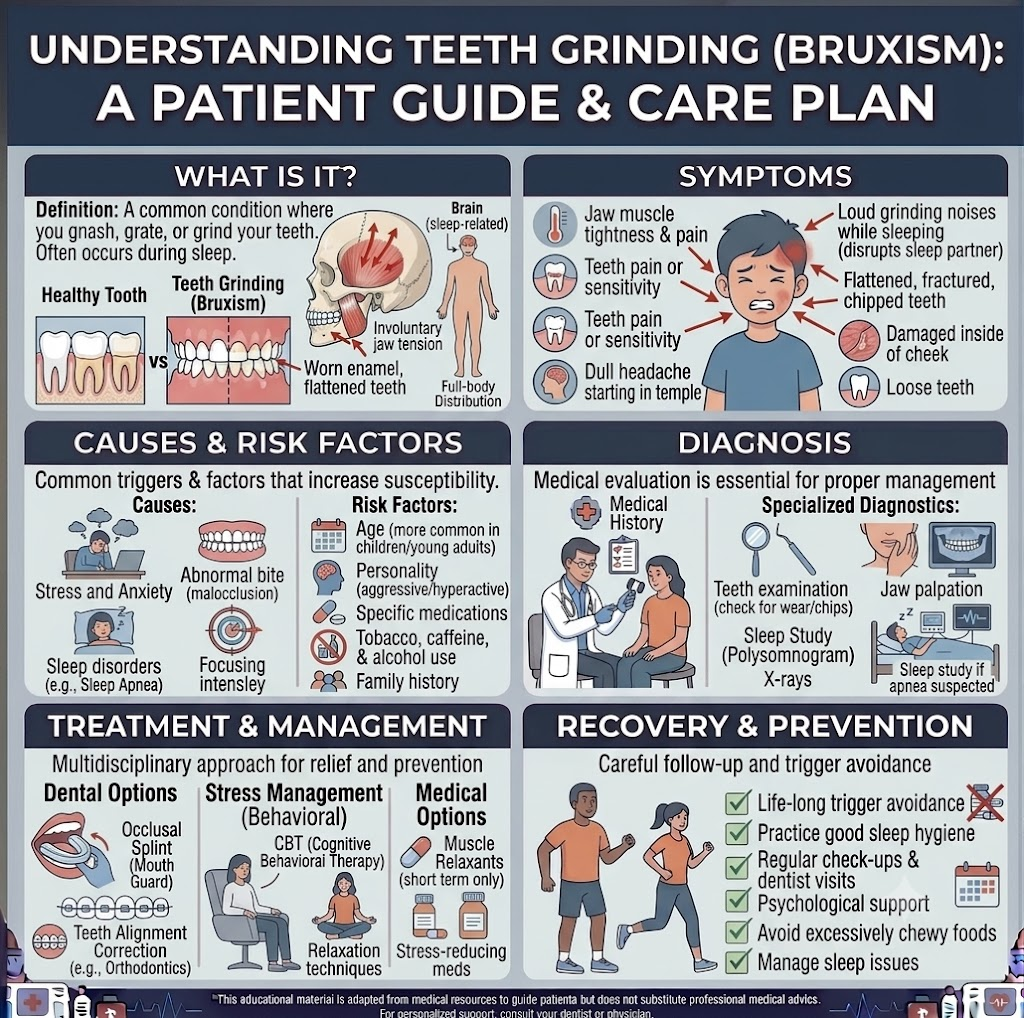
Bruxism is the medical term for teeth grinding or clenching, where you unknowingly squeeze or rub your upper and lower teeth together. This common condition can occur both when you're awake (awake bruxism) and during sleep (sleep bruxism). Awake bruxism often happens unconsciously during concentration or stress, while sleep bruxism is considered a sleep-related movement disorder. Many people with sleep bruxism are unaware of it until they experience dental or jaw problems, or if a partner notices grinding sounds. Untreated bruxism can lead to significant issues like jaw pain, headaches, worn or damaged teeth, and even disrupt a bed partner's sleep. It's often linked with other sleep issues such as snoring and pauses in breathing (sleep apnea).
Understanding the Condition
Understanding Teeth Grinding (Bruxism): Causes, Symptoms, and Care
Understanding the Condition
Bruxism is the medical term for teeth grinding or clenching, where you unknowingly squeeze or rub your upper and lower teeth together. This common condition can occur both when you're awake (awake bruxism) and during sleep (sleep bruxism). Awake bruxism often happens unconsciously during concentration or stress, while sleep bruxism is considered a sleep-related movement disorder. Many people with sleep bruxism are unaware of it until they experience dental or jaw problems, or if a partner notices grinding sounds. Untreated bruxism can lead to significant issues like jaw pain, headaches, worn or damaged teeth, and even disrupt a bed partner's sleep. It's often linked with other sleep issues such as snoring and pauses in breathing (sleep apnea).
Common Symptoms
Teeth Grinding or Clenching Sounds: Sounds of teeth grinding or clenching that may be loud enough to wake up a sleep partner.
Tooth Damage: Teeth that appear flattened, fractured, chipped, or have become loose over time.
Worn Tooth Enamel: The outer protective layer of your teeth (enamel) wears down, potentially exposing more sensitive inner layers.
Tooth Pain or Sensitivity: Experiencing discomfort or increased sensitivity in your teeth.
Jaw Muscle Issues: Tired, tight, or sore jaw muscles; difficulty opening or closing the jaw completely; or a jaw that makes clicking or popping sounds.
Jaw, Neck, or Face Pain: Pain or soreness felt in the jaw, neck, or facial areas.
Enlarged Jaw Muscles: Jaw muscles that may appear larger than usual due to overuse.
Before your visit, it's helpful to keep a diary of your symptoms, noting when they occur and their severity. Write down any known stressors in your life. Make a list of all medications, supplements, and recreational substances you use. Be prepared to discuss your sleep habits, and if you have a bed partner, ask them if they have noticed you grinding your teeth during sleep.
Book a doctor visit near me
Medical History and Symptom Review
Your healthcare provider will ask detailed questions about your general health, lifestyle, and specific symptoms. This includes when you experience grinding or clenching, the level of pain, your sleep habits, stress levels, and a comprehensive list of all medications you are currently taking. Information provided by a sleep partner about grinding sounds is also very useful.
Muscle Relaxants: Prescription medications taken for a short period to relax jaw muscles and reduce clenching and grinding. (Duration: Short-term use, typically days to weeks for acute symptoms)
Pain Relievers: Over-the-counter pain medications to alleviate headaches or jaw pain associated with bruxism. (Duration: As needed, for symptom relief)
Monitor Symptoms and Report Changes: Regularly assess your symptoms, such as jaw pain, headaches, tooth sensitivity, or sleep disturbances. Report any worsening or new symptoms to your healthcare provider promptly.
Consultation Guide
Earache-like Pain: Pain that feels similar to an earache but is not actually caused by an ear problem.
Temple Headaches: Dull headaches that typically start at your temples (the sides of your head between your forehead and ears).
Sleep Problems: Difficulty falling or staying asleep, or feeling unrested despite getting enough sleep.
Consultation Guide
Which Specialist to Meet
Dental Repairs and Adjustments: Addressing tooth damage caused by bruxism through fillings, crowns, veneers, or orthodontic treatment to correct bite issues. Adjusting the biting surfaces of teeth to improve alignment. (Duration: Varies based on the repair; often permanent, but may require maintenance)
Diagnostic Procedures
Dental Examination and Oral Assessment
Your dentist will conduct a thorough examination of your teeth, gums, and jaw. They will look for physical signs of bruxism, such as flattened, chipped, or worn teeth, as well as signs of damage to fillings or other dental work. They will also check for tenderness, soreness, or tightness in your jaw muscles and observe your jaw's movement.
What to Expect
You will sit in a dental chair, and the dentist will use small mirrors and instruments to inspect your mouth. They might gently press on your jaw muscles and ask you to open, close, or move your jaw from side to side to check for pain or limited movement. This is a routine, generally painless procedure that takes a few minutes.
What to Expect
This involves a conversation with your healthcare provider. You should be ready to discuss your daily routines, any significant life stressors, changes in your health, and provide a complete list of all prescribed and over-the-counter medications, as well as any supplements or recreational substances you use. Your honest and detailed answers are crucial for an accurate diagnosis.
Sleep Study (Polysomnography)
If sleep bruxism is suspected, especially when combined with other sleep-related issues like snoring or suspected sleep apnea, a comprehensive sleep study may be recommended. This test records various bodily activities during sleep, including brain waves, eye movements, jaw muscle activity, heart rate, breathing patterns, and blood oxygen levels, to help identify sleep bruxism and differentiate it from other sleep disorders.
What to Expect
You will typically spend a night at a specialized sleep clinic. Technicians will attach small sensors to your scalp, face, chest, and limbs using a gentle adhesive. These sensors are connected to equipment that records your physiological data throughout the night. You will sleep in a private room while the monitoring takes place. The procedure is safe and generally painless, though the sensors might feel unusual at first.
Treatment Options
For suspected bruxism, you should first consult a dentist. They can assess your teeth for damage and jaw for signs of grinding. Depending on the findings, they may refer you to other specialists. An oral surgeon or a maxillofacial specialist might be needed for severe jaw or temporomandibular joint (TMJ) issues. If sleep bruxism is suspected, especially with other sleep concerns like snoring or breathing pauses, a sleep specialist can provide further evaluation. A general practitioner can help manage overall health and medication effects, while a mental health professional (like a therapist or counselor) can assist if stress or anxiety are underlying factors.
Preparations Before Your Visit
Stress Management Techniques: Practicing relaxation methods such as deep breathing exercises, meditation, yoga, or engaging in regular physical activity to reduce overall stress and muscle tension. (Duration: Ongoing, as part of a daily routine)
Warm Compress Application: Applying a warm, moist cloth to the jaw muscles can help relax them and reduce pain. (Duration: As needed, for 15-20 minutes at a time)
Medications
Medications for Underlying Conditions: If bruxism is linked to anxiety, depression, or sleep disorders, certain medications may be prescribed to address these underlying issues. (Duration: As prescribed, typically months to long-term depending on the condition)
Injections: Injections into the jaw muscles (masseter and temporalis) to temporarily weaken them, reducing the force of clenching and grinding. (Duration: Effects last several months, then repeated as necessary)
Temporomandibular Joint (TMJ) Surgery: In rare and severe cases where bruxism has led to significant, irreversible damage to the temporomandibular joints and other treatments have failed, surgery may be considered to repair or replace the joint. (Duration: One-time procedure with a recovery period; often considered a last resort)
Follow-up with Healthcare Providers: Maintain regular follow-up appointments with your dentist, physician, or specialists to evaluate the effectiveness of your treatment plan and make any necessary adjustments.
Ongoing Stress Management: Continue to employ stress-reduction techniques as a vital part of your long-term wellbeing, as stress is a common trigger for bruxism.
Address Underlying Health Conditions: Ensure any associated conditions, such as sleep apnea, gastroesophageal reflux disease (GERD), anxiety, or ADHD, are effectively managed, as they can impact bruxism severity and treatment outcomes.
Prevention & Long-Term Wellbeing
Dietary Modifications: Avoiding very hard, crunchy, or chewy foods that can strain jaw muscles. (Duration: Ongoing, as part of dietary habits)
Limiting Stimulants: Reducing or avoiding intake of caffeinated beverages, alcohol, and nicotine, especially before bedtime, as they can exacerbate grinding. (Duration: Ongoing, as part of lifestyle changes)
Jaw Exercises and Stretches: Performing gentle exercises and stretches recommended by a healthcare professional to improve jaw flexibility and reduce tightness. (Duration: Daily, as prescribed)
Conscious Jaw Relaxation: For awake bruxism, regularly reminding yourself to keep your teeth slightly apart and your jaw relaxed throughout the day. (Duration: Ongoing, as a mindful practice)
Biofeedback: A technique that teaches you to control involuntary muscle activity. Sensors monitor jaw muscle tension, providing real-time feedback to help you learn relaxation techniques. (Duration: Several sessions initially, followed by self-practice)
Cognitive Behavioral Therapy (CBT): Therapy focused on identifying and changing negative thought patterns and behaviors contributing to stress, anxiety, or anger, which can trigger bruxism. (Duration: Several weeks to months of regular sessions)
Mouthguards or Splints: Custom-fitted acrylic appliances worn over the teeth, typically at night, to create a barrier between upper and lower teeth, protect them from wear, and sometimes help reposition the jaw. (Duration: Worn nightly or as advised; typically replaced every few years)
Prevention
Manage Stress Effectively: Integrate stress-reduction practices like mindfulness, meditation, deep breathing, or regular exercise into your daily routine to help alleviate tension that can trigger bruxism.
Practice Good Sleep Hygiene: Establish a consistent sleep schedule, create a comfortable and dark sleep environment, and avoid stimulating activities or screens before bedtime to promote restful sleep.
Limit Stimulants and Alcohol: Reduce or eliminate your intake of caffeine, alcohol, and nicotine, especially in the evening, as these substances can contribute to teeth grinding and poor sleep quality.
Avoid Awake Mouth Habits: Be conscious of and try to stop habits like excessive gum chewing, nail-biting, or biting your lips, tongue, or cheeks, as these can increase jaw muscle activity and contribute to awake bruxism.
Conscious Jaw Relaxation: Periodically check throughout the day to ensure your jaw is relaxed and your teeth are not touching, keeping your tongue gently resting on the roof of your mouth behind your upper front teeth.
Regular Dental Check-ups: Schedule routine visits with your dentist for early detection of tooth wear, jaw pain, or other signs of bruxism, allowing for timely intervention.
Long-Term Monitoring
Consistent Use of Dental Devices: If a mouthguard or splint is prescribed, ensure you wear it consistently as instructed by your dentist to protect your teeth and jaw from further damage.
Tags & Topics
Notice an error or need an update?
Help us keep medical information accurate. Report incorrect info or suggest an edit.


