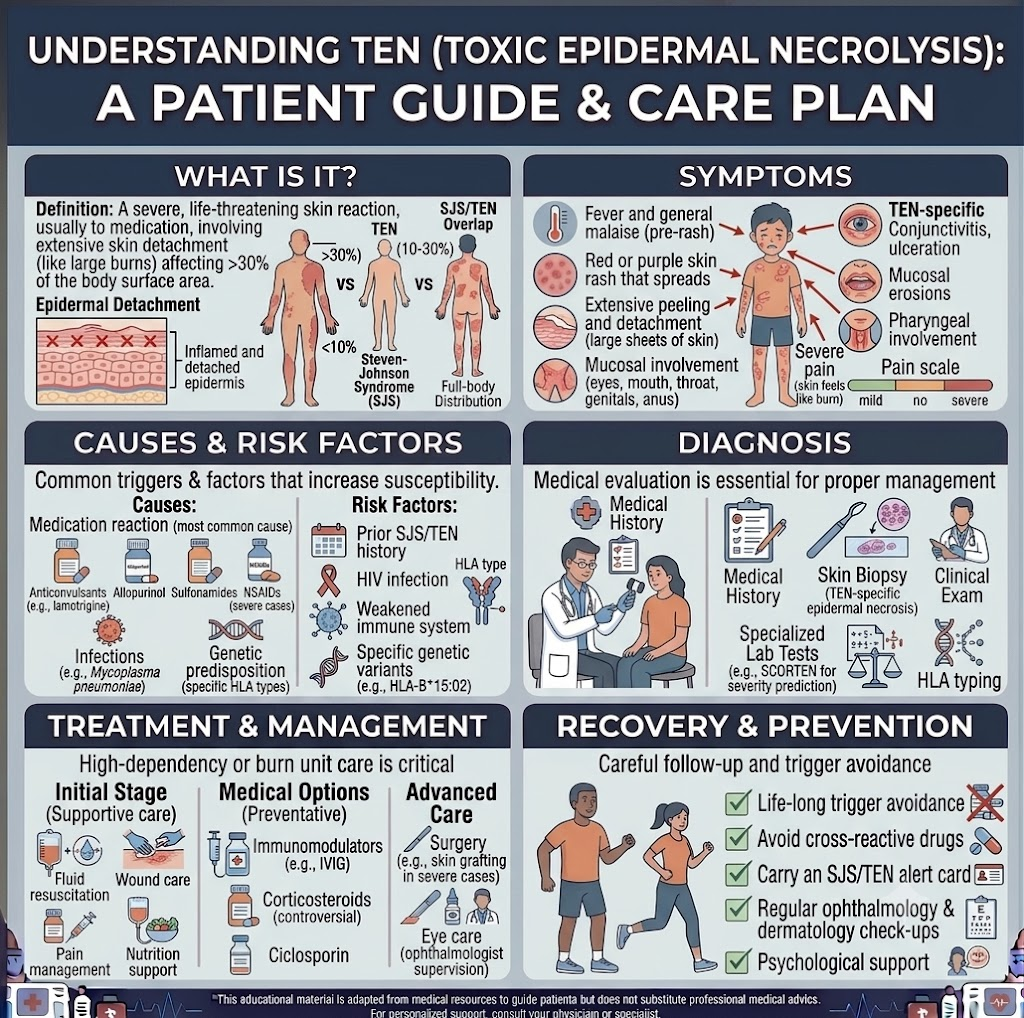
Toxic Epidermal Necrolysis (TEN) is a rare, life-threatening skin condition, most often triggered by a reaction to certain medications. It represents the most severe form of Stevens-Johnson syndrome (SJS), diagnosed when more than 30% of the body's skin surface is affected, alongside significant damage to the moist inner linings of the body, such as the mouth, eyes, and genitals. TEN requires immediate hospital treatment, often in specialized burn or intensive care units. Recovery can be lengthy, taking weeks to several months, and careful supportive care is crucial for healing.
Understanding the Condition
Toxic Epidermal Necrolysis (TEN): A Severe Skin Reaction
Understanding the Condition
Common Symptoms
Widespread Skin Pain: Intense and widespread pain across the skin surface, often preceding visible skin changes.
Spreading Rash: A rash that rapidly expands to cover a large portion of the body, specifically more than 30% of the skin surface.
Blisters and Peeling Skin: Formation of large blisters, followed by extensive peeling of the top layers of skin, leaving raw, open areas similar to severe burns.
Sores on Moist Linings: Painful sores, swelling, and crusting on the moist inner linings of the body, including the mouth, eyes, throat, and genital areas (vagina, penis).
Consultation Guide
Which Specialist to Meet
If you suspect TEN, you need immediate medical attention. You will likely be cared for by a team of specialists in a hospital setting. This team typically includes a dermatologist (skin specialist), critical care doctors, ophthalmologists (eye specialists), and possibly plastic surgeons for wound management.
Preparations Before Your Visit
Before your medical visit, if time permits, compile a list of all medications you are currently taking, including over-the-counter drugs, supplements, and any new prescriptions started in the last month. Note when your symptoms began and how they have progressed. Be prepared to share your full medical history, including any previous severe skin reactions or family history of similar conditions. Do not attempt to self-treat or remove any peeling skin before being seen by a doctor.
Book a doctor visit near me
Consultation Guide
Pain Management: Strong pain relievers are given to manage the intense pain caused by widespread skin damage and open sores. (Duration: Throughout the healing process, weeks to months)
Fluid and Nutrition Support: Intravenous (IV) fluids are provided to prevent dehydration, and nutritional support (often through a feeding tube) ensures adequate nourishment for healing, especially when mouth sores make eating difficult. (Duration: As needed, weeks to months)
Permanent Avoidance of Trigger Medication: It is crucial to permanently avoid the specific medication that caused TEN and any chemically related drugs. Future exposure could lead to a more severe and life-threatening recurrence.
Diagnostic Procedures
Toxic Epidermal Necrolysis (TEN) is a rare, life-threatening skin condition, most often triggered by a reaction to certain medications. It represents the most severe form of Stevens-Johnson syndrome (SJS), diagnosed when more than 30% of the body's skin surface is affected, alongside significant damage to the moist inner linings of the body, such as the mouth, eyes, and genitals. TEN requires immediate hospital treatment, often in specialized burn or intensive care units. Recovery can be lengthy, taking weeks to several months, and careful supportive care is crucial for healing.
A thorough visual inspection of your skin, including the extent of the rash, blistering, and peeling, as well as an examination of your mouth, eyes, and other moist body linings.
What to Expect
A doctor will carefully examine your entire body to assess the severity and pattern of your skin reaction. They will look for blisters, peeling, and redness, and check the condition of your mucous membranes (eyes, mouth, genitals). This examination helps in estimating the percentage of affected skin and evaluating your overall health.
A procedure where a small piece of affected skin is removed for examination under a microscope. This is crucial to confirm the diagnosis of TEN and rule out other skin conditions.
What to Expect
You will first receive a local anesthetic injection to numb a small area of your skin. Once numb, the doctor will use a small scalpel or punch tool to remove a tiny piece of skin, typically a few millimeters in size. You might feel a slight pressure, but no pain. The area will then be cleaned and bandaged, and the skin sample sent to a lab for analysis. Results typically take a few days.
Blood samples are taken to check for signs of infection, evaluate organ function, and monitor electrolyte levels and overall health status.
What to Expect
A healthcare professional will draw blood from a vein in your arm, usually with a small needle. You might feel a brief pinch or sting. Multiple tubes of blood may be collected for various tests. These tests provide important information about your body's response to the condition and help monitor for potential complications like infections or organ damage.
Treatment Options
Intensive Care Unit (ICU) or Burn Unit: Patients with TEN require immediate admission to a specialized unit, like a burn unit or intensive care unit, due to the severity of skin damage and risk of complications. (Duration: Weeks to months, depending on severity and complications)
Stopping Offending Medication: The first and most critical step is to immediately stop any medication suspected of causing the reaction. This is essential to prevent further progression of the disease. (Duration: Permanent avoidance of the specific medication and related drugs)
Medications and Therapies
Infection Prevention and Treatment: Given the large areas of open skin, strict infection control measures are implemented. Antibiotics may be administered if a bacterial infection develops. (Duration: Continuous monitoring; antibiotics as prescribed, typically 7-14 days per course)
Immune System Modulation: In some cases, medications that help calm the overactive immune response, such as high-dose corticosteroids or intravenous immunoglobulin (IVIG), may be used, though their effectiveness is debated and usage is individualized. (Duration: Short-term, typically several days to weeks, under strict medical supervision)
Specialized Wound Care: Wounds are treated similarly to severe burns. This involves gentle cleaning, applying protective dressings, and using specialized skin substitutes or grafts to cover raw areas and promote healing. (Duration: Ongoing daily care until full skin regeneration, weeks to months)
Eye Care: Eyes are particularly vulnerable. Regular application of lubricating eye drops, antibiotic ointments, and careful monitoring by an eye specialist helps prevent complications like dry eyes, scarring, or vision impairment. (Duration: Often long-term, potentially lifelong)
Inform All Healthcare Providers: Always inform every healthcare professional you see (doctors, dentists, pharmacists) about your history of TEN and the specific trigger medication. This information should be part of your permanent medical record.
Medical Alert Identification: Wear a medical alert bracelet or necklace, or carry an allergy passport, clearly stating your condition (TEN) and the specific drug(s) to avoid. This provides vital information in emergencies.
Long-Term Monitoring and Support
Regular Follow-Up Appointments: Schedule regular visits with your dermatologist and other specialists (e.g., ophthalmologist) to monitor for long-term complications, such as chronic dry eyes, skin changes, or nail issues.
Psychological Support: The experience of TEN can be traumatic. Seeking support from mental health professionals, support groups, or counseling can help manage emotional distress and long-term psychological impact.
Skin and Eye Health Management: Continue specialized care for skin (e.g., moisturizing, sun protection for sensitive skin) and eyes (e.g., lubricating drops) as advised by your doctors, even after initial healing.
Prevention & Long-Term Wellbeing
Prevention of Recurrence
Tags & Topics
Notice an error or need an update?
Help us keep medical information accurate. Report incorrect info or suggest an edit.


