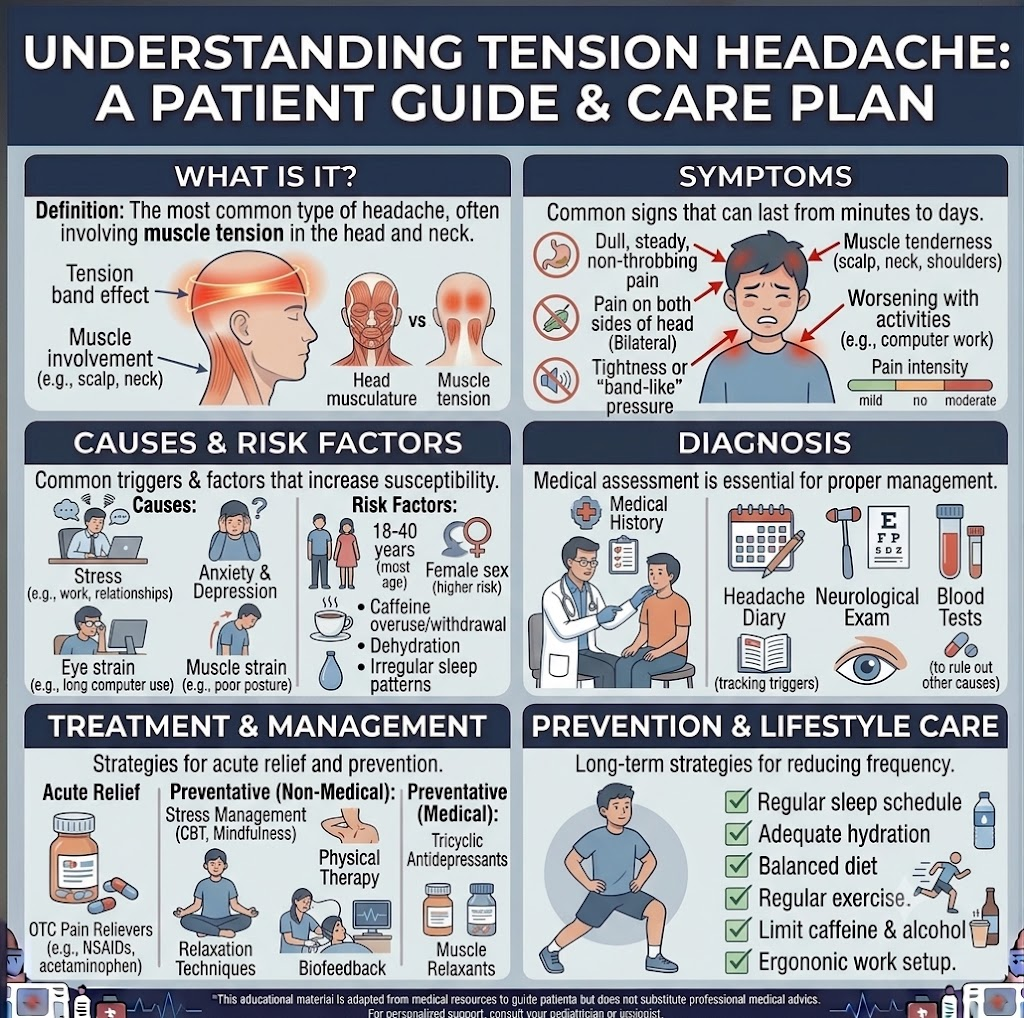
A tension headache causes mild to moderate head pain, often described as a tight band around the head. It's the most common type of headache, but its exact cause isn't fully understood. Experts now believe it stems from increased pain sensitivity rather than solely muscle tension. While the cause is unclear, effective ways to manage and prevent tension headaches involve a blend of healthy lifestyle habits, stress management, non-medication approaches, and appropriate use of pain relief. These headaches can be occasional (episodic) or frequent and persistent (chronic).
Understanding the Condition
Tension Headache: Understanding and Managing the Most Common Headache
Understanding the Condition
Common Symptoms
General Characteristics: Tension headaches are categorized as episodic (occurring less than 15 days a month for at least three months) or chronic (15 or more days a month for at least three months). Unlike some migraines, they typically do not involve visual disturbances, nausea, or vomiting, and physical activity usually doesn't worsen the pain. Sensitivity to light or sound can sometimes occur but is less common.
Dull, Aching Head Pain: A persistent, generalized ache throughout the head.
Tightness or Pressure Sensation: Feeling like a tight band squeezing around the forehead, or pressure on the sides and back of the head.
Scalp, Neck, and Shoulder Tenderness: Muscles in these areas may feel sore or tender to the touch.
Consultation Guide
Which Specialist to Meet
Begin with your primary care physician. If headaches are severe, frequent, or difficult to control, a neurologist—a specialist in brain and nervous system disorders—may be recommended for further evaluation and management.
Preparations Before Your Visit
Before your visit, keep a headache diary noting when headaches occur, their severity, potential triggers, and any medications you take. Be prepared to discuss your symptoms, medical history, and lifestyle habits. It's particularly important to seek professional advice if you take headache medication more than twice a week or if headaches significantly disrupt your daily life.
Book a doctor visit near me
A Brain CT scan uses X-rays and computer processing to create detailed cross-sectional images, or 'slices,' of the brain, skull, blood vessels, and soft tissues. It provides more detail than standard X-rays and is often used to quickly check for issues like bleeding, swelling, or tumors, especially after head injuries or sudden symptoms like a stroke. In non-urgent cases, it helps monitor known conditions or investigate persistent symptoms like headaches that don't go away. This scan is generally used to rule out other, more serious causes of headaches.
A Brain MRI uses strong magnets and radio waves, combined with a computer, to produce highly detailed images of the brain, and sometimes the neck and spine. It creates numerous 'slices' of your brain, offering exceptional clarity of soft tissues. This test is crucial for diagnosing conditions such as stroke, tumors, multiple sclerosis, and to investigate the cause of symptoms like persistent headaches, vision changes, or seizures. Unlike CT scans, MRI does not use radiation. Like a CT, it's often used to exclude other conditions when evaluating headaches.
Consultation Guide
A tension headache causes mild to moderate head pain, often described as a tight band around the head. It's the most common type of headache, but its exact cause isn't fully understood. Experts now believe it stems from increased pain sensitivity rather than solely muscle tension. While the cause is unclear, effective ways to manage and prevent tension headaches involve a blend of healthy lifestyle habits, stress management, non-medication approaches, and appropriate use of pain relief. These headaches can be occasional (episodic) or frequent and persistent (chronic).
You will lie on a movable table that slides into a large, donut-shaped scanner. The machine makes some clicking and whirring noises. You may be asked to hold your breath for short periods. Some scans use a special dye (contrast material) injected into a vein to highlight specific areas, which might cause a brief warm flush or metallic taste. The procedure is generally quick, typically lasting 5-15 minutes, and involves low radiation exposure.
Brain MRI (Magnetic Resonance Imaging)
Diagnostic Procedures
Brain CT (Computed Tomography) Scan
What to Expect
What to Expect
You will lie on a padded table that slides into a long, tube-shaped machine. The scanner creates loud banging and humming noises, so you'll likely be offered earplugs or headphones. It's important to lie very still during the scan, which can last from 30 minutes to an hour or more, depending on the detail needed. Some people find the enclosed space uncomfortable (claustrophobic); open MRI machines are available but less common. Similar to CT, a contrast dye may be used to enhance certain tissues, given intravenously.
Treatment Options
Over-the-Counter Pain Relievers: Common pain relief medications can effectively alleviate mild to moderate tension headache pain. These work by reducing inflammation and blocking pain signals. (Duration: For short-term relief (hours). Should not be used more than twice a week to avoid medication overuse headaches.)
Preventive Medications
Prescription Medications: For frequent or chronic tension headaches, your doctor may prescribe specific medications to help prevent headaches before they start or reduce their severity and frequency. These typically work by influencing nerve signals or muscle relaxation. (Duration: Long-term daily use, as directed by a physician, often for several months to assess effectiveness.)
Headache Diary: Continuously track headache occurrences, triggers, severity, and responses to treatments. This helps you and your doctor understand patterns and adjust management strategies.
Prevention & Long-Term Wellbeing
Therapies and Lifestyle Adjustments
Biofeedback Training: This technique teaches you to control certain body functions, like muscle tension, heart rate, and blood pressure, using electronic monitoring. By learning to relax these responses, you can reduce pain. (Duration: Typically involves several sessions over weeks to months, with ongoing self-practice.)
Cognitive Behavioral Therapy (CBT): A type of talk therapy that helps you identify and change negative thought patterns and behaviors, particularly those related to stress, which can trigger headaches. It provides coping mechanisms for stress. (Duration: Usually weekly sessions over several weeks to months.)
Relaxation Techniques: Practices such as deep breathing exercises, yoga, meditation, and progressive muscle relaxation can help reduce overall stress and muscle tension, potentially lessening headache frequency and intensity. (Duration: Daily practice, often lifelong for sustained benefits.)
Physical Therapy: A physical therapist can help address muscle imbalances, posture issues, and specific trigger points in the neck and shoulders that may contribute to tension headaches. (Duration: Varies based on individual needs, typically several weeks of sessions.)
Prevention and Long-Term Wellbeing
Stress Management: Identify and actively manage daily stressors. This includes making time for enjoyable activities, delegating tasks, and using relaxation techniques like mindfulness or listening to music. Stress is a primary trigger for tension headaches.
Regular Exercise: Engage in consistent physical activity, which can help reduce stress, improve sleep, and strengthen muscles, all contributing to headache prevention.
Consistent Sleep Schedule: Aim for adequate, but not excessive, sleep by maintaining a regular sleep and wake cycle, even on weekends. Poor sleep can exacerbate headaches.
Balanced Nutrition and Hydration: Eat regular, balanced meals and stay well-hydrated throughout the day. Dehydration and hunger can be headache triggers. Limit alcohol, caffeine, and high sugar intake.
Avoid Smoking: Smoking can worsen headaches and negatively impact overall health. Quitting smoking is a vital step for wellbeing.
Posture Awareness: Maintain good posture, especially during prolonged sitting or screen use, to reduce muscle tension in the neck and shoulders that can lead to headaches.
Tags & Topics
Notice an error or need an update?
Help us keep medical information accurate. Report incorrect info or suggest an edit.


