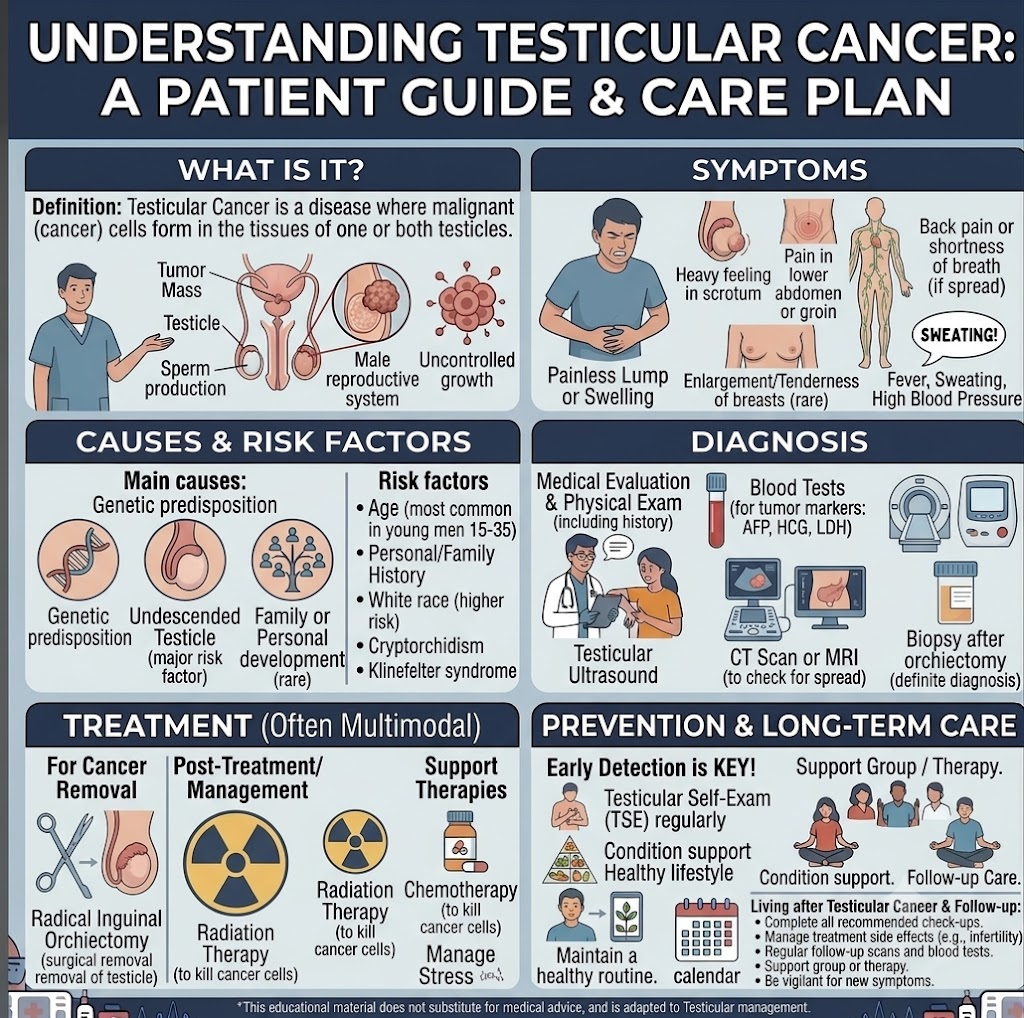
Testicular cancer is a type of cancer that begins in the testicles, which are located in a loose skin pouch called the scrotum, beneath the penis. These vital organs produce sperm and the hormone testosterone. While not among the most common cancers, it primarily affects males between 15 and 45 years old. The initial sign is often a noticeable lump or swelling on a testicle. Although cancer cells can grow and spread rapidly to other body parts, testicular cancer is highly treatable, even in advanced stages. Treatment strategies, typically involving surgery and chemotherapy, are tailored based on the cancer's type and how far it has spread.
Understanding the Condition
Common Symptoms
Before your visit, make note of any symptoms you've experienced, including when they started and how they've changed. Be prepared to discuss your personal and family medical history. Your doctor will perform a physical exam, so it's helpful to be aware of any changes in your body.
Book a doctor visit near me
Consultation Guide
Enlargement or Tenderness of the Breast Tissue: In rare cases, hormonal changes caused by the cancer can lead to breast growth or tenderness.
Consultation Guide
Which Specialist to Meet
Understanding Risk Factors: Be aware if you have higher risk factors such as an undescended testicle (cryptorchidism), a family history of testicular cancer, or being between 15 and 45 years old. However, having risk factors does not mean you will get cancer.
Addressing Testicular Microlithiasis: If you have been diagnosed with testicular microlithiasis (small calcium clusters in the testicles), discuss with your healthcare provider if any specific monitoring is needed. For otherwise healthy individuals without other risk factors, it's generally not considered to significantly increase cancer risk, but your doctor will consider your overall medical history.
Diagnostic Procedures
Testicular Cancer: Understanding, Diagnosis, and Treatment
Understanding the Condition
Testicular cancer is a type of cancer that begins in the testicles, which are located in a loose skin pouch called the scrotum, beneath the penis. These vital organs produce sperm and the hormone testosterone. While not among the most common cancers, it primarily affects males between 15 and 45 years old. The initial sign is often a noticeable lump or swelling on a testicle. Although cancer cells can grow and spread rapidly to other body parts, testicular cancer is highly treatable, even in advanced stages. Treatment strategies, typically involving surgery and chemotherapy, are tailored based on the cancer's type and how far it has spread.
Lump or Swelling in a Testicle: The most common first sign is a painless lump or swelling, usually in one testicle.
Feeling of Heaviness in the Scrotum: A noticeable sensation of increased weight or fullness in the scrotum.
Dull Ache in the Lower Belly or Groin: A persistent, mild discomfort in the lower abdominal or groin area.
Sudden Swelling in the Scrotum: An abrupt increase in the size of the scrotum, possibly accompanied by tenderness.
Pain or Discomfort in a Testicle or the Scrotum: Any new or persistent pain or tenderness in the testicle or surrounding area.
You should first consult your primary care provider. If testicular cancer is suspected, they will likely refer you to a urologist, a doctor specializing in the male urinary and reproductive systems, and potentially an oncologist, a doctor who specializes in cancer treatment.
Preparations Before Your Visit
Your doctor will carefully examine your testicles, scrotum, abdomen, and groin to check for lumps, swelling, tenderness, or enlarged lymph nodes.
What to Expect
This is a quick and gentle examination. You will typically be asked to undress from the waist down and lie on an exam table. The doctor will visually inspect and then manually feel the areas.
This imaging test uses high-frequency sound waves to create detailed pictures of the structures inside your scrotum. It helps determine if a lump is solid (more likely to be cancerous) or filled with fluid (less likely to be cancerous).
What to Expect
You will lie on your back. A clear gel will be applied to your scrotum. A small, handheld device (transducer) will be gently moved over the area. You might feel slight pressure, but it's generally painless. The images are displayed on a screen. The procedure usually takes 15-30 minutes.
Blood Tests (Tumor Markers)
Certain types of testicular cancer can produce specific proteins called tumor markers (e.g., alpha-fetoprotein (AFP), human chorionic gonadotropin (HCG), and lactate dehydrogenase (LDH)). Blood tests measure the levels of these markers, which can aid in diagnosis and monitoring.
What to Expect
A healthcare professional will draw a small sample of blood, usually from a vein in your arm, using a needle. This is a common, quick procedure, similar to any routine blood test. You might feel a brief pinch.
CT Scan (Computed Tomography)
A CT scan combines a series of X-ray images taken from different angles around your body and uses computer processing to create cross-sectional images (slices) of your bones, blood vessels, and soft tissues. This helps determine if the cancer has spread to other parts of the body, such as lymph nodes, liver, or lungs.
What to Expect
You will lie on a motorized table that slides into a large, donut-shaped machine. You may be asked to hold your breath for short periods. Sometimes, a contrast dye is injected through an IV to make structures clearer; you might feel a warm flush. The scan is painless and takes about 10-30 minutes.
Radical Inguinal Orchiectomy: This is the primary treatment for nearly all testicular cancers, involving the surgical removal of the affected testicle through an incision in the groin. A prosthetic testicle can be implanted if desired. (Duration: A single surgical procedure, typically requiring a few weeks for initial recovery and several months for full healing.)
No Known Prevention: It's important to understand that there is currently no proven way to prevent testicular cancer. Developing it is not due to anything you could have done differently.
Testicular Self-Exams: While not definitively shown to reduce mortality, regularly examining your testicles can help you become familiar with their normal feel and detect any changes early. If you notice any lumps, swelling, hardness, or pain that lasts longer than two weeks, consult your doctor.
Regular Medical Follow-ups: After treatment, regular doctor visits, blood tests, and imaging scans are crucial to monitor for any recurrence of cancer or new spread. The frequency and duration of these follow-ups depend on your specific cancer type and stage.
Treatment Options
Surgical Procedures
Retroperitoneal Lymph Node Dissection (RPLND): If the cancer has spread to lymph nodes in the abdomen, this surgery may be performed to remove them. It can be done at the same time as orchiectomy or later. (Duration: A major surgical procedure with a hospital stay of several days and a recovery period of several weeks to months.)
Medications
Chemotherapy: This treatment uses powerful drugs to kill fast-growing cancer cells throughout the body. It is often used after surgery if cancer has spread or is at high risk of spreading. (Duration: Administered in cycles, typically over several weeks to a few months, depending on the cancer stage and specific regimen.)
Therapies
Radiation Therapy: This treatment uses high-energy beams (often X-rays) to destroy cancer cells or prevent them from growing. It is precisely aimed at the cancer and surrounding areas, commonly targeting lymph nodes. (Duration: Usually involves daily treatments over several weeks, depending on the stage and location of the cancer.)
Prevention & Long-Term Wellbeing
Prevention
Tags & Topics
Notice an error or need an update?
Help us keep medical information accurate. Report incorrect info or suggest an edit.


