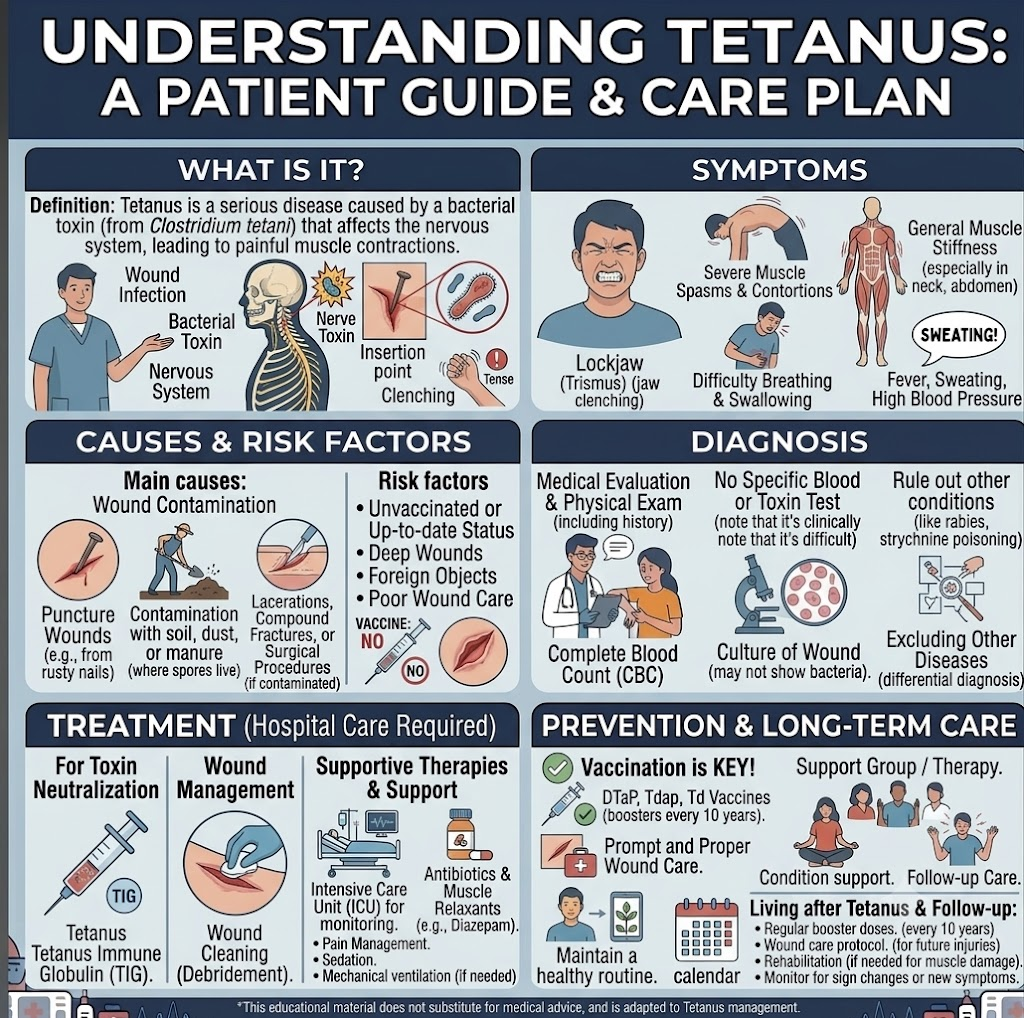
Tetanus, commonly known as lockjaw, is a severe nervous system disease caused by a powerful toxin released by bacteria found in soil and animal waste. This toxin leads to painful, uncontrollable muscle tightening and spasms, particularly in the jaw and neck, making it difficult to open the mouth or swallow. While there's no cure for the disease itself, treatment focuses on managing life-threatening symptoms and complications until the toxin's effects naturally subside over weeks. Widespread vaccination has made tetanus rare in many developed countries, but it remains a significant risk for those not up-to-date on their immunizations, especially in developing regions.
Understanding the Condition
Tetanus: The Serious Threat of Lockjaw
Understanding the Condition
Tetanus, commonly known as lockjaw, is a severe nervous system disease caused by a powerful toxin released by bacteria found in soil and animal waste. This toxin leads to painful, uncontrollable muscle tightening and spasms, particularly in the jaw and neck, making it difficult to open the mouth or swallow. While there's no cure for the disease itself, treatment focuses on managing life-threatening symptoms and complications until the toxin's effects naturally subside over weeks. Widespread vaccination has made tetanus rare in many developed countries, but it remains a significant risk for those not up-to-date on their immunizations, especially in developing regions.
Common Symptoms
Jaw Stiffness and Painful Spasms: Difficulty opening the mouth due to stiff and painful muscle contractions in the jaw, earning it the name 'lockjaw'.
Persistent Grin: Tension in the muscles around the lips can create a fixed, often uncomfortable 'grin'.
Neck Rigidity and Spasms: Painful muscle tightening and stiffness in the neck, making movement difficult.
Difficulty Swallowing: Spasms in the throat muscles can make swallowing food or liquids challenging and painful.
Rigid Abdominal Muscles: Abdominal muscles may become hard and unyielding to the touch.
Generalized Body Spasms: Severe, seizure-like muscle contractions affecting the entire body, lasting several minutes. During these spasms, the back often arches, legs stiffen, arms draw up, and fists clench.
Breathing Difficulties: Severe muscle rigidity, especially in the neck and abdomen, can impair breathing.
Heightened Sensitivity: These intense spasms can be triggered by seemingly minor stimuli such as a loud noise, a gentle touch, a draft, or even bright light.
Consultation Guide
Which Specialist to Meet
Immediate medical attention is vital for suspected tetanus, often in an emergency room. Ongoing care may involve infectious disease specialists, neurologists, or critical care teams for severe cases. Your primary care doctor can advise on vaccination and initial wound assessment.
Preparations Before Your Visit
If you suspect tetanus, or have a wound that concerns you, be prepared to tell your doctor precisely when and how the injury occurred, where it is located, and all symptoms you are experiencing, including when they started and how they have progressed. Importantly, share your complete vaccination history, including the dates of your last tetanus shot, if known. Bringing any immunization records can be very helpful.
Book a doctor visit near me
Tetanus is diagnosed primarily based on a person's symptoms and a physical examination, as rapid lab tests for confirmation are not standard. When a doctor suspects tetanus, they will thoroughly evaluate your medical history and symptoms, looking for characteristic signs like muscle stiffness, painful spasms, and lockjaw. A recent wound, especially deep or contaminated, is a key diagnostic clue.
The doctor will ask detailed questions about your health, any injuries you've sustained (even minor ones), and when your symptoms began and how they've progressed. They'll perform a physical exam, paying close attention to your muscle tone and reflexes, particularly in the jaw, neck, and abdomen, observing for rigidity and involuntary spasms. You might be asked to try opening your mouth or moving your neck. Your vaccination records will also be reviewed to determine your tetanus immunization status. No special equipment is typically involved in the diagnostic process itself.
Muscle Relaxants: These medications help to control painful muscle spasms and stiffness, making the patient more comfortable. (Duration: Administered as needed, typically for several weeks to months, depending on the severity and duration of symptoms.)
Sedatives: Used to calm the nervous system, reduce anxiety, and lessen sensitivity to stimuli that might trigger spasms. (Duration: Prescribed as needed, often for weeks to months, until the toxin's effects diminish.)
Antibiotics: These medicines are given to kill any remaining tetanus bacteria in the body, preventing further toxin production. (Duration: Usually given for several days to a week.)
Consultation Guide
Awareness of Risk Factors: Be particularly vigilant about wound care and vaccination status if you have conditions that suppress your immune system, live with diabetes, or if there’s any risk of exposure to unsanitary conditions or shared needles.
Diagnostic Procedures
What to Expect
Nutritional Support: If difficulty swallowing prevents adequate food and fluid intake, nutrients may be provided through a feeding tube placed into the stomach or small intestine. (Duration: Maintained for the duration of severe swallowing difficulties, potentially weeks to months.)
Treatment Options
Medications
Tetanus Antitoxin: This specialized treatment contains antibodies that can neutralize any tetanus toxin that has not yet bound to nerve tissue, preventing it from causing further damage. It does not reverse damage already done. (Duration: Typically a single dose administered early in treatment.)
Supportive Care and Procedures
Wound Care: Thorough cleaning of any wounds, including removal of dead or infected tissue, is crucial to eliminate the source of bacteria. (Duration: Performed upon admission and ongoing as the wound heals.)
Prevention & Long-Term Wellbeing
Breathing Support: For severe cases where muscle spasms affect breathing, a breathing tube and mechanical ventilator may be necessary to assist or take over breathing. (Duration: Can last for weeks to months, depending on recovery.)
Physical Therapy: Once the acute phase of illness passes, physical therapy can help patients regain muscle strength and flexibility, and improve overall mobility. (Duration: Varies widely based on individual recovery needs, potentially weeks to months after discharge.)
Prevention
Full Vaccination Schedule: Ensure you and your children receive the full course of tetanus vaccinations. For children, this is typically part of a combined vaccine that also protects against diphtheria and whooping cough (pertussis). This series usually involves five shots in early childhood (e.g., at 2, 4, 6, 15-18 months, and 4-6 years).
Regular Booster Shots: Adults should receive a booster shot every 10 years to maintain protection. If you sustain a deep or dirty wound and it’s been more than five years since your last booster, or if you're unsure of your vaccination status, consult your doctor about an earlier booster.
Pregnancy Vaccination: Pregnant individuals should receive a tetanus booster during their third trimester, regardless of their prior vaccination history, to protect the newborn from tetanus.
Prompt and Proper Wound Care: Clean all cuts, scrapes, and wounds thoroughly with soap and water as soon as possible. Remove any foreign objects like dirt or splinters. For deep puncture wounds, wounds contaminated with soil or manure, or those that are particularly dirty, seek medical attention immediately.
Long-Term Monitoring and Awareness
Regular Vaccination Status Review: Discuss your vaccination status with your doctor during regular check-ups to ensure you are up-to-date with all recommended boosters.
Travel Immunization Planning: If you plan to travel internationally, especially to developing countries, confirm your tetanus vaccination is current well in advance of your trip.
Tags & Topics
Notice an error or need an update?
Help us keep medical information accurate. Report incorrect info or suggest an edit.


