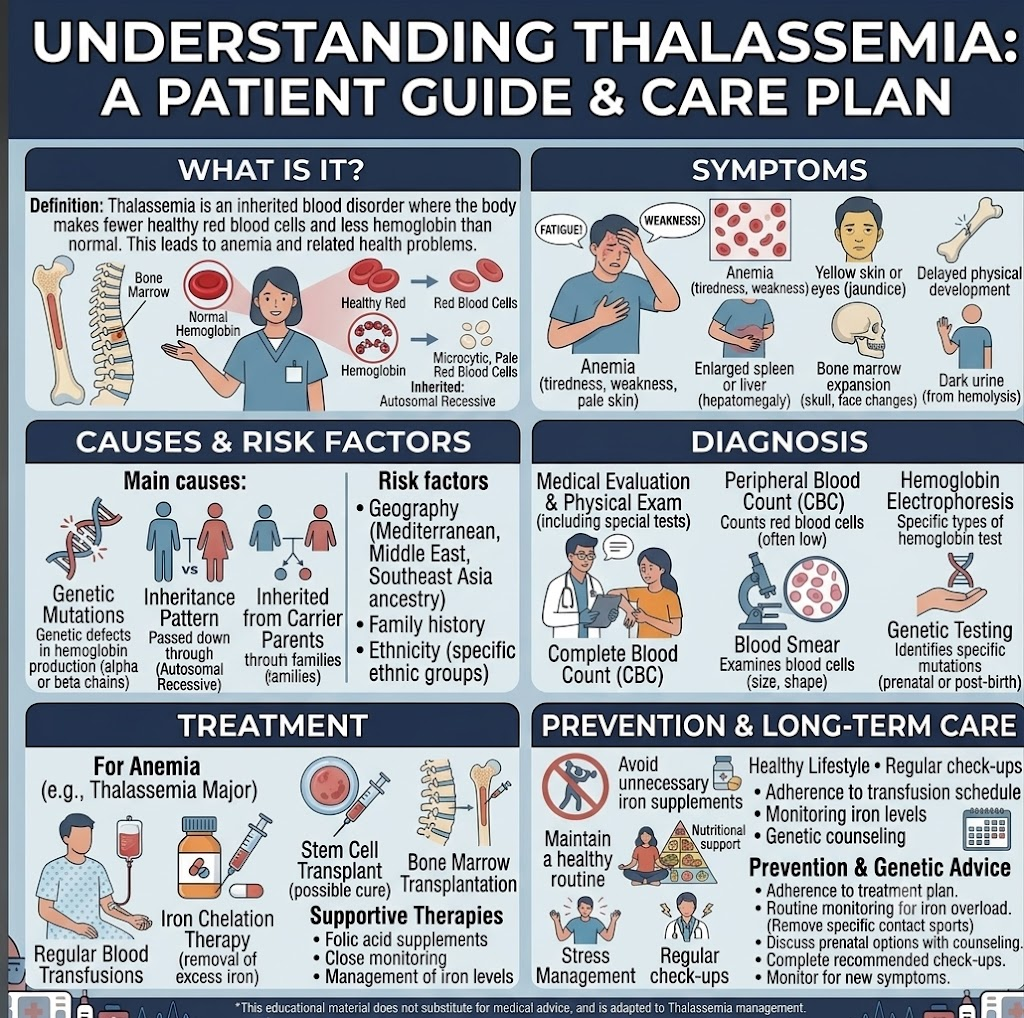
Thalassemia is an inherited blood disorder where your body makes less hemoglobin, a protein in red blood cells that carries oxygen. This leads to anemia, causing tiredness and weakness. Severity varies; mild forms may need no treatment, while severe types often require regular blood transfusions and ongoing medical care.
Understanding the Condition
Thalassemia: A Guide for Non-Medical Persons
Understanding the Condition
Common Symptoms
Fatigue: Persistent tiredness and lack of energy.
Weakness: General feeling of being weak or lacking strength.
Pale or Yellowish Skin: Skin appears lighter than usual, or takes on a yellow tint (jaundice).
Facial Bone Deformities: In severe cases, changes in facial bone structure can occur.
Slowed Growth: Children may not grow or develop at the expected rate.
Before your visit, gather your family medical history, especially if there's a history of anemia or thalassemia. Make a list of all your symptoms and any questions you have for the doctor. Be prepared to discuss your lifestyle and overall health.
Book a doctor visit near me
Consultation Guide
Abdominal Swelling: Enlargement of organs like the spleen or liver can cause the belly to swell.
Dark Urine: Urine may appear unusually dark.
Irritability: Especially common in infants and young children.
Consultation Guide
Which Specialist to Meet
Similar to a CBC, a small blood sample will be drawn from a vein in your arm. The procedure is generally quick and causes minor discomfort. The sample is then analyzed to determine your hemoglobin concentration.
Iron Chelation Therapy: Frequent blood transfusions can cause iron overload, which damages organs. Medicines are used to remove excess iron, preventing serious complications. (Duration: Ongoing, usually daily oral medication or regular infusions, for as long as regular transfusions are needed.)
Folic Acid Supplements: Folic acid is a vitamin that helps the body produce healthy red blood cells. Supplementation can support this process, especially in individuals with thalassemia. (Duration: Typically taken daily, long-term.)
Prenatal Screening: Tests like amniocentesis (if indicated by genetic risk factors) can detect severe forms of thalassemia during pregnancy, aiding informed decisions and preparation.
Diagnostic Procedures
You should consult a hematologist (a doctor specializing in blood disorders) or a genetic counselor. For children, a pediatrician may initiate the referral. They will help diagnose the condition and guide treatment.
Preparations Before Your Visit
A prenatal test (weeks 14-20) to check for genetic conditions in a baby. It involves collecting a small sample of amniotic fluid, which contains fetal cells for analysis.
What to Expect
Using ultrasound guidance, a thin needle is guided through your cleaned abdomen and into your uterus to collect amniotic fluid. You might feel cramping or pressure during the procedure; fluid goes to a lab for analysis.
Complete Blood Count (CBC)
A blood test measuring red blood cells, white blood cells, and platelets. It helps identify low red blood cells or hemoglobin levels, which can indicate anemia or thalassemia.
What to Expect
A blood sample is drawn from a vein in your arm; it's a quick process with minor discomfort, usually just a brief sting or pressure. The sample is then sent to a lab for analysis.
This test examines your DNA to find specific changes in the genes responsible for making hemoglobin. It confirms a diagnosis of thalassemia, identifies the type, and can determine if you are a carrier.
What to Expect
A sample for genetic testing is typically collected by drawing blood from a vein in your arm, or sometimes by swabbing the inside of your cheek. Prenatal genetic testing might involve procedures like amniocentesis, which carries a small risk.
Specifically measures the amount of hemoglobin protein in your red blood cells. Low levels indicate anemia, a key feature of thalassemia; unusually high levels can also be significant.
What to Expect
Blood Tests: Periodic complete blood counts, iron level checks, and other specialized blood tests will be conducted to track the disease progression and the impact of treatments.
Treatment Options
Thalassemia is an inherited blood disorder where your body makes less hemoglobin, a protein in red blood cells that carries oxygen. This leads to anemia, causing tiredness and weakness. Severity varies; mild forms may need no treatment, while severe types often require regular blood transfusions and ongoing medical care.
Blood Transfusions: For severe thalassemia, you receive healthy donor red blood cells via an intravenous line to boost oxygen-carrying capacity in your body. (Duration: Each session takes a few hours. Required regularly (e.g., monthly) for life unless a curative treatment is found.)
Bone Marrow Transplant (Stem Cell Transplant): A potentially curative treatment for severe cases, replacing unhealthy bone marrow with healthy blood-forming stem cells, typically from a compatible donor. It aims to restore normal blood cell production. (Duration: This intensive process, spanning several weeks or months including recovery, involves preparatory chemotherapy and the transplant itself.)
Regular Medical Check-ups: Consistent visits with a hematologist and other specialists are crucial to monitor your condition, assess treatment effectiveness, and manage potential complications.
Monitoring for Complications: Regular screenings for potential issues like heart problems, liver damage, bone health issues, and infections, which can arise from the condition or its treatments.
Adherence to Treatment Plans: Strictly follow all prescribed treatment regimens, including blood transfusions, iron chelation therapy, and supplements, to effectively manage the condition and prevent complications.
Avoid Unnecessary Iron: Unless specifically advised by a doctor, avoid iron supplements or iron-fortified foods to prevent harmful iron overload, common in thalassemia patients.
Prevent Infections: Take precautions to avoid infections, such as getting recommended vaccinations and practicing good hygiene, as individuals with thalassemia can be more susceptible to illness.
Prevention & Long-Term Wellbeing
Spleen Removal (Splenectomy): If an enlarged, overactive spleen destroys too many red blood cells, surgical removal can reduce transfusion needs. This surgical procedure requires a hospital stay and has long-term effects. (Duration: Typically a few days to a week for hospital stay and recovery. The effects are long-term.)
Lifestyle/Home Remedies
Healthy Diet: Eating a balanced, nutritious diet supports overall health and energy levels. It's important to discuss any specific dietary needs or restrictions, especially regarding iron, with your doctor. (Duration: Ongoing commitment.)
Regular Exercise: Engaging in appropriate physical activity can help manage fatigue, improve strength, and enhance overall well-being. Consult your doctor for safe exercise recommendations. (Duration: Ongoing commitment, tailored to individual tolerance.)
Prevention and Early Detection
Genetic Counseling: If thalassemia is in your family history, genetic counseling before pregnancy can assess risks and help with family planning decisions.
Lifestyle Management
Tags & Topics
Notice an error or need an update?
Help us keep medical information accurate. Report incorrect info or suggest an edit.


