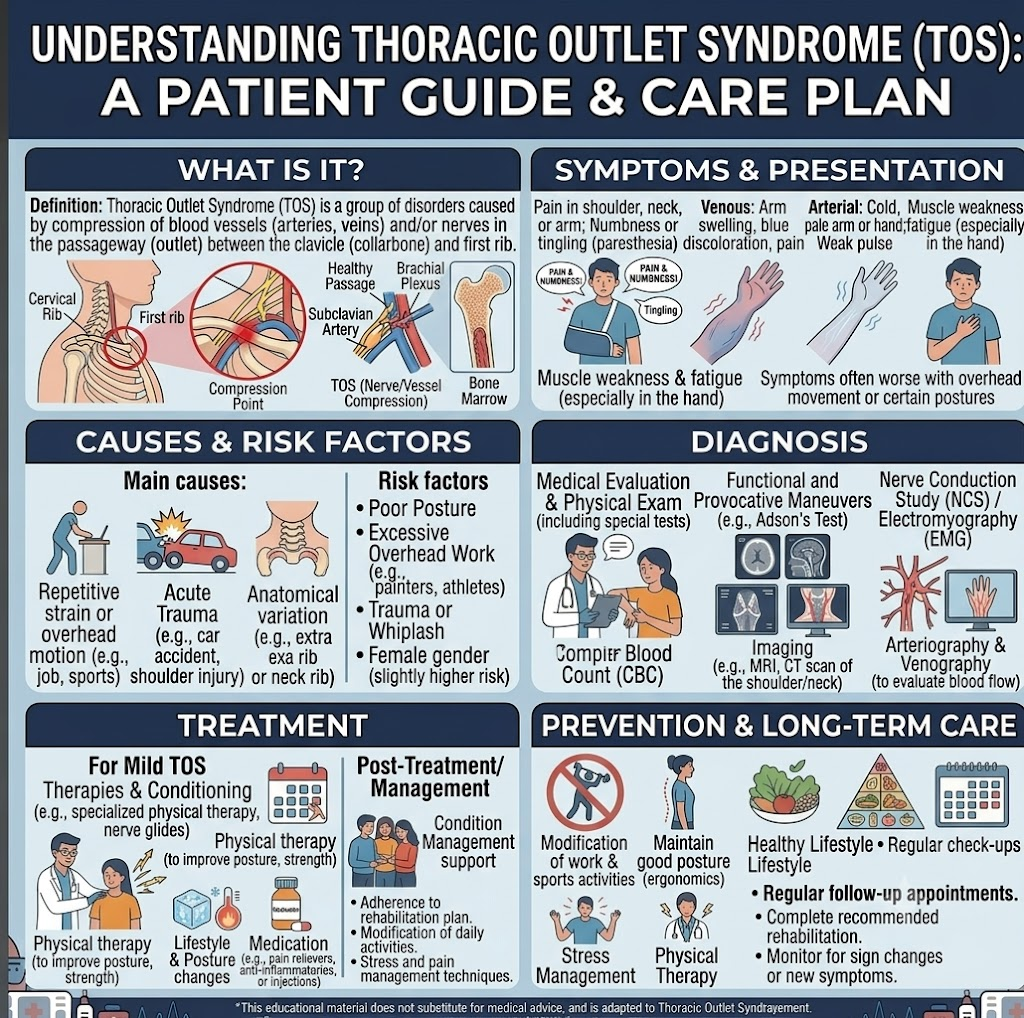
Thoracic Outlet Syndrome (TOS) is a group of conditions that occur when blood vessels or nerves in the space between your neck and shoulder (known as the thoracic outlet) become compressed. This compression can lead to a variety of symptoms, including pain in the neck and shoulder, and numbness or tingling in the fingers. Common causes include injuries from car accidents, repetitive strain from work or sports, and even pregnancy. Sometimes, anatomical differences, such as an extra rib, contribute to the condition. In some cases, the exact cause remains unknown. Treatment typically involves physical therapy and managing pain, with most people improving through these methods. For some, surgery may be considered.
Understanding the Condition
Thoracic Outlet Syndrome (TOS)
Understanding the Condition
Thoracic Outlet Syndrome (TOS) is a group of conditions that occur when blood vessels or nerves in the space between your neck and shoulder (known as the thoracic outlet) become compressed. This compression can lead to a variety of symptoms, including pain in the neck and shoulder, and numbness or tingling in the fingers. Common causes include injuries from car accidents, repetitive strain from work or sports, and even pregnancy. Sometimes, anatomical differences, such as an extra rib, contribute to the condition. In some cases, the exact cause remains unknown. Treatment typically involves physical therapy and managing pain, with most people improving through these methods. For some, surgery may be considered.
Common Symptoms
Neurogenic Thoracic Outlet Syndrome: This is the most common type, where nerves (specifically the brachial plexus, which controls movement and sensation in the shoulder, arm, and hand) are compressed. Symptoms include: numbness or tingling in the arm or fingers; pain or aches in the neck, shoulder, arm, or hand; arm fatigue with activity; and a weakening grip.
Venous Thoracic Outlet Syndrome: This type occurs when one or more veins under the collarbone are compressed and damaged. This can lead to blood clots forming. Symptoms often involve: swelling, pain, and a bluish discoloration in the arm or hand; and a feeling of heaviness or aching.
Arterial Thoracic Outlet Syndrome: This is the least common type, resulting from the compression of an artery under the collarbone. Compression can injure the artery, potentially causing a bulge (aneurysm) or blood clot formation. Symptoms may include: coldness, numbness, or tingling in the fingers and hand; pain or aching in the arm; paleness or a bluish tint to the skin of the arm or hand; a weakened or absent pulse in the affected arm; and rapid fatigue of the arm with activity.
Consultation Guide
Which Specialist to Meet
Initially, you should consult with your primary care physician. If TOS is suspected, you may be referred to a neurologist (for nerve-related symptoms), a vascular specialist or vascular surgeon (for blood vessel involvement), an orthopedic surgeon (if anatomical issues or surgical intervention is considered), or a physical therapist for conservative management.
Preparations Before Your Visit
Before your visit, make a detailed list of your symptoms, including when they started, what makes them better or worse, and how they affect your daily life. Be prepared to discuss your medical history, any previous injuries, current medications, and any recent activities or changes in routine. Write down any questions you have for the doctor.
Book a doctor visit near me
Depending on your symptoms and the suspected type of TOS, your doctor may order other imaging tests. Magnetic Resonance Imaging (MRI) provides detailed images of soft tissues, nerves, and blood vessels. Computed Tomography (CT) scans offer cross-sectional views, and an Ultrasound uses sound waves to visualize blood flow and detect vessel compression or blood clots.
Pain Management Medications: Over-the-counter pain relievers (like anti-inflammatory drugs) or prescription muscle relaxants may be used to reduce pain, inflammation, and muscle spasms. (Duration: As needed, for acute symptom relief.)
Interventional Procedures
Injections: Injections of local anesthetics, sometimes combined with a corticosteroid, can be administered into the affected area to reduce inflammation and provide temporary pain relief. (Duration: Relief can last weeks to months; may be repeated if effective.)
Manage Weight: If you are overweight, losing excess weight can help reduce pressure on the nerves and blood vessels in the thoracic outlet area, potentially preventing or relieving symptoms.
Modify Activities: Avoid repetitive arm or shoulder movements, prolonged overhead activities, and lifting heavy objects, especially if you are prone to TOS. Adjust your workstation ergonomics to support a neutral posture.
Avoid Carrying Heavy Bags: Refrain from carrying heavy backpacks or shoulder bags, as this can increase pressure on the thoracic outlet. Distribute weight evenly if you must carry heavy items.
Regular Stretching and Strengthening: Incorporate daily stretches focusing on your chest, neck, and shoulders to improve flexibility. Perform exercises that strengthen your shoulder and back muscles to support good posture and stability.
Adhere to Physical Therapy: If prescribed, consistently follow your physical therapy program, including all home exercises, to maintain muscle strength, flexibility, and proper body mechanics.
Diagnostic Procedures
An X-ray is a quick, painless imaging test that captures pictures of internal structures, primarily bones. It helps identify any bone abnormalities, such as an extra rib in the neck (cervical rib) or other structural differences that might be compressing nerves or blood vessels.
What to Expect
During an X-ray, you'll be asked to lie down or stand in various positions. A technician will position the X-ray machine to capture images of the affected area. You'll need to stay very still during the brief moments the images are taken. The procedure is typically quick and painless. You might be asked to remove jewelry or clothing items that could interfere with the images.
Electromyography (EMG) and Nerve Conduction Study (NCS)
EMG and NCS are tests used together to assess the health of your muscles and the nerves that control them. They help determine if there is nerve dysfunction, muscle dysfunction, or problems with how nerves communicate with muscles.
What to Expect
A Nerve Conduction Study (NCS) usually comes first. Surface electrodes (stickers) are placed on your skin along the path of a nerve. Small, harmless electrical impulses are sent through the nerve, and the electrodes measure how quickly and strongly the nerve transmits signals. You might feel a brief, mild shock-like sensation. After NCS, an Electromyography (EMG) might be performed. A thin needle electrode is inserted directly into several muscles to record their electrical activity both at rest and during muscle contraction. You might feel a slight prick or discomfort when the needle is inserted, and a dull ache or cramping when the muscle is activated. The entire procedure can take 30 to 90 minutes.
Other Imaging Studies (MRI, CT Scan, Ultrasound)
What to Expect
For an MRI, you'll lie on a table that slides into a large, tube-shaped machine. It's a non-invasive test, but the machine can be noisy. A CT scan involves lying on a table that moves through a doughnut-shaped scanner. An ultrasound typically involves a technician applying a gel to your skin and moving a handheld device (transducer) over the area, displaying real-time images on a screen. Some of these tests might require a contrast dye injected into a vein to highlight blood vessels.
Treatment Options
Conservative Management
Physical Therapy: A cornerstone of treatment, physical therapy involves specific exercises to strengthen shoulder muscles, improve posture, increase range of motion, and stretch tight muscles in the neck, chest, and shoulders to reduce compression on nerves and vessels. (Duration: Typically 6-12 weeks, but can extend for several months, with ongoing home exercises.)
Thoracic Outlet Decompression: This surgery aims to relieve pressure by removing structures that are compressing nerves or blood vessels. This might involve removing an extra cervical rib, part of the first rib, certain muscle bands, or scar tissue. (Duration: A single procedure; recovery can take several weeks to several months, with post-surgical physical therapy.)
Procedures for Vascular Complications: If blood clots are present, procedures like catheter-directed clot removal (thrombolysis) or surgical removal of the clot may be necessary. If an artery is damaged (e.g., aneurysm), repair or reconstruction of the blood vessel may be performed. (Duration: Acute treatment for clot or aneurysm, followed by recovery and potential long-term medication to prevent future clots.)
Prevention & Long-Term Wellbeing
Prevention and Long-Term Wellbeing
Improve Posture: Maintain good posture, especially when sitting or standing. Avoid slouching and keep your head aligned over your shoulders to prevent compression in the thoracic outlet.
Tags & Topics
Notice an error or need an update?
Help us keep medical information accurate. Report incorrect info or suggest an edit.


