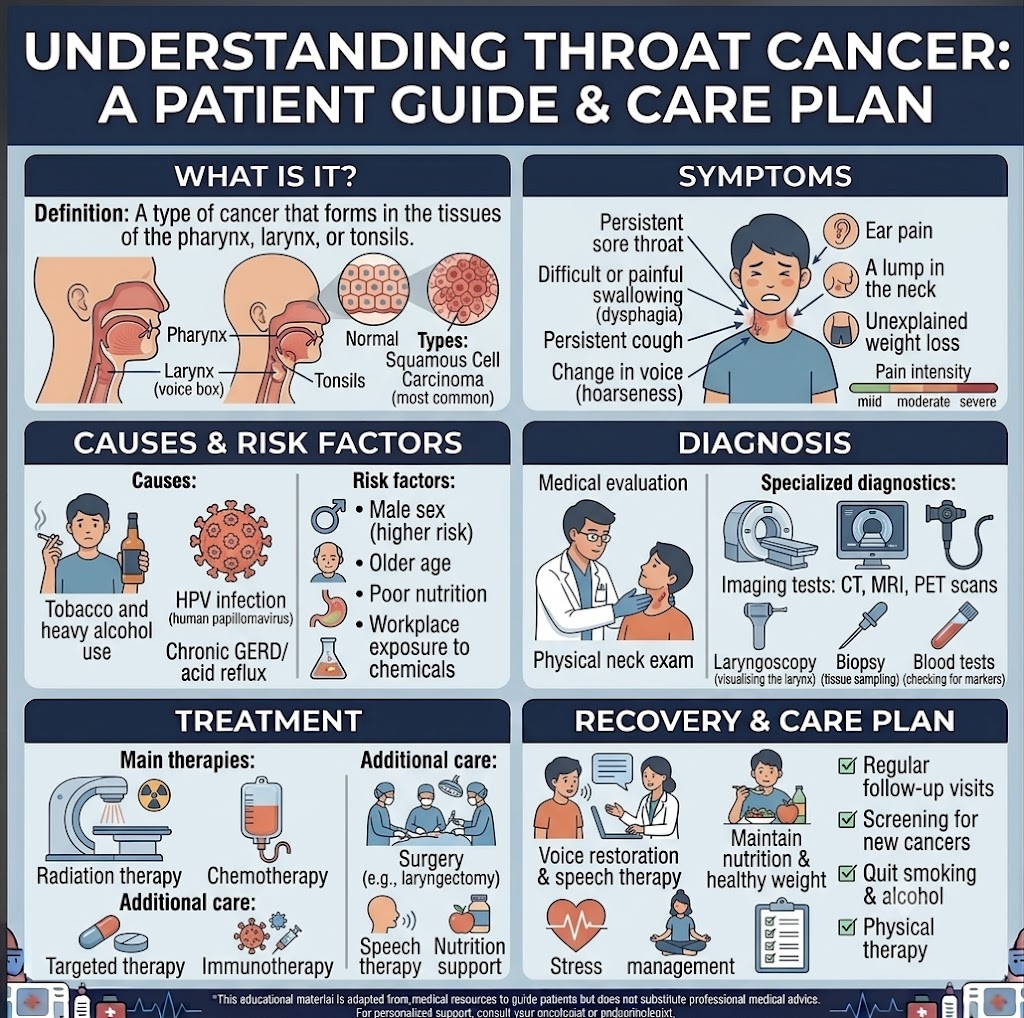
Throat cancer is a broad term for cancer that develops in your throat (pharynx) or voice box (larynx). The throat is a muscular tube behind your nose, leading down into your neck. The voice box, made of cartilage, sits just below the throat and contains vocal cords for speech. Most throat cancers begin in the flat cells lining these areas.While the exact cause of the genetic changes leading to throat cancer is unknown, certain factors increase risk. These include tobacco use (smoking, chewing), excessive alcohol, viral infections like Human Papillomavirus (HPV) and Epstein-Barr virus, a diet low in fruits and vegetables, gastroesophageal reflux disease (GERD), and exposure to workplace toxins. These factors can cause cells to grow uncontrollably, forming tumors.
Understanding the Condition
Common Symptoms
Changes in your voice: Hoarseness, difficulty speaking clearly, or a change in pitch.
Difficulty swallowing: Feeling like food is getting stuck, or pain when swallowing.
A lump or sore that doesn't heal: A persistent lump in the neck or a sore in the throat that doesn't improve.
A sore throat: A chronic sore throat that doesn't go away.
Before your visit, make a list of your symptoms, including when they started and how they've changed. Note any medical conditions, medications, and your lifestyle habits, especially tobacco and alcohol use. Be prepared to discuss your medical history and answer questions about your symptoms.
Book a doctor visit near me
Manage Gastroesophageal Reflux Disease (GERD): If you have GERD, work with your doctor to manage symptoms, as chronic acid reflux is a risk factor for certain throat cancers.
Minimize Exposure to Toxic Substances: If your work involves exposure to certain chemicals or toxins, ensure you follow safety protocols and use appropriate protective equipment.
Consultation Guide
Throat cancer is a broad term for cancer that develops in your throat (pharynx) or voice box (larynx). The throat is a muscular tube behind your nose, leading down into your neck. The voice box, made of cartilage, sits just below the throat and contains vocal cords for speech. Most throat cancers begin in the flat cells lining these areas.While the exact cause of the genetic changes leading to throat cancer is unknown, certain factors increase risk. These include tobacco use (smoking, chewing), excessive alcohol, viral infections like Human Papillomavirus (HPV) and Epstein-Barr virus, a diet low in fruits and vegetables, gastroesophageal reflux disease (GERD), and exposure to workplace toxins. These factors can cause cells to grow uncontrollably, forming tumors.
Diagnostic Procedures
Throat Cancer: Understanding, Diagnosis, and Treatment
Understanding the Condition
You should start by consulting your primary care provider. They may refer you to an ear, nose, and throat (ENT) specialist (otolaryngologist) for further evaluation. If cancer is diagnosed, an oncologist (cancer specialist) and other specialists will be involved in your care.
Preparations Before Your Visit
A procedure using a thin needle to remove a small tissue sample from a suspicious area for lab analysis to check for cancer.
What to Expect
The skin over the biopsy site will be cleaned and numbed. A needle is inserted, often guided by imaging. You may feel pressure. A bandage is applied. The procedure typically takes 15-30 minutes.
CT Scan (Computed Tomography Scan)
Uses X-rays and a computer to create detailed cross-sectional images of internal body structures, providing more detail than standard X-rays.
What to Expect
You will lie on a table that slides into a doughnut-shaped machine. You'll need to stay still for 10-30 minutes. Sometimes, a contrast dye may be given through an IV or swallowed to enhance image clarity.
PET Scan (Positron Emission Tomography Scan)
An imaging test revealing metabolic activity using a radioactive tracer to highlight areas of high activity, which can be indicative of cancer.
What to Expect
A radioactive tracer will be injected into a vein. You'll wait about an hour for the tracer to absorb. Then, you lie on a table in a large scanner for about 30 minutes, staying still. Often combined with a CT scan (PET-CT) for more precise images.
A quick imaging test using radiation to create pictures of internal body structures, particularly bones.
What to Expect
You will be positioned for the images; you may need to hold your breath for a few seconds. The procedure is painless and takes only a few minutes.
Home Enteral Nutrition (Tube Feeding): A method of delivering liquid nutrition directly to the stomach or small intestine through a feeding tube when a person cannot eat or drink enough due to swallowing difficulties or treatment side effects. (Duration: As long as necessary, which can range from weeks to months, or longer-term depending on recovery and nutritional needs.)
Treatment Options
Surgical Procedures
Transoral Robotic Surgery (TORS): Minimally invasive surgery using robotic tools guided through the mouth to precisely remove tumors in hard-to-reach areas, often leading to quicker recovery and fewer complications. (Duration: Single procedure; recovery typically takes weeks to months.)
Other Surgical Options: Traditional open surgery might be performed to remove the tumor, part of the throat or voice box, or nearby lymph nodes, depending on the cancer's stage and location. (Duration: Single procedure; recovery typically spans several weeks to months, potentially requiring reconstructive surgery.)
External Beam Radiation Therapy: High-energy beams from an external machine are precisely aimed at the cancer to target and kill cancer cells while minimizing damage to surrounding healthy tissue. (Duration: Often given daily (5 days a week) for several weeks, typically 5-7 weeks.)
Brachytherapy (Internal Radiation): Radioactive material is placed directly inside or very close to the tumor. This allows for a higher dose of radiation to be delivered directly to the cancer with less impact on nearby healthy tissues. (Duration: Can be delivered as a temporary implant (minutes to days) or as a permanent implant where radiation dissipates over a few months.)
Chemotherapy: Medications, given orally or intravenously, kill fast-growing cancer cells throughout the body. It can be used alone, before surgery to shrink tumors, after surgery to kill remaining cells, or in combination with radiation therapy. (Duration: Administered in cycles, typically lasting several months, with breaks between cycles to allow the body to recover.)
Regular Follow-Up Appointments: After treatment, regular check-ups with your medical team are crucial to monitor for recurrence, manage side effects, and ensure overall health.
Prevention & Long-Term Wellbeing
Weight loss: Unexplained loss of weight without changes in diet or exercise.
- Consultation Guide
Which Specialist to Meet
Prevention
Avoid Tobacco Products: Quitting all forms of tobacco, including smoking and chewing tobacco, or never starting, is the most impactful step to reduce throat cancer risk. Seek professional help and support if you need assistance to quit.
Limit Alcohol Consumption: If you choose to drink alcohol, do so in moderation. This means up to one drink per day for women and up to two drinks per day for men.
Maintain a Healthy Diet: Eat a variety of colorful fruits and vegetables. The vitamins and antioxidants found in these foods may help lower your risk of various cancers, including throat cancer.
Protect Against HPV: Some throat cancers are linked to human papillomavirus (HPV). You can reduce your risk by limiting sexual partners and using barrier protection during sex. Discuss the HPV vaccine with your doctor, as it can protect against certain HPV-related cancers.
Long-Term Wellbeing
Tags & Topics
Notice an error or need an update?
Help us keep medical information accurate. Report incorrect info or suggest an edit.


