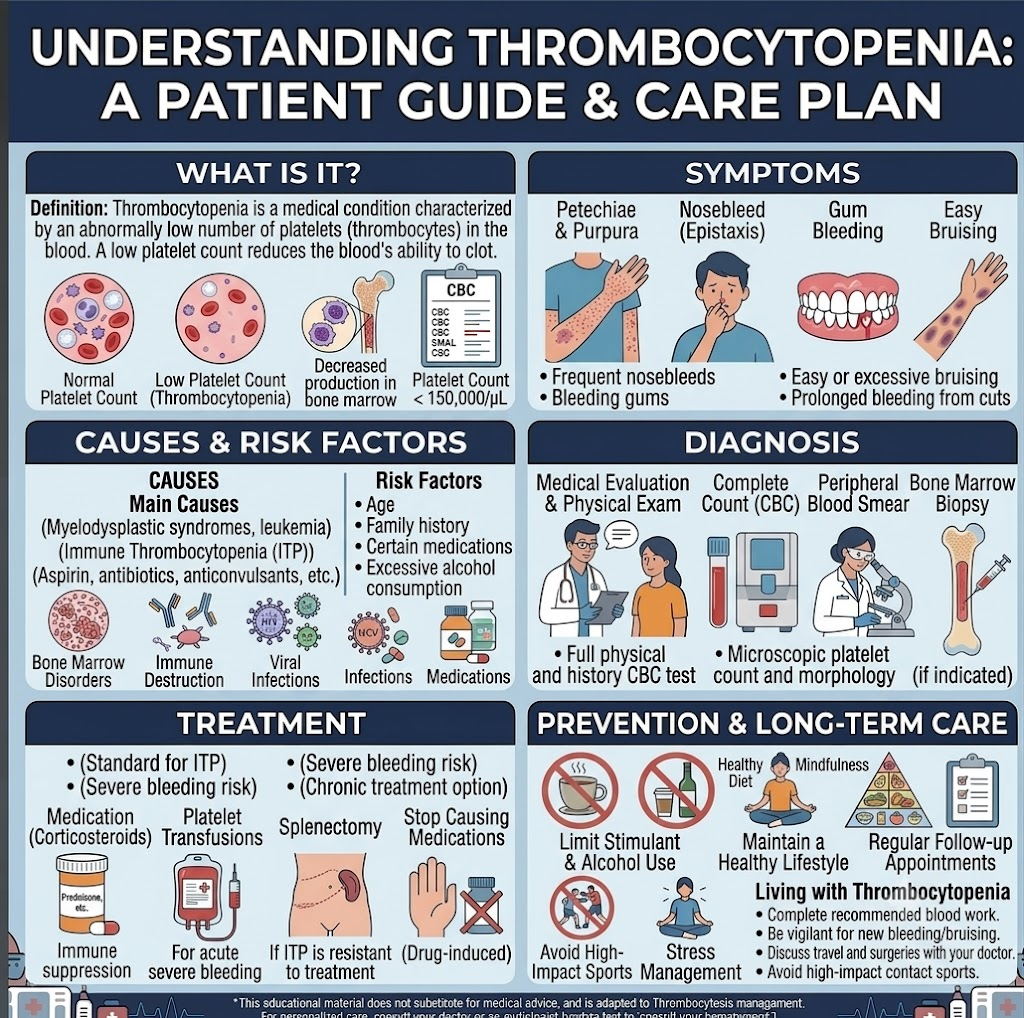
Thrombocytopenia is a condition where your blood has a lower-than-normal number of platelets. Platelets, also called thrombocytes, are tiny, colorless blood cells essential for blood clotting. They work by clumping together to form plugs that seal damaged blood vessels, stopping bleeding.This condition can arise from various factors, including underlying medical issues or certain medications that impact how platelets are produced, circulated, or used up in the body. While mild thrombocytopenia might not cause noticeable symptoms, a very low platelet count significantly increases the risk of excessive bleeding, even from minor injuries or during surgery. In rare instances, severe internal bleeding can occur, which can be dangerous. Treatment typically focuses on addressing the root cause of the low platelet count, and sometimes involves receiving a transfusion of donated platelets.
Understanding the Condition
Thrombocytopenia: Understanding Low Platelet Counts
Understanding the Condition
Thrombocytopenia is a condition where your blood has a lower-than-normal number of platelets. Platelets, also called thrombocytes, are tiny, colorless blood cells essential for blood clotting. They work by clumping together to form plugs that seal damaged blood vessels, stopping bleeding.This condition can arise from various factors, including underlying medical issues or certain medications that impact how platelets are produced, circulated, or used up in the body. While mild thrombocytopenia might not cause noticeable symptoms, a very low platelet count significantly increases the risk of excessive bleeding, even from minor injuries or during surgery. In rare instances, severe internal bleeding can occur, which can be dangerous. Treatment typically focuses on addressing the root cause of the low platelet count, and sometimes involves receiving a transfusion of donated platelets.
Common Symptoms
Easy Bruising (Purpura): Noticeable bruising on the skin or inside the mouth that appears easily or excessively.
Tiny Red Spots (Petechiae): Pinpoint-sized red, purplish, or brownish spots that look like a rash, typically on the skin.
Prolonged Bleeding: Bleeding from minor cuts or scrapes that lasts longer than is usual.
Gum or Nose Bleeds: Frequent or unexplained bleeding from the gums or nose.
Blood in Urine or Stools: Visible blood in your urine, which may make it appear pink or red, or in your bowel movements, which may look black or tarry.
Heavy Menstrual Periods: Unusually heavy or prolonged bleeding during menstruation.
Consultation Guide
Which Specialist to Meet
Start by consulting your primary care physician. If thrombocytopenia is suspected or confirmed, they may refer you to a hematologist, a doctor specializing in blood disorders.
Preparations Before Your Visit
Before your appointment, it's helpful to write down all your symptoms, including when they started and how often they occur. List all medications you are currently taking, including over-the-counter drugs, supplements, and herbal remedies, as well as any medical conditions you have. Prepare a list of questions you want to ask your doctor.
Book a doctor visit near me
Be Aware of Symptoms: Pay close attention to any new or worsening symptoms of bleeding and report them to your doctor promptly.
Consultation Guide
A healthcare professional will draw a small sample of blood, usually from a vein in your arm, using a needle. The process is quick and may cause a brief pinch or sting. The blood sample is then sent to a lab for analysis.
Often performed after a CBC, this test involves examining a thin layer of your blood under a microscope. It allows the doctor to visually check the size, shape, and overall appearance of your platelets and other blood cells, which can provide clues about the cause of a low count.
Treatment of Underlying Condition: The primary approach is to identify and treat the specific condition or stop the medication that is causing the low platelet count. This could involve managing infections, treating autoimmune diseases, or discontinuing certain drugs. (Duration: Varies widely depending on the underlying cause, from short-term courses to long-term management.)
Identify and Manage Risk Factors: Work with your doctor to understand any underlying conditions or medications that might contribute to low platelets and manage them proactively.
Avoid Injury: Take precautions to prevent cuts, bruises, and falls, especially if your platelet count is low, as even minor injuries can lead to significant bleeding.
Diagnostic Procedures
Complete Blood Count (CBC)
A common blood test that measures various components of your blood, including red blood cells, white blood cells, and platelets. It provides a total platelet count, which helps determine if the level is low.
What to Expect
What to Expect
This is part of the lab analysis following a blood draw (often the same one as for a CBC). There is no additional procedure for you to undergo beyond the initial blood sample collection.
Bone Marrow Examination (Aspiration and Biopsy)
If issues with platelet production are suspected, a bone marrow examination might be recommended. This procedure involves taking samples of bone marrow (the spongy tissue inside certain bones where blood cells are made) for microscopic analysis.
What to Expect
You will typically lie on your stomach or side. After numbing the skin and bone surface, a doctor will insert a hollow needle into your hip bone to draw out a small liquid sample (aspiration) and then a tiny piece of solid bone marrow (biopsy). You may feel pressure or a brief, sharp pain. The procedure usually takes about 15-30 minutes, and you might experience some soreness or bruising at the site for a few days.
Treatment Options
Medications
Corticosteroids: These medications can help suppress the immune system if it is mistakenly destroying platelets, thereby increasing platelet count. (Duration: Typically used for short periods, but sometimes long-term at lower doses.)
Immune Globulin Infusion: Administered intravenously, this treatment can temporarily increase platelet counts by blocking the immune system's destruction of platelets. (Duration: Often a short course of a few days, with effects lasting weeks.)
Platelet-Stimulating Medications: These medications stimulate the bone marrow to produce more platelets. (Duration: Often taken long-term for chronic conditions, with regular monitoring.)
Platelet Transfusion: If platelet counts are dangerously low or if there is active severe bleeding, donated platelets are given intravenously to quickly replenish the body's supply and improve clotting ability. (Duration: Each transfusion takes a few hours, with effects lasting a few days; may be repeated as needed.)
Surgical Procedures
Splenectomy (Spleen Removal): The spleen helps filter blood and can sometimes trap or destroy too many platelets. If other treatments are ineffective, surgical removal of the spleen may be performed to increase platelet count. This is typically done using minimally invasive (laparoscopic) techniques. (Duration: Hospital stay is usually a few days, with full recovery within two to four weeks for laparoscopic surgery.)
Regular Medical Check-ups: Schedule regular appointments with your healthcare provider or hematologist to monitor your platelet count and overall health, adjusting treatment as needed.
Adhere to Treatment Plan: Consistently follow your prescribed medication regimen and other treatment recommendations to maintain platelet levels and prevent complications.
Inform Other Healthcare Providers: Always inform dentists or other specialists about your low platelet count before any procedures, as it may require special precautions.
Prevention & Long-Term Wellbeing
Prevention
Tags & Topics
Notice an error or need an update?
Help us keep medical information accurate. Report incorrect info or suggest an edit.


