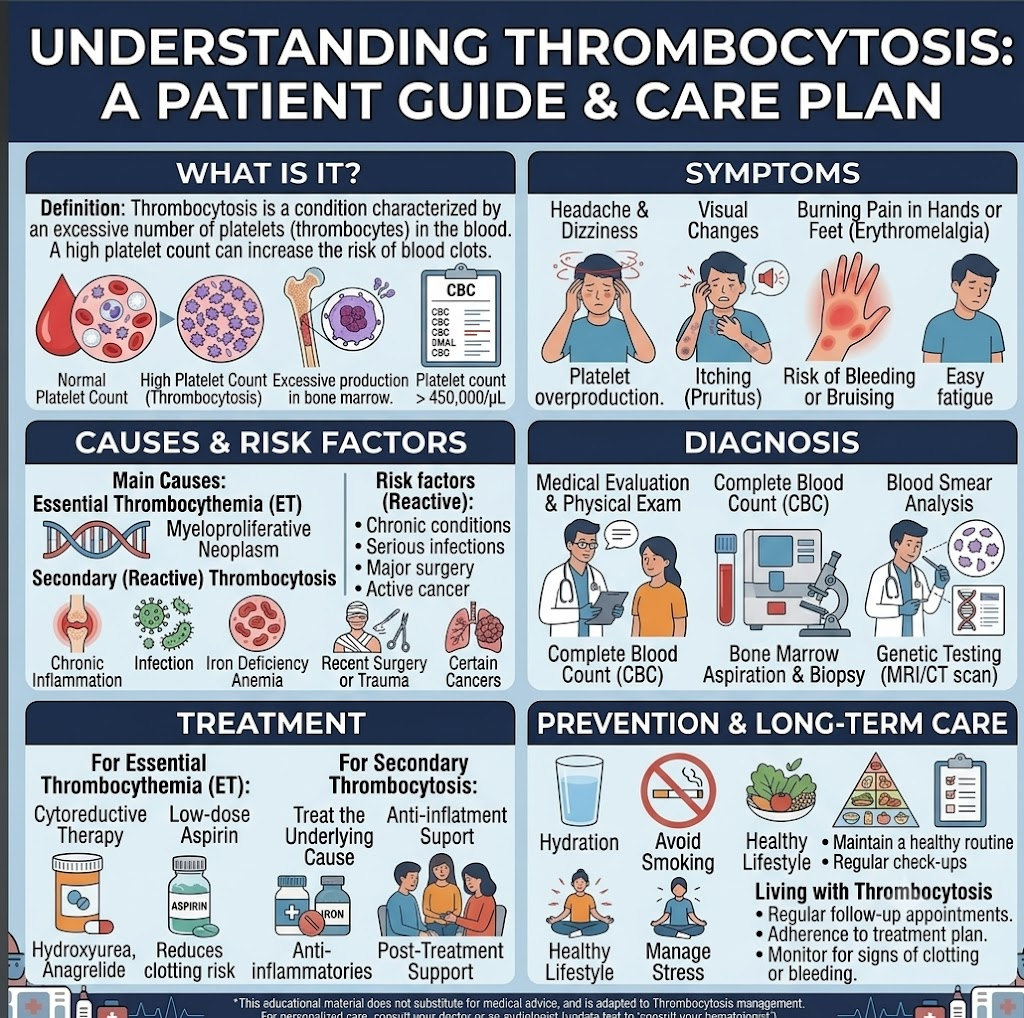
Thrombocytosis is a condition where your blood has too many platelets. Platelets are tiny blood cells essential for clotting and stopping bleeding. While sometimes harmless, very high platelet counts can lead to serious health issues, including excessive blood clotting (thrombosis) or, paradoxically, abnormal bleeding. It can be primary (essential), meaning a problem with the bone marrow itself, or secondary (reactive), caused by an underlying medical condition.
Understanding the Condition
Thrombocytosis: Understanding High Platelet Counts
Understanding the Condition
Common Symptoms
Often No Symptoms: Many individuals with thrombocytosis, especially secondary or mild cases, do not experience any noticeable symptoms. The condition is often discovered during routine blood tests.
Headache and Dizziness: Persistent or recurring headaches and feelings of lightheadedness or dizziness can occur due to changes in blood flow.
Weakness and Fatigue: Unexplained tiredness and a general feeling of weakness may be present.
Numbness or Tingling: A 'pins and needles' sensation or numbness in the hands and feet can result from small blood clots affecting nerve function or blood flow to the extremities.
Vision Changes: Temporary or persistent blurry vision, or other visual disturbances, may indicate blood flow issues to the eyes.
Chest Pain: Discomfort or pain in the chest area, particularly if it feels like pressure, could be a symptom related to blood clots.
Easy Bruising: Developing bruises easily or having bruises appear without a clear injury can indicate issues with blood clotting regulation.
Nosebleeds and Bleeding Gums: Frequent nosebleeds or bleeding from the gums, which can sometimes be difficult to stop, may occur despite having too many platelets, due to abnormal platelet function.
Consultation Guide
Which Specialist to Meet
Before your appointment, gather information about your medical history, including any previous diagnoses, recent illnesses, or surgeries. Make a list of all medications, vitamins, and supplements you are currently taking. Write down all your symptoms, even minor ones, and when they started. Prepare a list of questions for your doctor to ensure all your concerns are addressed.
Book a doctor visit near me
Regular Medical Follow-ups: Consistent appointments with your hematologist or general practitioner are essential. These visits allow for monitoring of platelet counts, assessment of symptoms, adjustment of medications, and screening for any potential complications related to thrombocytosis.
Symptom Awareness and Reporting: It is important to be vigilant for any new or worsening symptoms. This includes signs of clotting (e.g., unexplained pain, numbness, swelling, vision changes) or bleeding (e.g., unusual bruising, nosebleeds, blood in urine or stool). Report these promptly to your healthcare provider.
Consultation Guide
Thrombocytosis is a condition where your blood has too many platelets. Platelets are tiny blood cells essential for clotting and stopping bleeding. While sometimes harmless, very high platelet counts can lead to serious health issues, including excessive blood clotting (thrombosis) or, paradoxically, abnormal bleeding. It can be primary (essential), meaning a problem with the bone marrow itself, or secondary (reactive), caused by an underlying medical condition.
You should initially consult your primary care doctor. If thrombocytosis is diagnosed or suspected, your doctor will likely refer you to a hematologist, a specialist in blood disorders, for further evaluation and management. In some cases, other specialists might be involved depending on the underlying cause (e.g., an oncologist for cancer-related thrombocytosis or an infectious disease specialist for infection-related cases).
Preparations Before Your Visit
You will lie on your stomach or side. The skin over your hip bone (pelvis) will be cleaned and numbed with a local anesthetic. A hollow needle is then inserted into the bone. For aspiration, a syringe pulls out a liquid sample, which may cause a brief, sharp pain or pulling sensation. For the biopsy, a slightly larger needle extracts a small core of bone tissue. The entire procedure usually takes about 15-30 minutes. You may feel pressure and some discomfort, and soreness in the area for a few days afterward.
If secondary thrombocytosis is suspected, your doctor will order tests to identify the root cause. These can include inflammatory markers (e.g., C-reactive protein, erythrocyte sedimentation rate), iron studies, infection screenings, and imaging tests (like ultrasound or CT scans) to check for sources of inflammation, infection, or tumors.
Healthy Lifestyle and Hydration: Maintaining a balanced diet, engaging in regular, moderate physical activity, staying well-hydrated, and avoiding smoking are crucial. These habits support overall cardiovascular health and can help manage risk factors associated with blood clot formation. (Duration: Ongoing, lifelong commitment.)
Treatment of Underlying Condition: For secondary thrombocytosis, the most effective treatment involves addressing the root cause. This could mean treating an infection with appropriate medication, managing inflammatory diseases, correcting iron deficiency, or treating an underlying tumor. (Duration: Varies widely depending on the underlying condition, from a few weeks or months to ongoing management for chronic diseases.)
Plateletpheresis: A procedure used in emergency situations to rapidly lower dangerously high platelet counts. It involves drawing blood, separating out the excess platelets, and returning the remaining blood components to the body. (Duration: Typically a one-time procedure or a short series of sessions, each lasting a few hours, performed in a hospital setting.)
Diagnostic Procedures
Complete Blood Count (CBC)
A standard blood test that measures the levels of various components in your blood, including red blood cells, white blood cells, and platelets. An elevated platelet count is the primary indicator of thrombocytosis.
What to Expect
A healthcare professional will draw a small sample of blood, usually from a vein in your arm, using a needle. You might feel a brief sting or pinch. The process is quick, typically lasting only a few minutes. Afterward, a small bandage will be placed over the site.
After a CBC indicates high platelets, a blood smear involves examining a thin layer of your blood under a microscope. This allows the doctor to visually inspect the size, shape, and overall health of your blood cells, including platelets, for abnormalities.
What to Expect
This test uses the same blood sample drawn for a CBC. A small drop of your blood is spread thinly onto a glass slide, stained with special dyes, and then viewed by a pathologist. You will not feel anything extra during this procedure beyond the initial blood draw.
Bone Marrow Aspiration and Biopsy
This procedure is often performed for primary thrombocytosis to examine the bone marrow, where blood cells are produced. Aspiration collects liquid marrow, and a biopsy collects a small piece of solid bone marrow tissue. These samples help identify abnormal cell growth or specific genetic changes.
What to Expect
For suspected primary thrombocytosis, genetic tests look for specific gene mutations (such as JAK2, CALR, or MPL) that are commonly associated with the overproduction of platelets in the bone marrow.
What to Expect
This test requires a blood sample, similar to a CBC. Blood is drawn from a vein in your arm, with minimal discomfort. The sample is then sent to a laboratory for genetic analysis. Results may take several days or weeks to process.
Tests for Underlying Conditions
What to Expect
The experience varies based on the specific tests. Blood tests are similar to a CBC. Imaging tests involve lying still on a table while a machine scans your body; these are usually non-invasive and painless. Your doctor will explain any specific preparations or expectations for these additional tests.
Platelet-Lowering Medications: These medications are primarily used for primary thrombocytosis or very severe secondary cases to reduce the production of platelets in the bone marrow. They help bring platelet counts down to a safer level. (Duration: Long-term, potentially lifelong. Requires consistent medical supervision and blood tests to adjust dosage.)
Periodic Blood Tests: Routine blood tests, particularly Complete Blood Counts (CBCs), are crucial. They track platelet levels and other blood parameters, ensuring treatment effectiveness and detecting any changes or potential issues early on.
Treatment Options
Medications
Anti-platelet Therapy: Low-dose medication that makes platelets less 'sticky,' reducing the risk of blood clots. It is often prescribed when there is a significant risk of clotting events. (Duration: Long-term, potentially lifelong, with regular monitoring by your doctor.)
Prevention & Long-Term Wellbeing
Lifestyle and Home Remedies
Prevention and Risk Reduction
Managing Underlying Health Issues: For secondary thrombocytosis, diligent management of conditions like chronic infections, inflammatory disorders, or iron deficiency anemia is key. Working closely with your doctor to keep these conditions under control can prevent or reduce elevated platelet counts.
Heart-Healthy Lifestyle: Adopting a lifestyle that promotes heart health, including a balanced diet rich in fruits and vegetables, regular physical activity, maintaining a healthy weight, and completely avoiding smoking, significantly reduces the risk of blood clot-related complications.
Long-Term Monitoring and Support
Tags & Topics
Notice an error or need an update?
Help us keep medical information accurate. Report incorrect info or suggest an edit.


