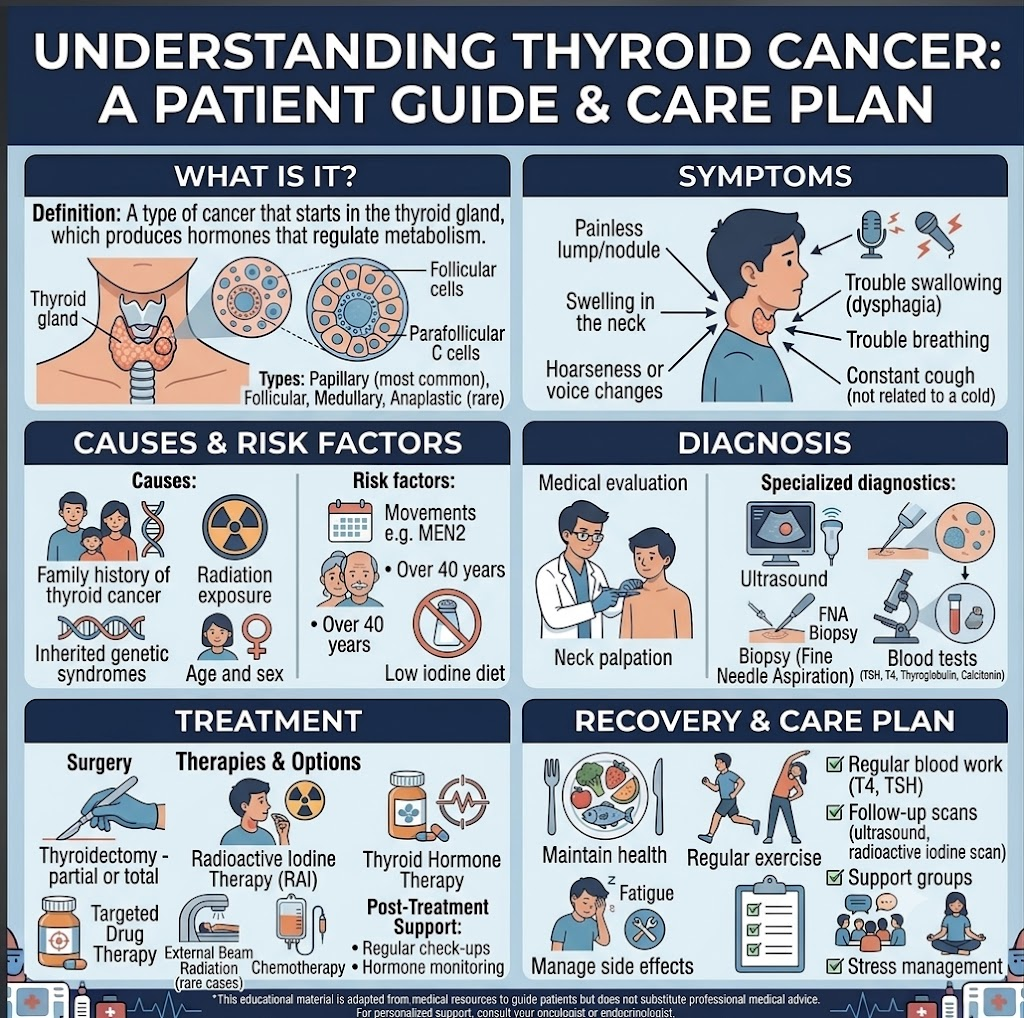
Thyroid cancer is a condition where abnormal cells grow in the thyroid gland. This gland, shaped like a butterfly, sits at the base of your neck, just below your Adam's apple, producing hormones vital for controlling heart rate, blood pressure, body temperature, and weight. Initially, thyroid cancer may not show any signs. As it grows, you might notice symptoms like a lump in your neck, changes in your voice, or difficulty swallowing. There are several types of thyroid cancer. Most types grow slowly and are highly treatable. However, some can be more aggressive. The number of thyroid cancer diagnoses has been rising, possibly due to advanced imaging techniques like CT and MRI scans, which can detect small cancers even when done for other reasons. These are typically small and respond well to treatment.
Understanding the Condition
Thyroid Cancer: A Comprehensive Guide for Non-Medical Individuals
Understanding the Condition
Thyroid cancer is a condition where abnormal cells grow in the thyroid gland. This gland, shaped like a butterfly, sits at the base of your neck, just below your Adam's apple, producing hormones vital for controlling heart rate, blood pressure, body temperature, and weight. Initially, thyroid cancer may not show any signs. As it grows, you might notice symptoms like a lump in your neck, changes in your voice, or difficulty swallowing. There are several types of thyroid cancer. Most types grow slowly and are highly treatable. However, some can be more aggressive. The number of thyroid cancer diagnoses has been rising, possibly due to advanced imaging techniques like CT and MRI scans, which can detect small cancers even when done for other reasons. These are typically small and respond well to treatment.
Common Symptoms
Neck Lump: A noticeable lump or nodule on your neck that you can feel through the skin.
Tight Collar Sensation: A feeling that shirt collars are becoming too tight or uncomfortable around your neck.
Voice Changes: Changes in your voice, such as increasing hoarseness that doesn't go away.
Difficulty Swallowing: Trouble or pain when swallowing food or liquids.
Swollen Lymph Nodes: Enlarged or swollen glands (lymph nodes) in your neck.
Neck and Throat Pain: Persistent pain in your neck or throat area.
Consultation Guide
Which Specialist to Meet
Start by consulting your primary care doctor. You may be referred to specialists like an endocrinologist (hormone expert), an ENT surgeon, or an oncologist (cancer expert).
Preparations Before Your Visit
Before your appointment, prepare a list of all your symptoms, including when they started and how they've changed. Gather relevant medical history, including past radiation exposure or family history of thyroid conditions/cancers. Also, write down any questions you have for the doctor.
Book a doctor visit near me
Palliative Care: Specialized medical care providing relief from pain and symptoms of serious illness, and managing treatment side effects. Aims to improve quality of life, alongside other treatments. (Duration: Ongoing, as needed, throughout the course of illness and treatment.)
Awareness of Recurrence Symptoms: Be vigilant for returning symptoms (neck lump, voice changes, swallowing difficulty) and report them promptly. Recurrence is often treatable if caught early.
Diagnostic Procedures
Uses sound waves to create images of the thyroid and neck, finding lumps (nodules) and swollen lymph nodes.
What to Expect
You'll lie on your back with your neck slightly extended. A gel is applied to your neck, and a small device is moved over the area. It's usually painless and takes about 15-30 minutes.
Thyroid Needle Biopsy
A thin needle collects a cell or tissue sample from a suspicious lump for microscopic cancer examination.
What to Expect
You'll lie on your back with your neck extended. After cleaning and possibly numbing the skin, the doctor uses ultrasound to guide the needle into the lump. You might feel pressure or a brief sharp sensation. The procedure typically lasts 15-30 minutes.
These tests measure thyroid hormone levels (TSH, T4) for function, and calcitonin levels for specific types like medullary cancer.
What to Expect
A small blood sample is drawn from a vein in your arm. This is a quick process, usually taking only a few minutes.
For family history of specific thyroid cancers, genetic tests check for inherited gene changes (e.g., RET gene) that increase risk.
What to Expect
A blood sample or a cheek swab is collected and sent to a lab for analysis. This is a straightforward procedure.
Advanced imaging (CT, MRI) provides detailed pictures of the neck and body to check for cancer spread.
What to Expect
You'll lie on a table that slides into a large machine. You need to remain still. Some scans may involve an injection of a contrast dye to enhance the images. Procedures can range from 20 minutes to over an hour.
Regular Doctor Visits and Blood Tests: Even after successful treatment, thyroid cancer can recur. Regular check-ups are crucial, including blood tests for hormone levels and recurrence markers (e.g., calcitonin).
Imaging Scans: Periodic neck ultrasounds or other scans check for cancer recurrence in the neck or body.
Treatment Options
Surgical Procedures
Thyroidectomy (Thyroid Removal Surgery): Surgical removal of all (total) or part (partial) of the thyroid gland, plus affected neck lymph nodes. (Duration: Surgery takes a few hours. Hospital stay is typically 1-3 days. Full recovery can take several weeks.)
Medications
Thyroid Hormone Replacement Therapy: Daily medication replaces thyroid hormones after surgery, or to suppress remaining cancer cells. (Duration: Lifelong, taken daily.)
Targeted Therapy: Medications target specific weaknesses in cancer cells, blocking growth and spread. Used for advanced or aggressive cancers unresponsive to other treatments. (Duration: Ongoing, as long as the treatment is effective and tolerable.)
Radioactive Iodine Therapy: A radioactive substance, taken orally, is absorbed by remaining thyroid cells (including cancer) to destroy them. Often used after surgery to eliminate microscopic cells. (Duration: Often a single dose, but sometimes repeated over time. Follow-up monitoring is ongoing.)
External Beam Radiation Therapy: High-energy beams from outside the body target and kill cancer cells in the neck. Less common for typical thyroid cancers, used for aggressive types or spread. (Duration: Typically given daily over several weeks.)
Chemotherapy: Powerful drugs kill fast-growing cancer cells throughout the body. Rarely used for common types, considered for aggressive or widespread disease unresponsive to other treatments. (Duration: Administered in cycles, typically over several months.)
Genetic Counseling and Prophylactic Surgery: For inherited risk (e.g., RET gene for medullary thyroid cancer), genetic counseling can explain risks. Preventative thyroid removal (prophylactic thyroidectomy) may be considered.
Potassium Iodide for Radiation Exposure: In a rare nuclear emergency, potassium iodide can protect the thyroid from absorbing radioactive iodine. Relevant for specific high-risk areas.
Long-Term Monitoring and Follow-up
Prevention & Long-Term Wellbeing
Prevention Strategies
Tags & Topics
Notice an error or need an update?
Help us keep medical information accurate. Report incorrect info or suggest an edit.


