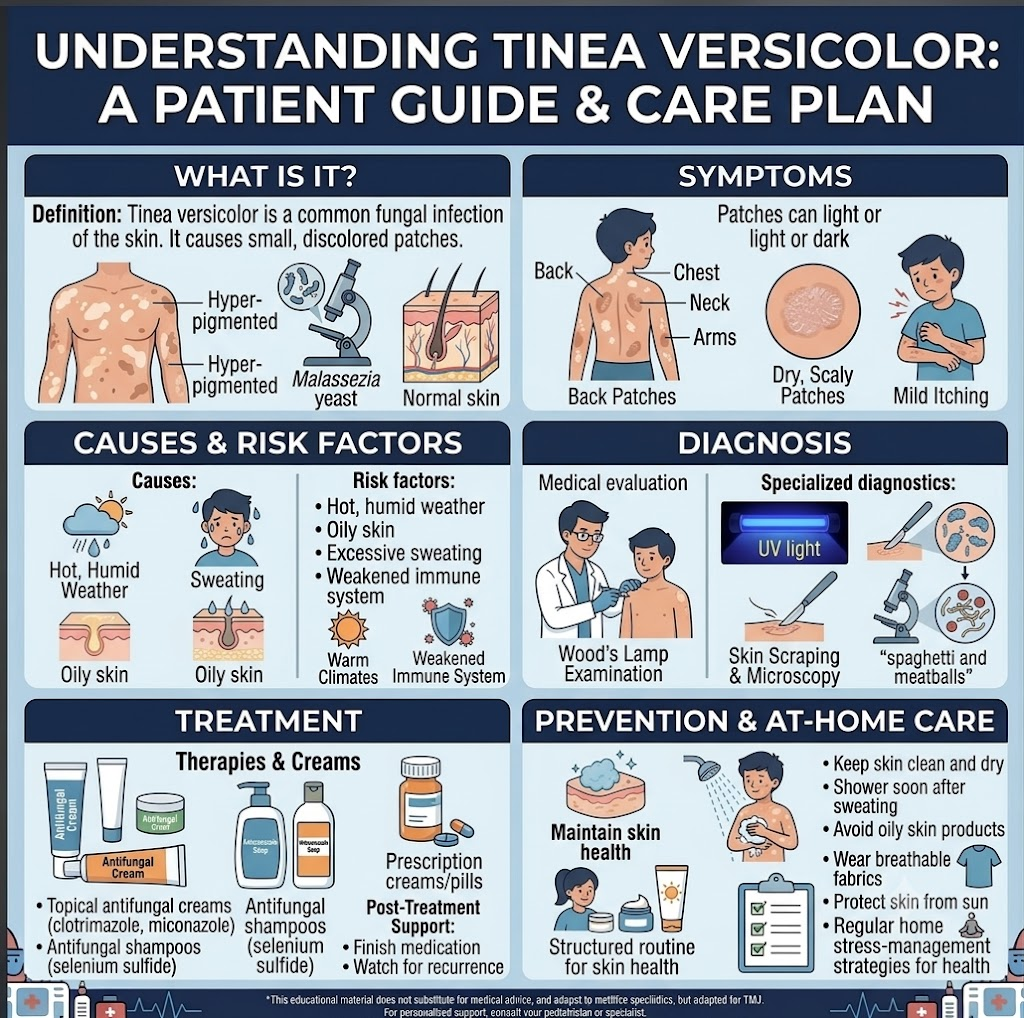
Tinea versicolor (pronounced TIN-ee-uh vur-si-KUL-ur), also known as pityriasis versicolor, is a common and harmless skin condition caused by an overgrowth of a specific type of yeast (a fungus) that normally lives on everyone's skin. This yeast overgrowth interferes with the skin's natural pigment production, leading to noticeable patches of skin that appear lighter or darker than the surrounding healthy skin. These patches commonly occur on the torso and shoulders and are not painful or contagious. It is most frequently observed in teenagers and young adults, and sun exposure can make the discolored areas more apparent because they don't tan like the healthy skin.
Understanding the Condition
Tinea Versicolor: Understanding and Managing a Common Skin Fungus
Understanding the Condition
Common Symptoms
Uneven Skin Color Patches: Areas of skin that are lighter (hypopigmented) or darker (hyperpigmented) than your natural skin tone. These patches often become more noticeable after sun exposure, as the affected areas do not tan. Commonly found on the chest, back, neck, and shoulders, but can appear elsewhere.
Mild Itching: Some individuals may experience a mild itching sensation in the affected areas.
Slightly Flaky or Scaly Skin: The patches may have a fine, powdery, or flaky texture on the surface.
Consultation Guide
Which Specialist to Meet
Before your visit, avoid applying any lotions, creams, or makeup to the affected skin areas, as this can make diagnosis more difficult. Be prepared to discuss when your symptoms started, how they've changed, and any factors that seem to make them better or worse.
Book a doctor visit near me
Consultation Guide
Tinea versicolor (pronounced TIN-ee-uh vur-si-KUL-ur), also known as pityriasis versicolor, is a common and harmless skin condition caused by an overgrowth of a specific type of yeast (a fungus) that normally lives on everyone's skin. This yeast overgrowth interferes with the skin's natural pigment production, leading to noticeable patches of skin that appear lighter or darker than the surrounding healthy skin. These patches commonly occur on the torso and shoulders and are not painful or contagious. It is most frequently observed in teenagers and young adults, and sun exposure can make the discolored areas more apparent because they don't tan like the healthy skin.
A doctor will closely examine your skin. They may use a special light called a Wood's lamp, which emits ultraviolet (UV) light. Under this light, the fungus that causes tinea versicolor often glows a specific yellowish-green color, helping to confirm the diagnosis.
A small sample of skin is gently scraped from the affected area. This sample is then placed on a slide and examined under a microscope to identify the presence of the yeast cells that cause tinea versicolor. This confirms the fungal nature of the condition.
Your doctor will use a sterile scalpel or a blunt edge of a glass slide to gently scrape a very thin layer of skin from one of the affected patches. You might feel a slight scratching sensation, but it's typically painless and does not cause bleeding. The collected skin cells are then prepared for immediate microscopic analysis.
Sun Protection: While sun exposure doesn't cause the condition, it makes the discolored patches more obvious. Use sunscreen on unaffected skin to prevent it from tanning, making the contrast with the lighter patches less stark.
Diagnostic Procedures
A dermatologist, a medical doctor specializing in skin conditions, is the most appropriate specialist to diagnose and treat tinea versicolor.
Preparations Before Your Visit
What to Expect
Your doctor will visually inspect the discolored patches on your skin. If a Wood's lamp is used, the room lights will be dimmed, and the doctor will hold the lamp a few inches from your skin to observe any characteristic glowing. This process is quick and completely painless.
Skin Scraping (Microscopic Examination)
What to Expect
Treatment Options
Topical Medications (Applied to the Skin)
Antifungal Creams, Lotions, or Ointments: These are applied directly to the affected skin to kill the yeast. They contain antifungal agents designed to stop the growth of the fungus. (Duration: Typically applied once or twice daily for several days to a few weeks. Skin color may take several weeks to months to return to normal after the fungus is cleared.)
Antifungal Shampoos or Cleansers: For larger areas or more widespread involvement, special medicated shampoos or body washes can be used on the skin, left on for a few minutes, and then rinsed off. (Duration: Used once daily or a few times a week for one to two weeks, sometimes as a preventative measure. Skin color normalization can still take months.)
Oral Medications (Taken by Mouth)
Antifungal Pills: For more extensive, severe, or recurrent cases, a doctor may prescribe antifungal medication in pill form. These medications work throughout the body to target the yeast. (Duration: Usually taken for a short course, typically ranging from a few days to a few weeks, depending on the specific medication and severity.)
Home Care and Over-the-Counter Options
Daily Cleansing with Antifungal Soaps: Regular washing with specialized soaps containing mild antifungal ingredients can help manage mild cases or prevent recurrence. (Duration: Can be used consistently as part of a daily hygiene routine.)
Prevention & Long-Term Wellbeing
Prevention Strategies
Maintain Good Skin Hygiene: Regular washing of the body, especially after sweating, helps to reduce the build-up of yeast on the skin surface.
Choose Breathable Clothing: Wear loose-fitting, cotton clothing in warm and humid climates to allow air circulation and minimize sweating, which can contribute to yeast overgrowth.
Manage Sweating: Shower promptly after exercise or heavy sweating, and use antiperspirants if excessive sweating is a concern in areas prone to tinea versicolor.
Long-Term Management and Recurrence Prevention
Consistent Antifungal Maintenance: If you are prone to recurrence, especially in warm, humid weather, your doctor may recommend using antifungal shampoos or cleansers on a regular basis (e.g., once or twice a month) to keep the yeast population under control.
Monitor Skin for Changes: Be vigilant for new or returning patches, particularly during periods of increased heat and humidity. Early intervention can help manage the condition before it spreads widely.
Avoid Oily Skin Products: Some oily lotions or sunscreens can create an environment conducive to yeast growth. Opt for non-comedogenic or oil-free products if you are susceptible to tinea versicolor.
Tags & Topics
Notice an error or need an update?
Help us keep medical information accurate. Report incorrect info or suggest an edit.


