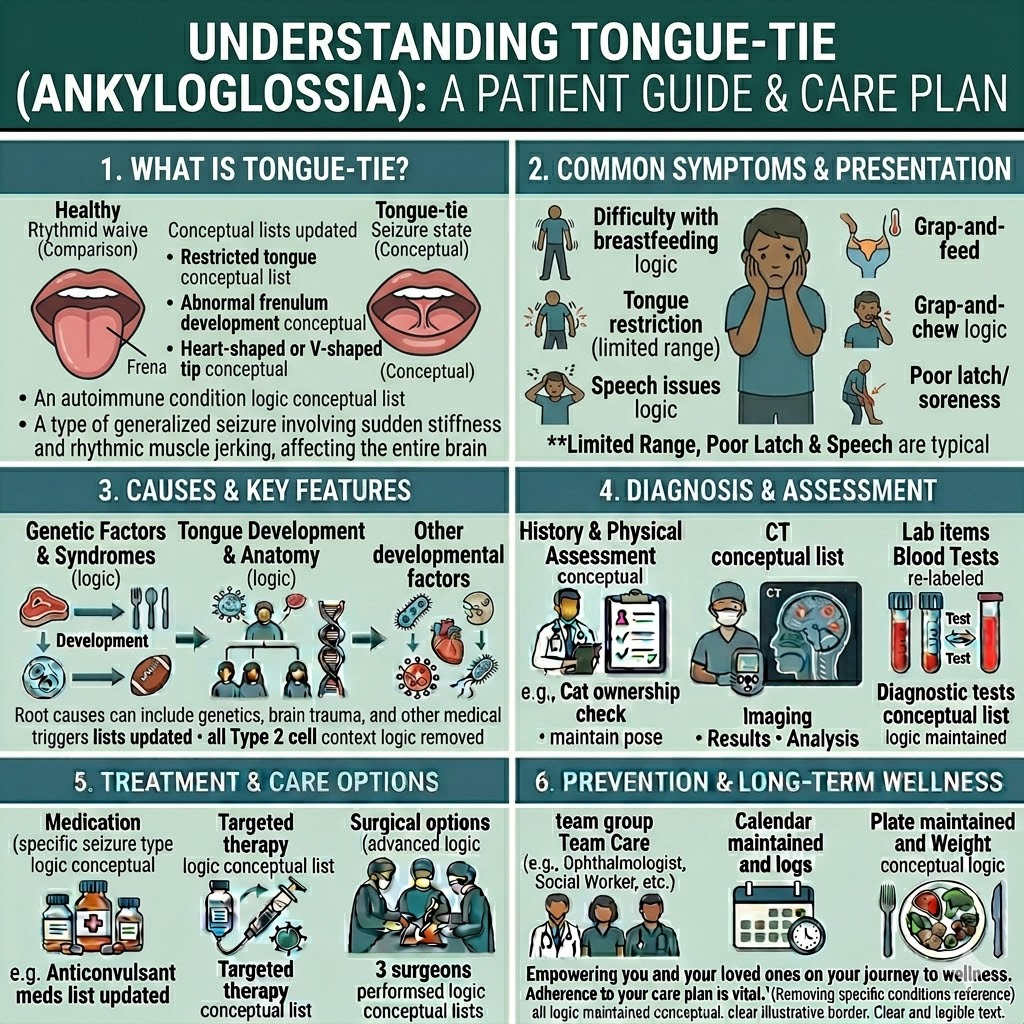
Tongue-tie, medically known as ankyloglossia, is a condition present at birth that limits the tongue's ability to move freely. It occurs when a short, thick, or unusually tight band of tissue, called the lingual frenulum, unusually tethers the tip of the tongue to the floor of the mouth. This restriction can make it difficult to stick out the tongue and may interfere with activities like breastfeeding, eating, or speaking. While some individuals with tongue-tie experience no problems, others may benefit from a simple corrective procedure.
Understanding the Condition
Tongue-Tie (Ankyloglossia): Understanding a Common Condition
Understanding the Condition
Tongue-tie, medically known as ankyloglossia, is a condition present at birth that limits the tongue's ability to move freely. It occurs when a short, thick, or unusually tight band of tissue, called the lingual frenulum, unusually tethers the tip of the tongue to the floor of the mouth. This restriction can make it difficult to stick out the tongue and may interfere with activities like breastfeeding, eating, or speaking. While some individuals with tongue-tie experience no problems, others may benefit from a simple corrective procedure.
Common Symptoms
Restricted Tongue Movement: Difficulty lifting the tongue to reach the upper teeth, moving it from side to side, or extending it past the lower front teeth.
Appearance of the Tongue: The tongue may appear notched or heart-shaped when an attempt is made to stick it out.
Breastfeeding Challenges (in babies): Babies may struggle to latch, feed effectively, causing nipple pain for the mother, prolonged feeding, or poor weight gain for the baby.
Speech Difficulties (in children and adults): Trouble pronouncing certain sounds, especially 't,' 'd,' 'z,' 's,' 'th,' 'n,' and 'l,' which require precise tongue movements.
Eating and Oral Hygiene Issues (in older children and adults): Difficulty clearing food from teeth (risking decay/gum inflammation) and challenges with activities like licking lips or playing wind instruments.
Consultation Guide
Which Specialist to Meet
Consult a pediatrician or lactation consultant for infants. For older individuals, an ENT specialist (otolaryngologist), oral surgeon, or speech-language pathologist may be needed.
Preparations Before Your Visit
List symptoms, including feeding or speech issues. For infants, note feeding patterns and weight gain. Be ready to discuss medical history.
Book a doctor visit near me
The healthcare provider will gently examine the mouth, assessing the lingual frenulum and tongue's range of motion (lifting, extending, side-to-side). For infants, feeding may be observed. For older individuals, they'll perform movements and discuss related symptoms.
Watchful Waiting: If tongue-tie is mild and asymptomatic, watchful waiting with regular check-ups may be advised, as some cases improve naturally. (Duration: Variable; ongoing monitoring as needed)
Early Detection: Cannot be prevented, but early identification via newborn exams and symptom awareness allows timely address of potential feeding, speech, or oral health issues.
Prompt Evaluation: Noticing symptoms (e.g., infant feeding issues, child speech concerns) warrants quick consultation with a healthcare professional for timely assessment.
Long-Term Monitoring and Support
Diagnostic Procedures
Clinical Examination and Assessment
Diagnosis of tongue-tie is primarily made through a thorough physical examination of the mouth and an assessment of the tongue's range of motion and function.
What to Expect
Treatment Options
Observation and Supportive Care
Lactation Consultation: For infants, a lactation consultant offers guidance on feeding positions and techniques to improve milk transfer and reduce nipple pain, potentially avoiding surgery. (Duration: Multiple sessions over several weeks or months)
Speech Therapy: A speech-language pathologist provides exercises and strategies for improved tongue mobility and articulation, suitable for mild cases or post-surgery. (Duration: Weeks to months, depending on individual needs)
Surgical Procedures
Frenotomy (Frenectomy): A quick in-clinic procedure (often without anesthesia for infants, local for older individuals) to snip the tight tissue, allowing immediate freer tongue movement. (Duration: Typically a few minutes for the procedure; full healing usually within days to a couple of weeks.)
Post-Procedure Exercises: Specific tongue exercises post-surgery are often recommended by the surgeon/therapist to prevent reattachment and encourage optimal tongue function.
Ongoing Lactation Support: For infants, continued lactation consultant support after a procedure helps refine feeding techniques and ensures breastfeeding success.
Continued Speech and Oral Motor Therapy: Ongoing therapy may be beneficial for individuals with speech difficulties or oral motor challenges to maximize tongue function and correct habits.
Regular Dental Care: Essential for older children/adults to maintain oral hygiene, monitoring for and addressing issues like food debris or gum inflammation exacerbated by limited tongue movement.
Prevention & Long-Term Wellbeing
Frenuloplasty: A more extensive surgical procedure for thicker frenulums or complex cases, usually performed under general anesthesia and involving stitches. (Duration: Procedure typically 15-30 minutes; full healing and recovery may take several weeks.)
Prevention and Early Intervention
Tags & Topics
Notice an error or need an update?
Help us keep medical information accurate. Report incorrect info or suggest an edit.


