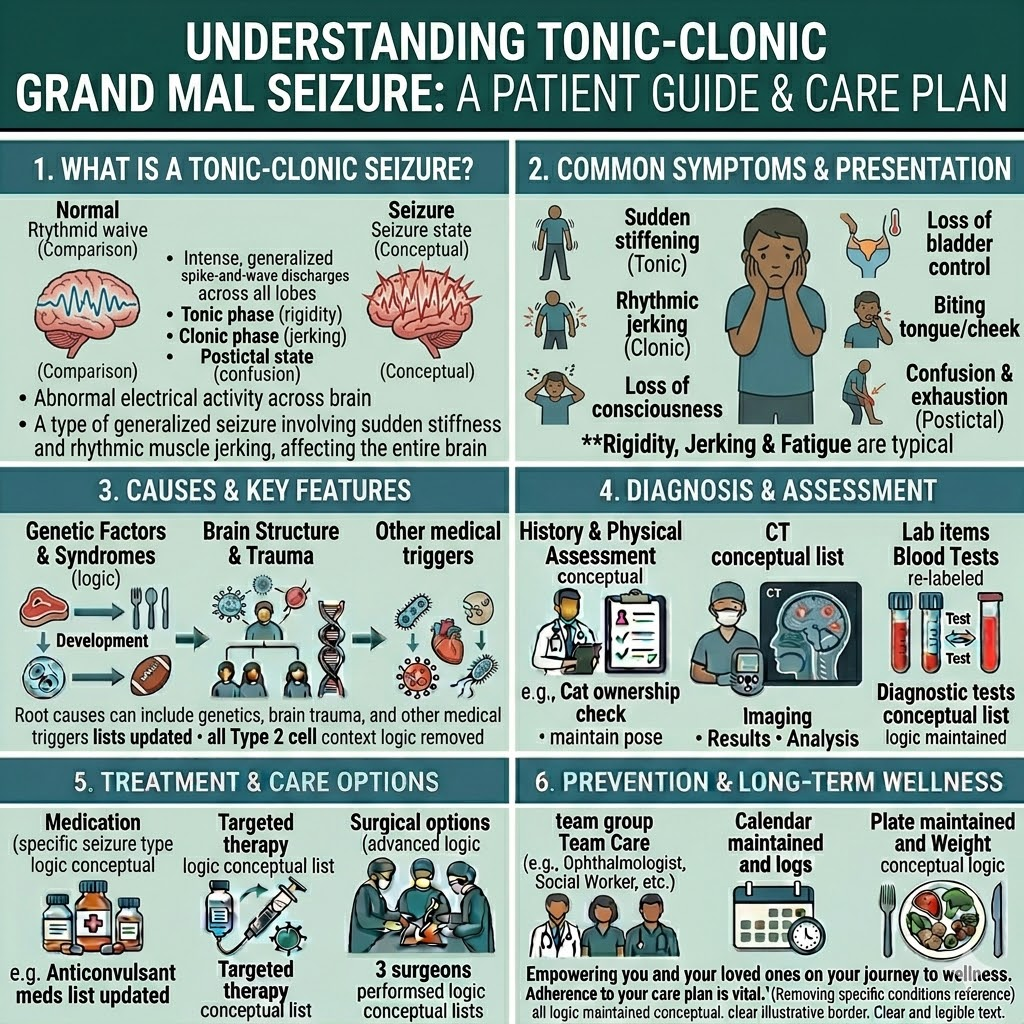
A tonic-clonic seizure, also known as a grand mal seizure, is a type of seizure that causes a temporary loss of consciousness and strong, uncontrolled muscle contractions. It is often what people imagine when they think of a seizure. During a seizure, there is a sudden surge of abnormal electrical activity across a large part or all of the brain. This electrical storm causes changes in a person's behavior and movements. While tonic-clonic seizures typically involve the entire brain, they can sometimes start in a small area and then spread rapidly. Most often, these seizures are a symptom of epilepsy, a condition characterized by recurring seizures. However, they can also be triggered by other health problems like a very high fever, severe head injury, or certain medical conditions. Some individuals may experience only one tonic-clonic seizure and require no further treatment, but those with repeated seizures usually need daily medication to help control and prevent them. Other management options include dietary changes or, in specific cases, surgery.
Understanding the Condition
Tonic-Clonic Seizures: Understanding and Management
Understanding the Condition
A tonic-clonic seizure, also known as a grand mal seizure, is a type of seizure that causes a temporary loss of consciousness and strong, uncontrolled muscle contractions. It is often what people imagine when they think of a seizure. During a seizure, there is a sudden surge of abnormal electrical activity across a large part or all of the brain. This electrical storm causes changes in a person's behavior and movements. While tonic-clonic seizures typically involve the entire brain, they can sometimes start in a small area and then spread rapidly. Most often, these seizures are a symptom of epilepsy, a condition characterized by recurring seizures. However, they can also be triggered by other health problems like a very high fever, severe head injury, or certain medical conditions. Some individuals may experience only one tonic-clonic seizure and require no further treatment, but those with repeated seizures usually need daily medication to help control and prevent them. Other management options include dietary changes or, in specific cases, surgery.
Common Symptoms
Tonic Phase: This phase begins with the body suddenly stiffening. The person may let out a groan or yell as air is forced from their lungs. Consciousness is lost, and the person usually falls to the ground. This phase tends to last about 10 to 20 seconds.
Clonic Phase: Following the tonic phase, the muscles begin to contract and relax rapidly and rhythmically, causing jerking movements in the arms and legs. This is what is commonly referred to as convulsions. Convulsions usually last 1 to 2 minutes or less.
Loss of Bowel and Bladder Control: May happen during or after the seizure.
Unresponsiveness: The person might not fully regain awareness for several minutes after the jerking movements stop.
Confusion: Feeling disoriented or confused immediately after the seizure, often called postictal confusion.
Fatigue: Feeling very sleepy and tired after the seizure.
Headache: A significant headache is common following a tonic-clonic seizure.
Consultation Guide
Which Specialist to Meet
If you suspect you or someone you know has experienced a tonic-clonic seizure, it is important to consult a healthcare professional. You will likely be referred to a neurologist, a doctor who specializes in conditions affecting the brain and nervous system.
Preparations Before Your Visit
To make the most of your appointment, prepare the following: Keep a detailed diary of any seizure-like events, including when they happened, what symptoms occurred, how long they lasted, and what you were doing beforehand. List all medications you are currently taking, including over-the-counter drugs, vitamins, and supplements. Mention any other health conditions you have, and provide information about your family's medical history, especially if there's a history of seizure disorders. Write down any questions you have for the doctor.
Book a doctor visit near me
A neurological exam checks your nervous system (brain, spinal cord, nerves, muscles) function. It helps identify issues causing seizures or other symptoms.
The doctor asks about history and symptoms. Simple tests evaluate mental status, coordination, reflexes, strength, and sensation (e.g., walking, following eyes, knee taps). It can take minutes to over an hour.
Regular Medical Check-ups: Maintain regular follow-up appointments with your neurologist to monitor your condition, adjust medications if necessary, and discuss any new symptoms or concerns.
Diagnostic Procedures
Brain Magnetic Resonance Imaging (MRI)
Brain MRI uses a powerful magnet and radio waves to create detailed images of the brain, neck, and spine, without radiation. It helps identify structural issues, damage, or tumors causing seizures.
What to Expect
You lie on a table that slides into a tube-shaped machine. It makes loud noises, so earplugs are provided. Staying still is crucial. Some may find the enclosed space uncomfortable. It's painless, lasting 30-60 minutes.
Electroencephalogram (EEG)
An EEG measures and records the brain's electrical activity. Brain cells communicate via impulses, which the EEG captures as wavy lines. Abnormal patterns can indicate epilepsy or other seizure conditions.
What to Expect
Small electrodes are attached to your scalp. You'll relax, and might be asked to breathe deeply, look at flashing lights, or try to sleep to trigger activity. It's painless, lasting 30-60 minutes.
Neurological Examination
What to Expect
Treatment Options
Medications
Daily Anti-Seizure Medicines: These medications are the primary treatment for recurrent seizures, working to stabilize brain activity and reduce the likelihood of future tonic-clonic seizures. (Duration: Taken daily, often for extended periods, under the guidance of a healthcare professional.)
Surgical Interventions: In specific cases where seizures originate from a defined area of the brain that can be safely treated, surgery might be an option, particularly if medications are not fully effective. (Duration: A one-time procedure, followed by a recovery period.)
Dietary Management: Certain specialized diets, such as the ketogenic diet, can be considered as a management strategy for some individuals, especially when standard medications are not sufficient. (Duration: Requires ongoing, strict adherence and close medical supervision.)
Adhere to Medication Regimen: Consistently take any prescribed anti-seizure medications exactly as directed by your doctor. Missing doses can increase the risk of a seizure.
Identify and Avoid Triggers: Pay attention to factors that might provoke a seizure for you, such as sleep deprivation, excessive alcohol consumption, or illicit drug use, and actively work to avoid them.
Ensure Safety During Activities: If your seizures are not well-controlled, exercise caution during activities like swimming or bathing. Avoid driving or operating heavy machinery until your doctor confirms it is safe to do so.
Prepare for Pregnancy: If you plan to become pregnant, discuss your condition and medications with a healthcare professional beforehand, as adjustments may be needed to ensure safety for both mother and baby.
Long-Term Monitoring and Support
Address Emotional Health: Seek support for associated emotional health issues like depression or anxiety, which can arise from living with a seizure condition or as a side effect of medication. Children may also benefit from support for conditions like ADHD.
Create a Safe Environment: Consider home modifications, such as padding sharp furniture edges or installing grab bars, to reduce the risk of injury during a seizure. Inform close family, friends, and colleagues about what to do if you have a seizure.
Emergency Preparedness: Carry medical identification that clearly states you have a seizure condition. Educate those around you on seizure first aid, including knowing when to call emergency services (e.g., for seizures lasting longer than 5 minutes, repeated seizures, or significant injury).
Prevention & Long-Term Wellbeing
Lifestyle and Therapies
Prevention and Risk Reduction
Tags & Topics
Notice an error or need an update?
Help us keep medical information accurate. Report incorrect info or suggest an edit.


