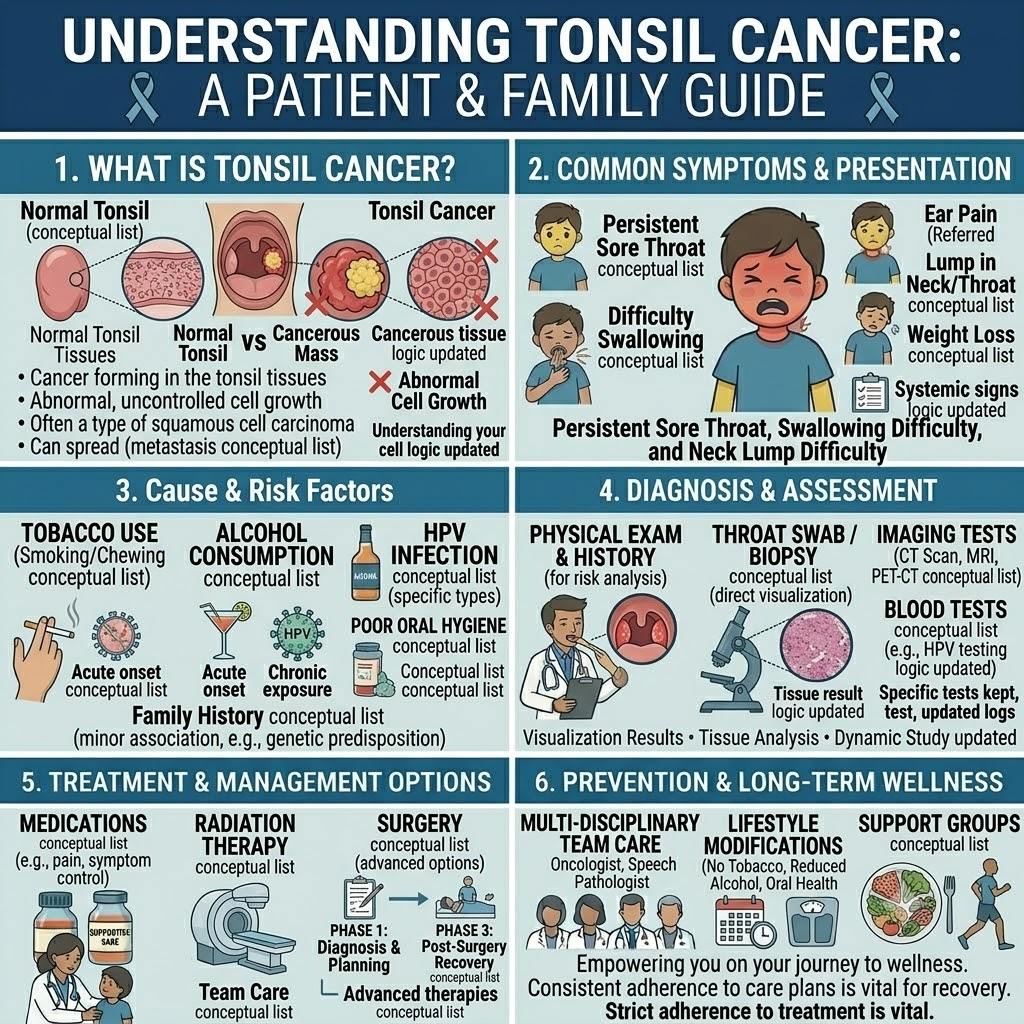
Tonsil cancer is a type of head and neck cancer that begins in the cells of the tonsils, which are two oval-shaped pads of tissue located at the back of the throat. This disease is part of a larger group of cancers called oropharyngeal cancers. While historically linked primarily to heavy tobacco and alcohol use, a significant number of tonsil cancer cases today are associated with the Human Papillomavirus (HPV), a common sexually transmitted infection. When caught early, tonsil cancer is highly treatable, and HPV-positive cases typically have a highly favorable outlook.
Understanding the Condition
Understanding Tonsil Cancer: A Comprehensive and Accessible Guide
Understanding the Condition
Tonsil cancer is a type of head and neck cancer that begins in the cells of the tonsils, which are two oval-shaped pads of tissue located at the back of the throat. This disease is part of a larger group of cancers called oropharyngeal cancers. While historically linked primarily to heavy tobacco and alcohol use, a significant number of tonsil cancer cases today are associated with the Human Papillomavirus (HPV), a common sexually transmitted infection. When caught early, tonsil cancer is highly treatable, and HPV-positive cases typically have a highly favorable outlook.
Common Symptoms
Difficulty Swallowing: Also known as dysphagia, this is a persistent feeling of pain, burning, or a sensation that food is stuck in the throat when trying to swallow.
A Persistent Sore Throat: A sore throat that does not go away with standard remedies or antibiotics, often localized to one side of the throat.
Before your appointment, prepare a comprehensive list of all your symptoms, noting when they began and their severity. Write down your complete medical history, including any history of smoking, alcohol use, or past HPV diagnoses. Bring a complete list of all medications, vitamins, and supplements you currently take. It is also helpful to write down a list of questions regarding diagnostics, potential treatments, and recovery to ensure you cover all concerns during your consultation.
Book a doctor visit near me
Consultation Guide
Unexplained Ear Pain: Pain in one ear (referred pain) that occurs even though there is no infection or issue within the ear itself. This happens because the nerves supplying the throat and ears are connected.
A Lump in the Neck: A painless or tender swelling or lump in the neck, which often indicates that the cancer has spread to the nearby lymph nodes.
Blood in the Saliva: Spitting up blood or noticing blood-tinged saliva without an obvious cause, such as a gum injury.
Consultation Guide
Which Specialist to Meet
You will lie flat on a motorized table that slides into a large, ring-shaped scanner. For certain scans, a special contrast dye will be injected into a vein via an IV line, which can cause a temporary warm, flushing sensation. You must remain completely still during the scan, which can take anywhere from 15 to 45 minutes.
Diagnostic Procedures
To address suspected tonsil cancer, you should see an Otolaryngologist (commonly known as an Ear, Nose, and Throat, or ENT specialist). If a diagnosis is confirmed, your care will be managed by a multidisciplinary oncology team, which includes a Head and Neck Surgical Oncologist, a Radiation Oncologist, and a Medical Oncologist.
Preparations Before Your Visit
Physical and Visual Examination
A preliminary check where a healthcare professional visually inspects your mouth, throat, and neck.
What to Expect
During the exam, the doctor will use a small mirror and a bright light to look at the back of your throat. They will also wear gloves to gently feel (palpate) your neck, throat, and inside your mouth to check for unusual lumps, swelling, or asymmetrical tissue.
Endoscopy (Laryngoscopy)
A detailed internal exam using a specialized tool called an endoscope—a thin, flexible tube equipped with a light and a tiny camera.
What to Expect
A local anesthetic spray is often applied to your nose or the back of your throat to minimize discomfort. The doctor gently passes the flexible tube through your nose or mouth down into your throat. You might feel a mild gagging sensation or pressure, but the procedure is typically painless and takes only a few minutes.
The removal of a small sample of tissue from the suspicious tonsil area to be analyzed in a laboratory for cancer cells and HPV status.
What to Expect
Depending on the location and size of the tumor, this can be performed in the office under local anesthesia or in an operating room under general anesthesia. If local anesthesia is used, the area is numbed, and you will feel a brief pinch or tugging. If general anesthesia is used, you will sleep through the procedure and wake up with a mild to moderate sore throat.
Imaging Scans (CT, MRI, PET)
Advanced scans used to determine the exact size of the tumor and see if the cancer has spread to the lymph nodes or other parts of the body.
What to Expect
Treatment Options
Surgical Procedures
Surgical Resection (TORS and Open Surgery): The surgical removal of the tumor. Surgeons often use Transoral Robotic Surgery (TORS), utilizing robotic tools inserted through the mouth to access the tonsil with high precision, avoiding large external incisions. If the cancer has spread, a neck dissection may be performed to remove affected lymph nodes. (Duration: The surgery itself takes several hours. Hospital recovery typically lasts 1 to 7 days, with complete tissue healing taking 4 to 6 weeks.)
Therapies
Radiation Therapy: The use of high-energy beams, such as X-rays, to target and destroy cancer cells. This is often used as a primary treatment for early-stage cancers or after surgery to eliminate any remaining microscopic cancer cells. (Duration: Radiation is typically administered daily, five days a week, for a total of 6 to 7 weeks.)
Medications
Chemotherapy and Targeted Therapy: The administration of powerful medications systemically to kill rapidly dividing cancer cells or target specific proteins on cancer cells to halt their growth. Chemotherapy is frequently combined with radiation (chemoradiation) to enhance its effectiveness. (Duration: Typically given in cycles over a period of 3 to 7 weeks, depending on the stage of the cancer and individual treatment tolerance.)
Supportive Care and Home Remedies
Swallowing Therapy and Nutritional Support: Working with a speech-language pathologist to perform exercises that preserve swallowing function during and after radiation. Temporary nutritional support, such as a feeding tube (G-tube), may be utilized to maintain hydration and calorie intake. (Duration: Exercises and nutritional monitoring begin before cancer treatment and continue for several months post-treatment until recovery is complete.)
Regular Oncology Follow-ups: Attend scheduled physical and endoscopic examinations every few months in the first few years after treatment to monitor for any signs of recurrence.
Specialized Dental Care: Visit an oncology dentist regularly. Radiation therapy can permanently reduce saliva production, leading to dry mouth and a significantly higher risk of rapid tooth decay. Custom fluoride trays and mouth rinses are essential.
Manage Treatment Side Effects: Stay hydrated, use gentle alcohol-free mouthwashes to manage throat irritation, and practice neck-stretching exercises to prevent tissue stiffness (radiation fibrosis).
Prevention & Long-Term Wellbeing
Prevention
Receive the HPV Vaccine: The HPV vaccine protects against the specific strains of Human Papillomavirus most closely linked to tonsil and other head and neck cancers. It is highly recommended for adolescents and young adults.
Tobacco and Alcohol Cessation: Avoid smoking, vaping, or chewing tobacco products, and strictly limit alcohol consumption. Using both tobacco and alcohol heavily increases the risk of head and neck cancers exponentially.
Long-Term Wellbeing and Monitoring
Tags & Topics
Notice an error or need an update?
Help us keep medical information accurate. Report incorrect info or suggest an edit.


