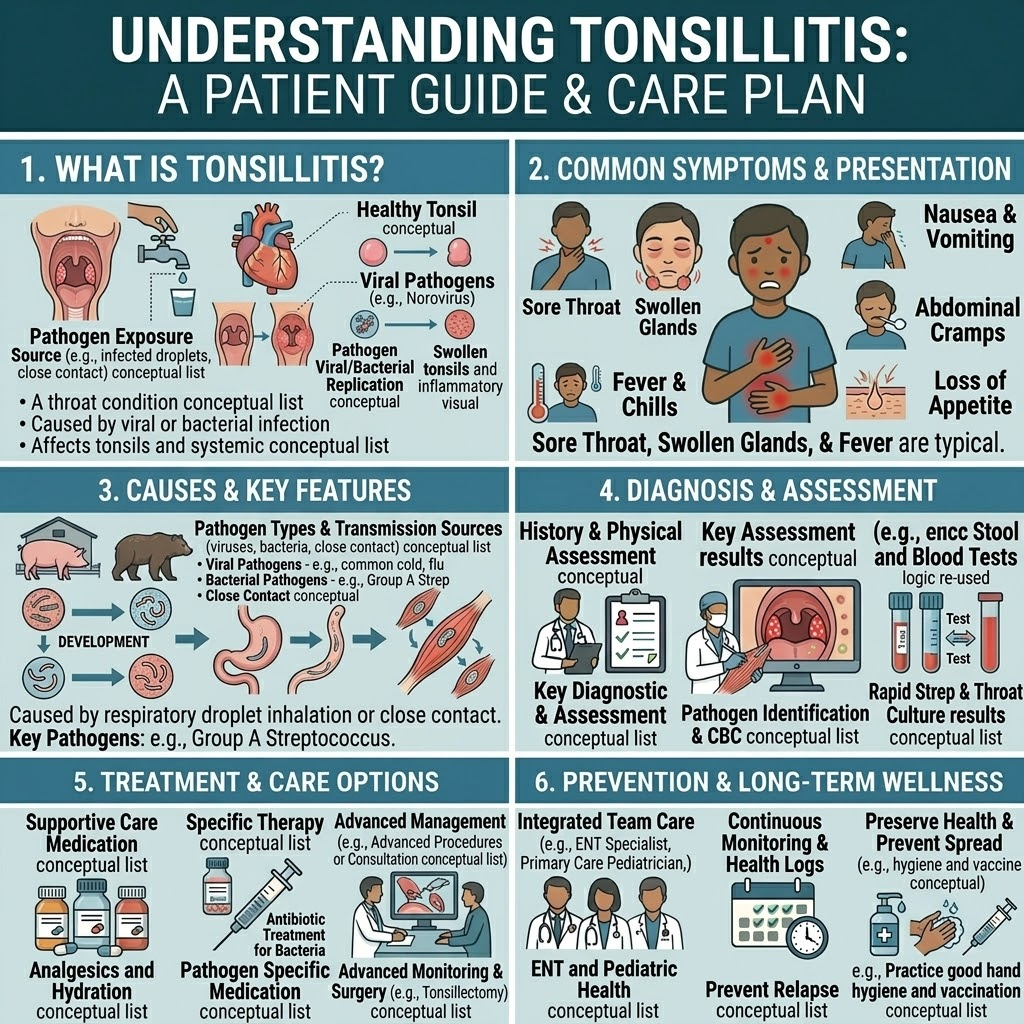
Tonsillitis is when your tonsils, two oval-shaped pads at the back of your throat, become swollen and irritated. These tonsils are part of your immune system, acting as a first line of defense against germs entering through your mouth. Because of this role, they are prone to infection and inflammation. While often caused by common viruses, bacteria can also be responsible. It mainly affects children and teenagers. Quick diagnosis is key as treatment depends on the cause. Surgery to remove tonsils is now typically reserved for cases that happen often, don't respond to other treatments, or cause serious problems.
Understanding the Condition
Tonsillitis: Understanding and Managing Swollen Tonsils
Understanding the Condition
Common Symptoms
Sore Throat: Often severe, making it painful to swallow.
Difficulty Swallowing: Feeling like food or liquid gets stuck.
Red, Swollen Tonsils: Visible inflammation at the back of the throat.
White Patches or Streaks: Pus or white spots on the tonsils.
Fever: Elevated body temperature.
Hoarse or Muffled Voice: Changes in how your voice sounds.
Headache: Pain or throbbing in the head.
Stiff Neck: Discomfort or limited movement in the neck.
Bad Breath: Unpleasant odor from the mouth.
Stomach Ache: Abdominal discomfort, more common in children.
In Young Children: Drooling: Due to painful swallowing.
Before your visit, be prepared to describe all symptoms, including when they started, how severe they are, and anything that seems to make them better or worse. Mention any recent illnesses or exposure to sick individuals. List any current medications and your child's medical history. It's also helpful to write down any questions you have for the doctor.
Book a doctor visit near me
Rest: Get plenty of sleep and rest your voice. (Duration: As long as symptoms persist, typically a few days.)
Warm Saltwater Gargle: Mix 1/4 teaspoon salt in 8 ounces of warm water and gargle. (Duration: Several times a day until symptoms ease.)
Avoid Irritants: Steer clear of cigarette smoke and polluted air. (Duration: Ongoing.)
Antibiotics: Prescribed only if the tonsillitis is caused by a bacterial infection. (Duration: Usually 7 to 10 days; it is crucial to complete the entire course even if symptoms improve earlier.)
Watch for Recurring Symptoms: Be aware of the signs of tonsillitis and seek medical attention if they return.
Consultation Guide
Tonsillitis is when your tonsils, two oval-shaped pads at the back of your throat, become swollen and irritated. These tonsils are part of your immune system, acting as a first line of defense against germs entering through your mouth. Because of this role, they are prone to infection and inflammation. While often caused by common viruses, bacteria can also be responsible. It mainly affects children and teenagers. Quick diagnosis is key as treatment depends on the cause. Surgery to remove tonsils is now typically reserved for cases that happen often, don't respond to other treatments, or cause serious problems.
In Young Children: Refusing to Eat: Avoiding food because of discomfort.
In Young Children: Unusual Fussiness: General irritability or discomfort.
Consultation Guide
Which Specialist to Meet
You should typically start by seeing your primary care doctor, or a pediatrician for a child. If tonsillitis is a recurring issue or severe, they may refer you to an ear, nose, and throat specialist (otolaryngologist).
Preparations Before Your Visit
A healthcare professional will gently rub a sterile swab over the back of your throat and tonsils. This might feel a bit scratchy or cause a brief gagging sensation. The sample is then quickly tested in the clinic or sent to a lab for more detailed analysis.
Complete Blood Count (CBC)
Tonsillectomy (Tonsil Removal Surgery): This surgical procedure removes the tonsils. It is generally recommended when tonsillitis occurs very frequently (e.g., several times a year), does not respond to other treatments, or causes serious complications like breathing problems during sleep (sleep apnea) or difficulty swallowing. (Duration: Recovery typically takes 10 to 14 days.)
Diagnostic Procedures
The doctor will examine your throat, ears, and nose and feel your neck to check for swollen glands. They will look for redness, swelling, and any white spots on the tonsils.
What to Expect
The doctor will use a small light to look inside your mouth and throat, possibly asking you to open wide and say "Ah." They may gently press on your neck to check for tenderness or swollen lymph nodes. This is a quick and generally painless part of the exam.
Throat Swab (Rapid Strep Test or Throat Culture)
This test helps determine if a bacterial infection, like strep throat, is causing the tonsillitis. A sterile cotton swab is used to collect a sample from the back of the throat.
What to Expect
A blood test that measures various components of your blood, including red and white blood cells. It can help the doctor understand your overall health and identify signs of infection, giving clues as to whether it's viral or bacterial.
What to Expect
A healthcare professional will draw a small amount of blood, usually from a vein in your arm, using a needle. You might feel a brief pinch or sting. The blood is collected in a tube and sent to a lab for examination. This is a common and quick procedure.
Treatment Options
Medications
Pain Relievers/Fever Reducers: Over-the-counter options can help manage pain and fever. (Duration: As needed, typically for a few days to a week.)
Follow Doctor's Advice: Adhere to all post-treatment instructions and attend follow-up appointments as recommended.
Prevention & Long-Term Wellbeing
Drink Plenty of Fluids: Stay hydrated with water, warm tea, or broth. (Duration: Continuously until recovery.)
Humidifier: Use a cool-mist humidifier to moisten the air. (Duration: As needed to soothe the throat.)
Throat Lozenges/Hard Candies: For older children and adults to soothe a sore throat. (Duration: As needed for comfort.)
Prevention
Good Hand Hygiene: Wash hands thoroughly and frequently, especially after coughing, sneezing, before eating, and after using the restroom.
Avoid Sharing: Do not share food, drinks, or eating utensils with others.
Isolate Infected Individuals: Keep a sick person away from others as much as possible to prevent spread.
Cover Coughs and Sneezes: Use a tissue or the inside of your elbow to cover your mouth and nose.
Long-Term Monitoring
Maintain Healthy Habits: Support your immune system with a balanced diet, regular exercise, and adequate sleep.
Tags & Topics
Notice an error or need an update?
Help us keep medical information accurate. Report incorrect info or suggest an edit.


