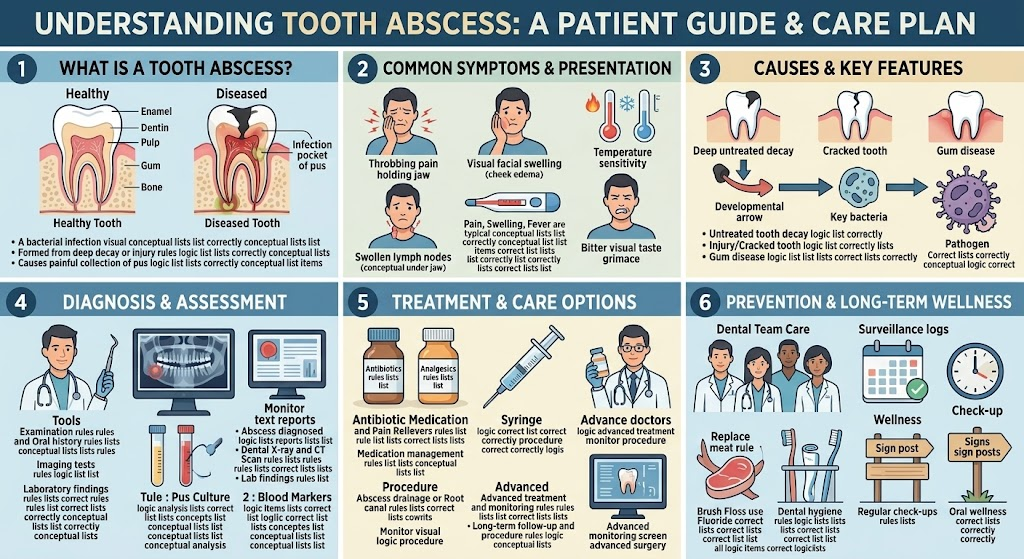
A tooth abscess is a collection of pus caused by a bacterial infection. Specifically, a periapical abscess forms at the tip of a tooth's root. This usually happens as a result of an untreated deep cavity, a tooth injury, or complications from prior dental work. Bacteria can invade the innermost part of the tooth (the pulp), leading to infection and inflammation, which then creates this painful pus pocket. It's crucial to seek prompt dental care for a tooth abscess, as untreated cases can lead to serious and potentially life-threatening health complications, including the spread of infection to other parts of the body.
Understanding the Condition
Tooth Abscess: Causes, Symptoms, and Treatment
Understanding the Condition
Common Symptoms
Severe, Persistent Toothache: Often described as throbbing pain that can spread to the jawbone, ear, or neck.
Sensitivity to Hot and Cold: Pain or discomfort when consuming hot or cold foods and drinks.
Sensitivity to Pressure: Pain when chewing or biting down.
Swelling in the Face or Cheek: Noticeable swelling that can affect one side of the face.
Swollen, Tender Gums: Red and inflamed gums, especially near the affected tooth.
Fever: An elevated body temperature, indicating a systemic infection.
Persistent Bad Breath or Foul Taste: A continuous unpleasant odor or taste in the mouth, often due to pus drainage.
Swollen Lymph Nodes: Tender, swollen glands under your jaw or in your neck.
Consultation Guide
Which Specialist to Meet
You should promptly see a general dentist if you experience any signs or symptoms of a tooth abscess. In some cases, your dentist may refer you to an endodontist, a specialist in treating diseases of the tooth pulp and roots.
Preparations Before Your Visit
If you suspect a tooth abscess, contact your dentist immediately for an appointment. Before your visit, be prepared to describe your symptoms, including when they started, their severity, and any factors that make them better or worse. If you develop a fever, facial swelling, difficulty breathing, or trouble swallowing, and cannot reach your dentist, go to an emergency room right away, as these symptoms may indicate a rapidly spreading infection.
Book a doctor visit near me
Consultation Guide
A tooth abscess is a collection of pus caused by a bacterial infection. Specifically, a periapical abscess forms at the tip of a tooth's root. This usually happens as a result of an untreated deep cavity, a tooth injury, or complications from prior dental work. Bacteria can invade the innermost part of the tooth (the pulp), leading to infection and inflammation, which then creates this painful pus pocket. It's crucial to seek prompt dental care for a tooth abscess, as untreated cases can lead to serious and potentially life-threatening health complications, including the spread of infection to other parts of the body.
For a CT scan, you will lie on a motorized table that slides into a large, doughnut-shaped machine called a gantry. You will need to lie still during the scan. The table will move slowly through the gantry as the scanner rotates around you, taking numerous images. You might hear whirring or clicking noises during this process. In some cases, a contrast material might be administered orally or through an intravenous (IV) line to enhance the visibility of certain structures; this may cause a temporary warm sensation or a metallic taste. The entire procedure typically takes 15 to 30 minutes and is usually painless.
Abscess Drainage: The dentist makes a small incision in the abscess to drain the pus. This provides immediate relief from pain and reduces swelling caused by pressure from the infection. (Duration: Typically completed within a single dental visit, lasting approximately 15-30 minutes.)
Diagnostic Procedures
An X-ray is a quick, painless imaging test that uses small amounts of radiation to capture images of the structures inside your mouth, particularly your teeth and jawbones. It allows the dentist to identify the precise location of the abscess, assess the extent of the infection, and check for any damage to the surrounding bone.
What to Expect
During a dental X-ray, you will sit in a dental chair. The dental technician will place a small sensor or film holder inside your mouth, against your teeth, and position an X-ray machine next to your cheek. You will be asked to hold still briefly while the X-ray is taken. You might wear a lead apron for protection. The process is very quick, usually taking only a few minutes to capture all necessary images, and is generally painless.
CT Scan (Computerized Tomography Scan)
A CT scan uses specialized X-ray equipment and computer processing to create detailed cross-sectional images, or 'slices,' of the body. In the context of a tooth abscess, it provides more comprehensive views than a standard X-ray, helping to identify if the infection has spread deeper into the jawbone, sinuses, or other areas of the head and neck. It's often used when the infection is widespread or severe.
What to Expect
Treatment Options
Medications
Antibiotics: If the infection has spread beyond the abscessed area or if your immune system is compromised, your dentist may prescribe antibiotics. These medications help to kill the bacteria causing the infection. (Duration: Typically taken for 7 to 10 days, or as prescribed by your dentist, to ensure complete eradication of the infection.)
Pain Relievers: Over-the-counter pain medications can help manage discomfort before and after treatment. Your dentist may also prescribe stronger pain relievers if necessary. (Duration: Taken as needed for pain relief, typically for a few days following initial treatment.)
Root Canal Treatment: This procedure is performed to save the infected tooth. The dentist drills a small hole into the tooth's crown, removes the infected pulp (nerve, blood vessels, and tissue) from inside the tooth and its roots, cleans and shapes the root canals, and then fills them. The tooth is later sealed with a permanent filling or a crown. (Duration: Usually requires one to two dental visits, each lasting approximately 30 to 90 minutes. Placement of the final crown may require an additional visit.)
Tooth Extraction (Pulling the Tooth): If the infected tooth is severely damaged and cannot be saved with a root canal or other treatments, the dentist may need to extract it. This removes the source of the infection entirely. (Duration: A single dental visit, typically lasting 20 to 60 minutes, depending on the complexity of the extraction.)
Regular Dental Check-ups: Visit your dentist for routine check-ups and professional cleanings at least once or twice a year. This allows for early detection and treatment of cavities and other dental issues before they become severe.
Limit Sugary Foods and Drinks: Reduce your intake of sugary snacks and beverages, as sugar contributes to tooth decay and cavity formation.
Protect Your Teeth: Wear a mouthguard during sports or if you grind your teeth at night to prevent dental injuries like chips or cracks that can expose the tooth pulp to bacteria.
Address Dental Injuries Promptly: If you experience a chipped, cracked, or loose tooth, see your dentist as soon as possible to prevent potential infection.
Follow Post-Treatment Instructions: Adhere strictly to your dentist's instructions after any procedure, including taking antibiotics as prescribed and proper care of the treated tooth.
Attend Follow-up Appointments: Schedule and attend all recommended follow-up appointments to ensure the infection has cleared and the tooth is healing properly.
Prevention & Long-Term Wellbeing
Prevention
Maintain Good Oral Hygiene: Brush your teeth twice a day with fluoride toothpaste and floss daily to remove food particles and plaque, which can lead to cavities and gum disease.
Tags & Topics
Notice an error or need an update?
Help us keep medical information accurate. Report incorrect info or suggest an edit.


