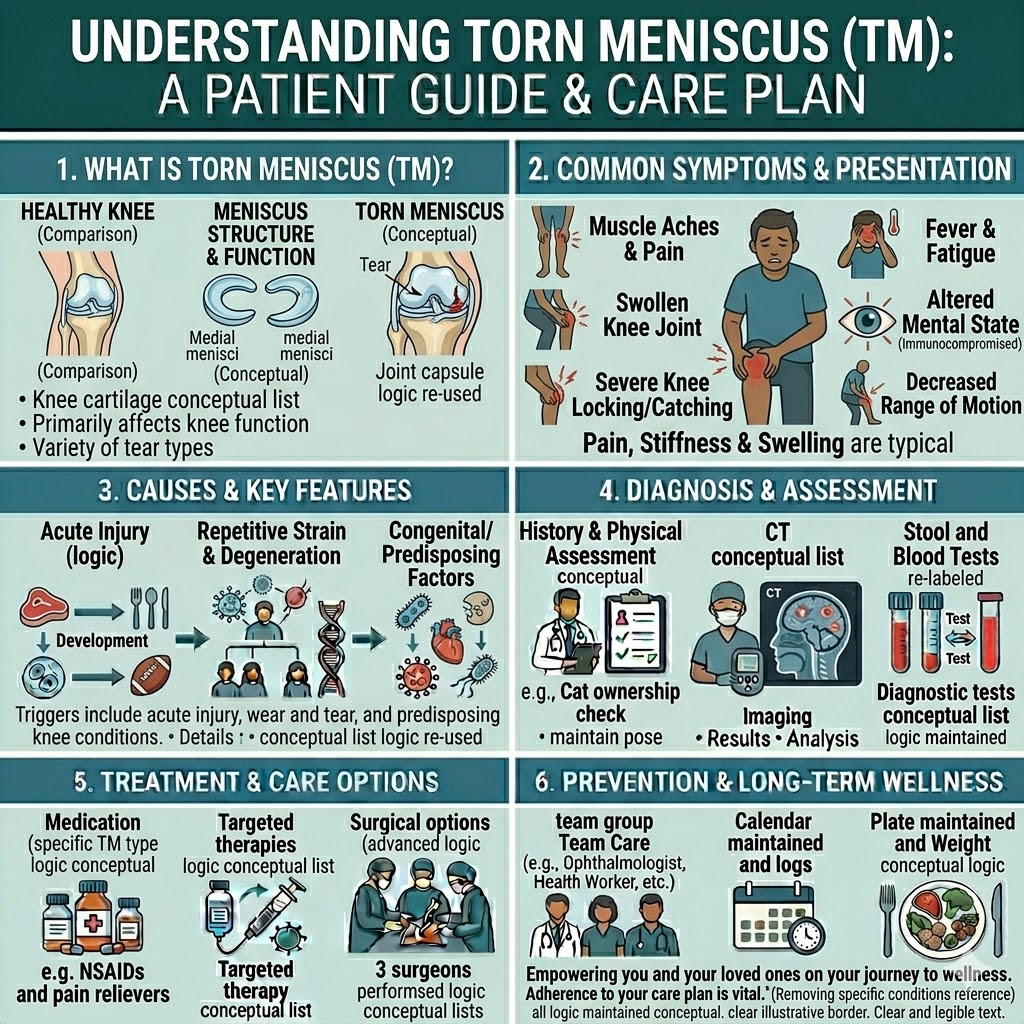
A torn meniscus is a common knee injury affecting the cartilage that cushions your knee joint. The meniscus is a C-shaped piece of tough, rubbery cartilage located between your thigh bone and shin bone, acting as a natural shock absorber. A tear often occurs from activities that involve forcefully twisting or rotating your knee, especially while bearing your full weight on it. This injury typically causes pain, swelling, and can make it difficult to move your knee normally.
Understanding the Condition
Torn Meniscus: Understanding Your Knee Injury
Understanding the Condition
Common Symptoms
Pain: Aches or sharp pain in the knee, particularly when twisting, squatting, or putting weight on it.
Swelling: Noticeable fluid buildup and inflammation around the knee joint.
Stiffness: Difficulty in bending or straightening the knee fully, making movement feel restricted.
Blocked Knee Motion: A sensation that your knee is catching, clicking, popping, or even locking in a certain position, preventing smooth movement.
Trouble Extending Knee Fully: Inability to completely straighten your leg, which can be a sign of a significant tear or a piece of meniscus blocking the joint.
Consultation Guide
Which Specialist to Meet
Before your appointment, gather your medical history, including any previous knee injuries. Write down a detailed list of your symptoms, noting when they started, what activities make them worse or better, and any over-the-counter remedies you've tried. Be ready to discuss your typical activity level and any concerns you have. Wear loose, comfortable clothing that allows for easy examination of your knee.
Book a doctor visit near me
Rest, Ice, Compression, and Elevation (RICE): This involves resting the injured knee to avoid further damage, applying ice packs to reduce swelling and pain, using a compression bandage to prevent fluid buildup, and elevating the leg above heart level. This approach allows the initial inflammation to subside and encourages natural healing. (Duration: Typically initiated for the first few days to weeks after injury, followed by a gradual return to activity over several weeks, guided by symptom improvement.)
Pain and Anti-inflammatory Medication: Over-the-counter or prescription medications are used to alleviate pain and reduce inflammation in the knee. These help manage discomfort and allow you to participate in rehabilitation exercises more effectively. (Duration: Used as needed for symptom relief, usually for a few days to a few weeks, or as directed by a healthcare professional.)
Arthroscopic Partial Meniscectomy (Meniscus Removal): If the tear is in an area with poor blood supply or is too complex to repair, the surgeon will remove only the damaged or torn portion of the meniscus using small instruments via tiny incisions. This procedure aims to relieve symptoms but reduces some of the knee's natural shock-absorbing capability. (Duration: The surgery itself typically takes 30-60 minutes. Recovery and rehabilitation are generally shorter than for a repair, usually taking 4-8 weeks.)
Regular Check-ups: Follow up with your healthcare provider as recommended to monitor your knee health, address any lingering symptoms, and ensure long-term stability and function.
Consultation Guide
A torn meniscus is a common knee injury affecting the cartilage that cushions your knee joint. The meniscus is a C-shaped piece of tough, rubbery cartilage located between your thigh bone and shin bone, acting as a natural shock absorber. A tear often occurs from activities that involve forcefully twisting or rotating your knee, especially while bearing your full weight on it. This injury typically causes pain, swelling, and can make it difficult to move your knee normally.
An X-ray is a quick, painless imaging test that uses small amounts of radiation to create images of the bones inside your body. While X-rays cannot show a meniscus tear directly (as the meniscus is cartilage, not bone), they are crucial for ruling out other potential causes of knee pain, such as bone fractures or arthritis.
Diagnostic Procedures
For a torn meniscus, it's advisable to consult an orthopedic surgeon (a doctor specializing in bone and joint conditions), a sports medicine doctor, or a physical therapist. These experts can accurately diagnose your condition and guide you to the most effective treatment plan.
Preparations Before Your Visit
What to Expect
You will be asked to lie on an examination table or stand in front of an X-ray machine. The technician will position your knee and may ask you to hold still for a few seconds while the images are captured. You might be asked to change positions to get different views of your knee. The entire process is very brief and typically takes only a few minutes, with no discomfort during the X-ray itself.
An ultrasound, or sonography, uses high-frequency sound waves to generate real-time images of soft tissues within your body, including muscles, tendons, and ligaments. It can help identify fluid accumulation within the knee joint or assess some soft tissue injuries. However, its effectiveness in directly visualizing a meniscus tear can be limited compared to other imaging methods, as sound waves do not travel well through bone or air.
What to Expect
You will lie comfortably on an examination table. A clear, water-based gel will be applied to the skin around your knee. A small, handheld device called a transducer will then be gently moved over the gel-covered area. This device transmits and receives sound waves, creating images displayed on a monitor. The technician may apply slight pressure or ask you to move your leg to get various views. The procedure is generally painless and takes approximately 15-30 minutes.
Diagnostic Arthroscopy
Arthroscopy is a minimally invasive surgical procedure where a surgeon inserts a narrow tube with a fiber-optic camera (arthroscope) through a small incision, roughly the size of a buttonhole, into your knee joint. This allows the surgeon to get a direct, magnified view of the inside of your knee on a high-definition video monitor. It is typically used for diagnosis when less invasive imaging tests haven't provided clear answers, and it often allows for immediate treatment if a tear is identified.
What to Expect
This is usually an outpatient procedure, meaning you can often go home the same day. You will receive anesthesia (either general, making you sleep, or regional, numbing only your leg). A small incision will be made in your knee, and the arthroscope will be carefully inserted. The joint may be filled with a sterile fluid to improve visibility. The surgeon will then thoroughly examine the internal structures of your knee. If a tear is found, they may proceed with repair or removal during the same session. Afterward, the scope is removed, the incision is closed with stitches or sterile strips, and a dressing is applied.
Treatment Options
Conservative Management
Physical Therapy and Rehabilitation Exercises: A tailored program of exercises designed to strengthen the muscles surrounding the knee (quadriceps, hamstrings, calves), improve knee flexibility, and restore its full range of motion and stability. This is a critical component of recovery, whether or not surgery is performed. (Duration: Several weeks to several months, depending on the severity of the tear, the type of treatment (conservative or surgical), and individual progress.)
Surgical Procedures
Arthroscopic Meniscus Repair: For tears located in areas with a good blood supply, a surgeon may use small instruments inserted through tiny arthroscopic incisions to stitch the torn pieces of the meniscus back together. The goal is to preserve the meniscus and its cushioning function. (Duration: The surgery itself typically takes 30-90 minutes. Post-operative recovery and rehabilitation can take 3-6 months, including a period of limited weight-bearing.)
Adhere to Rehabilitation Plans: If prescribed physical therapy or recovering from surgery, diligently follow all recommended exercises and instructions. Consistent effort is vital for optimal healing, strength recovery, and preventing re-injury.
Gradual Return to Activity: Do not rush back into intense physical activity after an injury or surgery. Gradually increase the intensity, duration, and type of activity, following the guidance of your physical therapist or doctor.
Maintain a Healthy Weight: Excess body weight places significant additional stress on your knee joints, increasing the risk of further meniscal damage, arthritis, and other knee problems.
Prevention & Long-Term Wellbeing
Prevention
Strengthen Leg Muscles: Regularly perform exercises that build strength in your quadriceps, hamstrings, and glutes. Strong leg muscles provide better support and stability for your knee joint, helping to protect the meniscus.
Proper Warm-up and Stretching: Always engage in a thorough warm-up routine and gentle stretches before any physical activity, especially sports. This prepares your muscles and joints for movement and reduces injury risk.
Use Proper Technique: Learn and consistently apply correct body mechanics for sports and everyday movements. Be particularly mindful when pivoting, deep squatting, or lifting heavy objects to avoid placing excessive stress on your knees.
Wear Appropriate Footwear: Choose shoes that fit well, provide adequate support, and offer good cushioning for your specific activities. Replace athletic shoes regularly when they show signs of wear and tear.
Listen to Your Body: Avoid pushing through knee pain. If you experience discomfort or warning signs in your knee, rest immediately and assess the situation before continuing any activity.
Long-Term Wellbeing
Tags & Topics
Notice an error or need an update?
Help us keep medical information accurate. Report incorrect info or suggest an edit.


