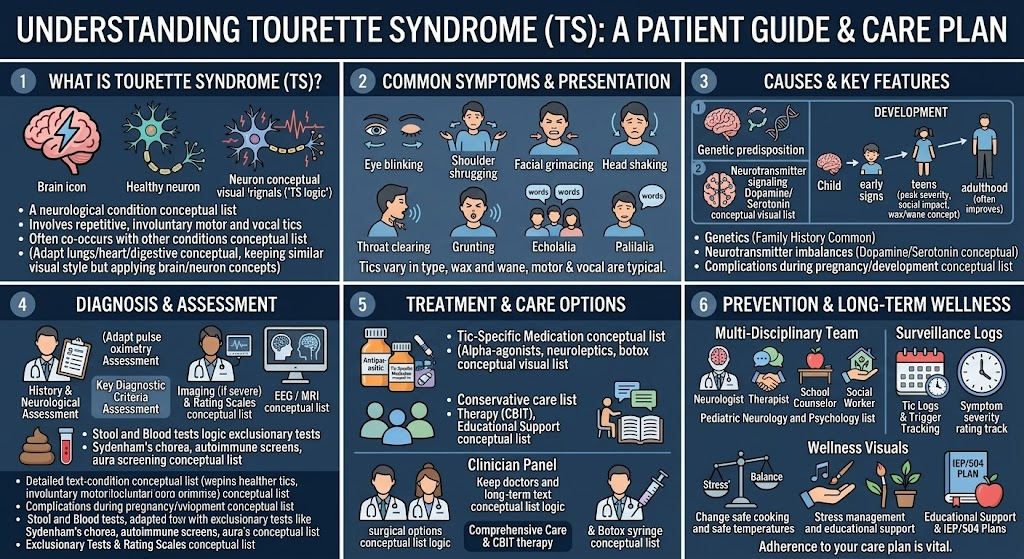
Tourette syndrome is a brain condition that causes people to make sudden, repetitive movements or sounds called tics, which are difficult to control. These can include blinking, shrugging, making unusual noises, or blurting out words. Tics usually appear between ages 2 and 15, most commonly around age 6. Males are more frequently affected than females. Although there is no cure, many individuals successfully manage their symptoms with treatment, and tics often lessen or become more manageable after the teenage years.
Understanding the Condition
Tourette Syndrome: Understanding and Managing Tics
Understanding the Condition
Tourette syndrome is a brain condition that causes people to make sudden, repetitive movements or sounds called tics, which are difficult to control. These can include blinking, shrugging, making unusual noises, or blurting out words. Tics usually appear between ages 2 and 15, most commonly around age 6. Males are more frequently affected than females. Although there is no cure, many individuals successfully manage their symptoms with treatment, and tics often lessen or become more manageable after the teenage years.
Common Symptoms
Tics (Movements and Sounds): Tics are the main sign of Tourette syndrome – sudden, brief, and uncontrollable movements or sounds. They vary from mild to severe, sometimes significantly impacting daily life, communication, and overall quality of life. Tics can be categorized as:- **Simple Tics:** Quick, repetitive movements or sounds involving a limited number of muscles, such as eye blinking, head jerking, throat clearing, or sniffing.- **Complex Tics:** More distinct, coordinated patterns of movement or sounds involving several muscle groups, like touching objects, jumping, repeating words or phrases (echolalia), or, in some cases, blurting out offensive words.- **Motor Tics:** Involve movement (e.g., blinking, shrugging). These typically begin before vocal tics.- **Vocal Tics:** Involve sounds (e.g., grunting, shouting, repeating words).Tics can vary greatly in type, frequency, and severity. They may worsen if a person is ill, stressed, anxious, tired, or excited, and can even occur during sleep. Tics often change over time, sometimes intensifying during early teenage years before improving as one transitions into adulthood.
Consultation Guide
Which Specialist to Meet
Before your appointment, prepare detailed notes about the specific tics you or your child experience, including their onset, frequency, and any factors that seem to worsen or improve them. List any other symptoms or challenges. Gather information on your family's medical history, particularly concerning tic disorders or other neurological conditions. Prepare a list of questions to ask your doctor.
Book a doctor visit near me
There is no single medical test to confirm Tourette syndrome. Diagnosis is made by a healthcare professional based on a thorough review of your symptoms and medical history. The doctor will look for a pattern of both motor and vocal tics that have been present for at least a year, without another identifiable medical cause. The diagnostic process aims to rule out other conditions that might present with similar symptoms.
During the visit, the doctor will ask detailed questions about the tics, including when they began, how long they last, how often they occur, and what, if anything, makes them better or worse. They will also inquire about any associated conditions like ADHD, anxiety, or learning difficulties. A physical and neurological examination may be performed to assess overall health and nervous system function. In some cases, brain imaging (like an MRI) or blood tests may be conducted, not to diagnose Tourette's directly, but to exclude other conditions that could mimic its symptoms.
Cognitive Behavioral Therapy (CBT): This type of talk therapy helps individuals understand and change thought patterns and behaviors that contribute to their symptoms. For tics, a specific form called Habit Reversal Training teaches strategies to recognize and manage the urge to tic, and to develop competing responses. CBT also helps manage stress, anxiety, and other conditions often associated with Tourette syndrome. (Duration: Typically involves a structured series of sessions, often lasting several weeks to a few months, with ongoing practice at home.)
Psychotherapy (Talk Therapy): A broader approach where you discuss your issues, emotions, and behaviors with a mental health professional. It helps develop healthy coping skills, improve self-image, and manage conditions like anxiety or anger often linked with Tourette syndrome. (Duration: Can vary significantly from short-term (a few sessions) to long-term (several months or more), depending on individual needs.)
Symptom-Reducing Medications: While there's no medication to cure Tourette syndrome, certain medicines can help reduce the severity of tics and manage associated conditions like ADHD, anxiety, or obsessive-compulsive disorder (OCD). These medications work by affecting brain chemicals and are prescribed when tics significantly interfere with daily life. (Duration: Varies widely; some medications may be taken long-term under medical supervision, with dosages adjusted as needed.)
Botulinum Toxin Injections: These injections contain a purified protein that temporarily weakens or paralyzes specific muscles. For Tourette syndrome, they can be used to treat severe, focal tics (tics affecting a specific, limited area) by relaxing the involved muscles, thereby reducing their movement. (Duration: The effects typically last for three to four months, requiring repeat injections for continued benefit.)
Lifestyle Management: While not cures, strategies like managing stress, ensuring adequate sleep, avoiding known triggers, and engaging in regular physical activity can help some individuals reduce tic frequency and severity. Creating a supportive environment at home and school is also crucial. (Duration: Ongoing, lifelong strategies for managing symptoms and improving quality of life.)
Consultation Guide
Pain Management: In some cases, frequent tics can cause physical discomfort or pain, such as headaches from repetitive head movements. Working with a healthcare provider to manage this pain is important for comfort and quality of life.
Education and Advocacy: Educating family, friends, teachers, and colleagues about Tourette syndrome can promote understanding and create a more supportive environment, reducing stigma and promoting acceptance. Advocating for accommodations at school or work, if necessary, can also be helpful.
Diagnostic Procedures
To diagnose and manage Tourette syndrome, you might consult a primary care physician, a neurologist (a doctor specializing in brain and nervous system disorders), a psychiatrist (a medical doctor specializing in mental health), or a psychologist or therapist.
Preparations Before Your Visit
What to Expect
Treatment Options
Therapies
Medications
Deep Brain Stimulation (DBS): A surgical procedure where small electrodes are implanted into specific brain regions. These electrodes deliver controlled electrical impulses, regulated by a device placed under the skin in the chest, to modify brain activity and reduce severe, debilitating tics that have not responded to other treatments. It is generally reserved for the most challenging cases. (Duration: Once implanted, the device provides continuous stimulation and can be adjusted over time as a long-term treatment.)
Home Remedies/Self-Care
Managing Associated Conditions: Many individuals with Tourette syndrome also experience conditions like attention-deficit/hyperactivity disorder (ADHD), obsessive-compulsive disorder (OCD), anxiety, or learning disabilities. Addressing these co-occurring conditions with appropriate therapies and, if needed, medication, is vital for overall well-being.
Emotional and Social Support: Tourette syndrome can sometimes lead to social challenges and impact self-image. Seeking support from family, friends, support groups, or mental health professionals can help navigate these difficulties and foster a positive self-perception. Learning strategies for managing anger or frustration related to tics is also beneficial.
Stress and Fatigue Management: Tics often worsen with stress, anxiety, excitement, or fatigue. Developing healthy coping mechanisms for stress, ensuring sufficient rest, and identifying and avoiding personal triggers can help minimize tic severity.
Prevention & Long-Term Wellbeing
Long-Term Management and Support
Tags & Topics
Notice an error or need an update?
Help us keep medical information accurate. Report incorrect info or suggest an edit.


