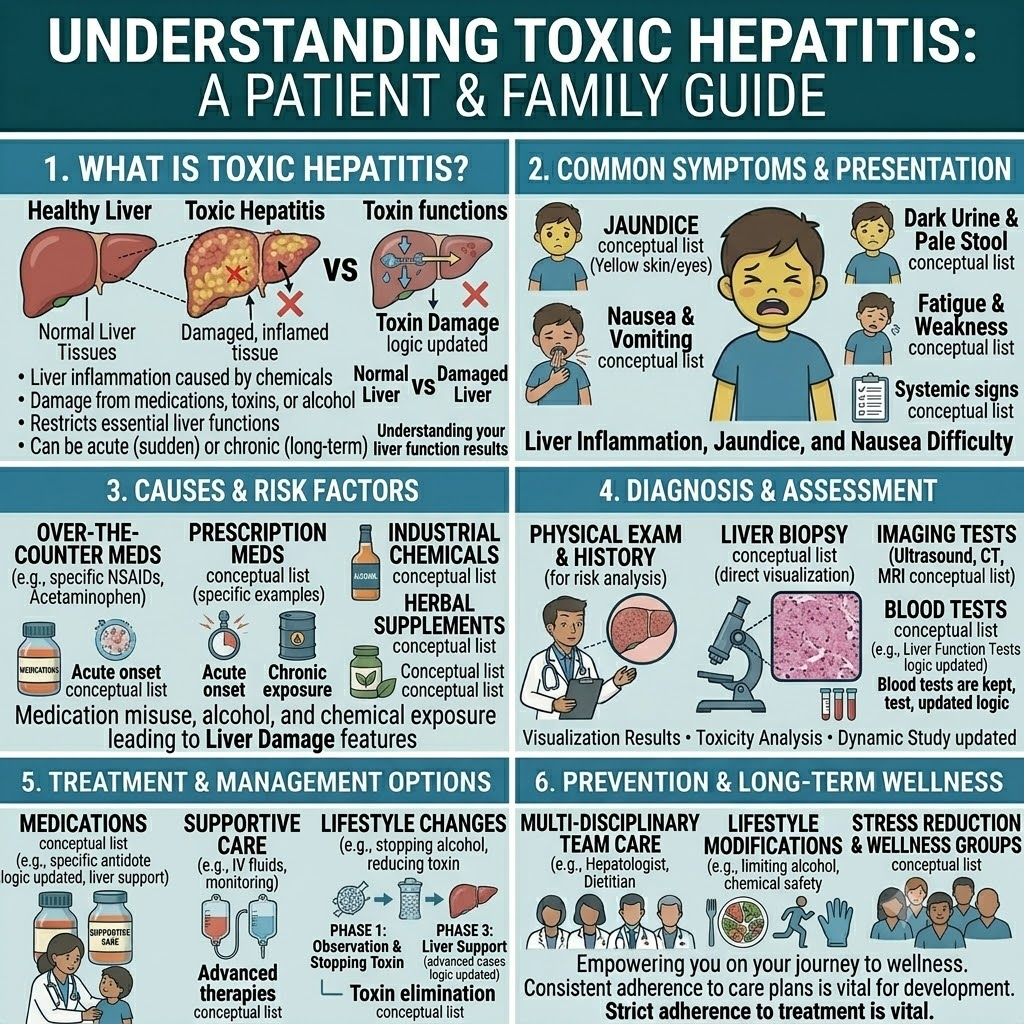
Toxic hepatitis is a condition where your liver becomes swollen and damaged due to exposure to certain harmful substances. These can include alcohol, some medications, specific herbal remedies, nutritional supplements, or industrial chemicals. The liver is vital for filtering toxins, but when overwhelmed, these substances or their breakdown products can injure liver cells. Symptoms might appear quickly within hours or days of exposure, or gradually over months with ongoing contact. While often reversible if the harmful substance is removed, severe or prolonged exposure can lead to permanent liver damage, scarring (known as cirrhosis), and life-threatening liver failure. Factors increasing your risk include existing liver disease, viral hepatitis, older age (as the liver processes toxins more slowly), being female (due to different toxin processing rates), and certain genetic changes that affect how your liver handles chemicals.
Understanding the Condition
Toxic Hepatitis: Understanding Liver Inflammation from Harmful Substances
Understanding the Condition
Toxic hepatitis is a condition where your liver becomes swollen and damaged due to exposure to certain harmful substances. These can include alcohol, some medications, specific herbal remedies, nutritional supplements, or industrial chemicals. The liver is vital for filtering toxins, but when overwhelmed, these substances or their breakdown products can injure liver cells. Symptoms might appear quickly within hours or days of exposure, or gradually over months with ongoing contact. While often reversible if the harmful substance is removed, severe or prolonged exposure can lead to permanent liver damage, scarring (known as cirrhosis), and life-threatening liver failure. Factors increasing your risk include existing liver disease, viral hepatitis, older age (as the liver processes toxins more slowly), being female (due to different toxin processing rates), and certain genetic changes that affect how your liver handles chemicals.
Common Symptoms
Yellowing of Skin or Eyes (Jaundice): Your skin and the whites of your eyes may turn yellow, a condition called jaundice. This can be more noticeable on lighter skin tones.
Abdominal Pain: You might feel discomfort or pain in the upper right side of your stomach area, where your liver is located.
Loss of Appetite: A reduced desire to eat, which can lead to weight loss over time.
Nausea and Vomiting: Feeling sick to your stomach and throwing up.
Dark Urine: Your urine may appear unusually dark, similar to the color of tea.
Unexplained Weight Loss: Losing weight without trying, often linked to loss of appetite or digestive issues.
Symptoms of Overdose (e.g., from certain pain relievers): If someone, especially a child, has taken too much of a common pain reliever, symptoms like loss of appetite, nausea, vomiting, and upper stomach pain can signal liver distress and require immediate medical attention.
Consultation Guide
Which Specialist to Meet
You should initially see your primary care doctor for any concerning symptoms. They may then refer you to a liver specialist (a hepatologist) or a toxicologist if chemical exposure is suspected.
Preparations Before Your Visit
Before your visit, make a list of all medications (prescription and over-the-counter), herbal remedies, and supplements you are currently taking. Note any recent exposure to chemicals or alcohol consumption. Be prepared to describe your symptoms, when they started, and your medical history. Write down any questions you have for your doctor.
Book a doctor visit near me
Supportive Medical Care: This involves managing your symptoms, such as nausea or pain, and ensuring you maintain proper hydration and nutrition while your liver recovers. (Duration: As needed, typically during the acute phase of recovery.)
Careful Medication Use: Only take medications when absolutely necessary and always follow dosage instructions precisely. Never exceed the recommended dose, even if symptoms persist. Explore lifestyle changes for common conditions like high blood pressure or arthritis pain.
Consultation Guide
You will lie on a motorized table that slides into a large, doughnut-shaped machine. You might be asked to hold your breath for short periods. Sometimes, a special dye (contrast material) is injected into a vein to make the images clearer, which might cause a warm sensation. The procedure is generally painless but requires you to lie still.
Regular Medical Check-ups: If you have a history of liver problems or known risk factors for liver disease, regular visits to your doctor and periodic blood tests are important to monitor your liver health and detect any issues early.
Diagnostic Procedures
Blood tests are often the first step to check your liver health. They can measure levels of liver enzymes and other substances that indicate liver damage or how well your liver is functioning. Mild toxic hepatitis might only be detected through these tests.
What to Expect
A healthcare professional will draw a small amount of blood, usually from a vein in your arm. You might feel a brief pinch or sting. The sample is then sent to a lab for analysis.
An ultrasound uses high-frequency sound waves to create images of your internal organs, including your liver. It can help identify changes in the liver's size, shape, or texture, and look for signs of damage or scarring.
What to Expect
You will lie on an examination table. A clear gel is applied to your skin over your abdomen. A handheld device, called a transducer, is then gently moved over the gelled area. You will not feel any pain, only light pressure as the images are captured on a screen.
CT Scan (Computed Tomography)
A CT scan uses special X-ray equipment and a computer to create detailed cross-sectional images, or 'slices,' of your liver and surrounding areas. These images provide more detail than standard X-rays and can help assess the extent of liver damage.
What to Expect
A liver biopsy involves taking a small sample of liver tissue for examination under a microscope. This is the most definitive way to diagnose the type and severity of liver damage, including inflammation and scarring.
What to Expect
Before the procedure, you will receive a local anesthetic to numb the area on your abdomen. The doctor will make a small cut and insert a thin needle through your skin and into your liver to collect a tissue sample. You might feel some pressure or a brief, sharp pain as the needle is inserted. After the biopsy, you will need to rest for several hours for observation, and you may experience some soreness at the biopsy site.
Treatment Options
Stopping Exposure to the Toxin: The most crucial step is to immediately identify and stop exposure to the substance causing the liver inflammation. This could mean discontinuing a medication, avoiding certain chemicals, or stopping alcohol consumption. (Duration: Immediate and ongoing; often leads to recovery if damage is not severe.)
Medications
Specific Antidotes or Liver-Protecting Agents: In some cases of specific toxic exposures (e.g., an overdose of certain pain relievers), doctors may administer medications designed to counteract the poison's effects or protect liver cells from further damage. (Duration: Short-term, usually during the acute phase of poisoning.)
Surgical Procedures
Liver Transplant: For severe and irreversible liver failure, where the liver is too damaged to function, a liver transplant may be the only treatment option. This involves replacing the diseased liver with a healthy liver from a donor. (Duration: A single surgical procedure, followed by lifelong anti-rejection medication and monitoring.)
Avoid Alcohol with Medications: Do not consume alcohol when taking medications, especially common pain relievers. Always ask your doctor or pharmacist about how alcohol might interact with any drugs you are using.
Safe Chemical Handling: If your work or hobbies involve dangerous chemicals, always wear appropriate protective gear and follow all safety protocols. In case of accidental exposure, seek immediate emergency medical help or contact a poison control center.
Secure Storage for Medicines and Chemicals: Always keep all medications and hazardous chemicals in childproof containers and store them out of the reach and sight of children to prevent accidental ingestion.
Prevention & Long-Term Wellbeing
Lifestyle & Supportive Care
Prevention
Caution with Herbs and Supplements: Many 'natural' products can be harmful to the liver. Always discuss potential benefits and risks with a healthcare professional before taking any herbal remedies or dietary supplements.
Tags & Topics
Notice an error or need an update?
Help us keep medical information accurate. Report incorrect info or suggest an edit.


