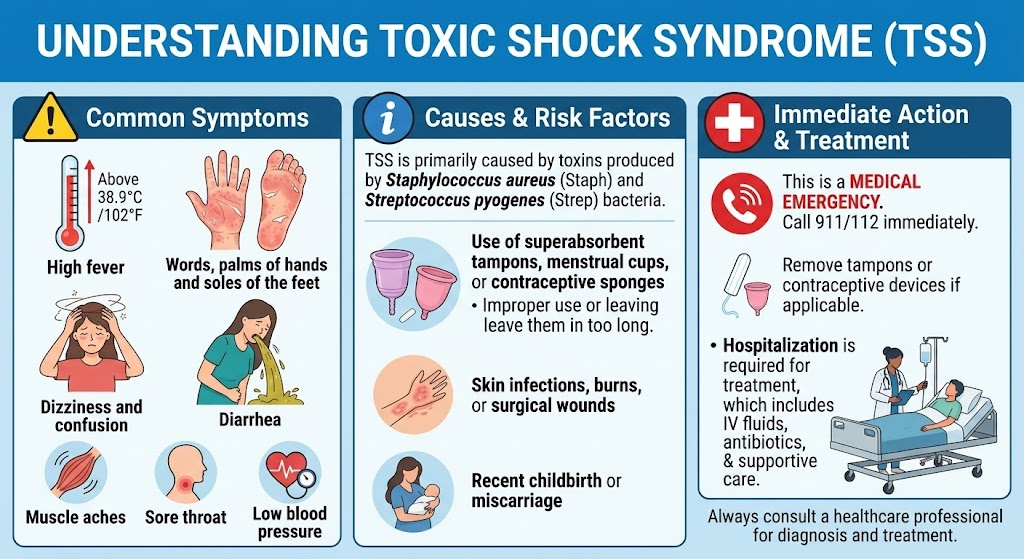
Toxic Shock Syndrome (TSS) is a rare but life-threatening complication of certain bacterial infections, primarily from Staphylococcus aureus (staph) or Group A Streptococcus (strep) bacteria releasing potent toxins. These toxins rapidly overwhelm the body, leading to severe illness and potential organ failure. Anyone can be affected, with risk factors including skin wounds, recent surgery, and the use of internal menstrual products.
Understanding the Condition
Toxic Shock Syndrome: Understanding a Serious Bacterial Illness
Understanding the Condition
Common Symptoms
High Fever: A sudden and unusually high body temperature.
Low Blood Pressure: Feeling dizzy, lightheaded, or fainting.
Vomiting or Diarrhea: Sudden onset of stomach upset.
Sunburn-like Rash: A reddish rash covering the body, particularly noticeable on the palms of hands and soles of feet.
Confusion: Feeling disoriented or having difficulty thinking clearly.
Muscle Aches: Severe and widespread muscle pain.
Red Eyes, Mouth, and Throat: Inflammation causing redness in these areas.
Headaches: Severe or persistent head pain.
Seizures: Uncontrolled electrical activity in the brain causing convulsions (less common, but possible in severe cases).
Consultation Guide
Which Specialist to Meet
If you suspect Toxic Shock Syndrome, immediately go to an emergency room. You will be seen by emergency medicine physicians, who may consult with infectious disease and critical care specialists. Due to the severe and rapid nature of TSS, urgent medical attention is paramount.
Preparations Before Your Visit
Early Symptom Recognition: Be aware of the sudden symptoms of TSS (high fever, rash, low blood pressure, confusion, vomiting, diarrhea) and seek emergency care immediately if they appear.
Consultation Guide
Toxic Shock Syndrome (TSS) is a rare but life-threatening complication of certain bacterial infections, primarily from Staphylococcus aureus (staph) or Group A Streptococcus (strep) bacteria releasing potent toxins. These toxins rapidly overwhelm the body, leading to severe illness and potential organ failure. Anyone can be affected, with risk factors including skin wounds, recent surgery, and the use of internal menstrual products.
Follow-Up Care: After recovering from TSS, close follow-up with your doctor is essential to monitor for any lasting organ damage (e.g., kidney, liver, heart function) and to discuss strategies for preventing recurrence, especially if the original cause was related to menstrual product use.
Diagnostic Procedures
These tests are crucial for checking for signs of infection (like elevated white blood cells), inflammation markers, and how well organs like kidneys and liver are functioning. Blood cultures specifically try to identify the bacteria causing the infection.
What to Expect
A healthcare professional will draw blood from a vein in your arm using a needle. This is a quick procedure, causing a brief pinch. Multiple tubes may be collected for different analyses.
Urine Test (Urinalysis)
This test examines your urine for signs of urinary tract infection or to assess kidney function, which TSS can impair. It checks urine appearance, concentration, and content for abnormalities.
What to Expect
You'll provide a 'midstream clean-catch' urine sample into a sterile cup after cleaning the genital area to prevent contamination. The sample is then analyzed in a lab.
Cultures from Other Sites
Samples from the throat, vagina, or a wound may be taken to identify the specific bacteria causing the illness, especially if an infection source is suspected in these areas.
What to Expect
A sterile swab will be used to gently collect a sample from the suspected area. This is typically a quick and minimally uncomfortable procedure.
Tests like X-rays, CT scans, or MRI scans may be used to locate a hidden source of infection, such as an internal abscess.
What to Expect
You will lie still on a table while the machine captures images. Depending on the scan, you might hear noises, and some may involve receiving an intravenous contrast dye.
Treatment Options
Since TSS is an emergency, prioritize seeking care without delay. If possible, bring a list of your current medications, any allergies, and a brief medical history. Do not wait to gather extensive information before going to the emergency room.
Book a doctor visit near me
Medications
Antibiotics: Powerful medications administered intravenously (into a vein) to kill the bacteria responsible for the infection. Treatment begins immediately, often using broad-spectrum antibiotics before specific bacteria are identified. (Duration: Typically several days to weeks, depending on the severity and response to treatment, often continuing after discharge.)
Intravenous Fluids: Given through a vein to help maintain blood pressure, counteract dehydration, and support kidney function. (Duration: Continuous administration for several days, adjusted based on blood pressure and hydration levels.)
Organ Support: Depending on which organs are affected, treatments may include medications to raise blood pressure, machines to help with breathing (ventilator), or kidney dialysis if kidney failure is severe. (Duration: Can range from days to weeks, depending on the extent of organ damage and recovery.)
Surgical Procedures
Removal of Infected Tissue/Foreign Objects: If the infection originates from a wound or a foreign object (like a tampon or packing), these may need to be surgically cleaned, drained, or removed to eliminate the source of toxins. (Duration: A single surgical procedure, though follow-up may be needed.)
Therapies
Blood Product Transfusions: If severe anemia or clotting problems develop, transfusions of blood, plasma, or platelets may be necessary. (Duration: As needed, typically one-time or over a few days during acute illness.)
Prevention & Long-Term Wellbeing
Prevention
Proper Tampon Use: If using tampons, choose the lowest absorbency needed. Change tampons frequently (every 4-8 hours) and consider alternating with sanitary pads. Wash hands before and after insertion/removal.
Hygiene for Other Menstrual Products: Carefully follow manufacturer instructions for menstrual cups, sponges, or diaphragms, including cleaning and proper wear time. Do not leave internal menstrual devices in for longer than recommended.
Wound Care: Clean and cover all skin cuts, scrapes, and surgical wounds thoroughly. Watch for any signs of infection (redness, swelling, pus, fever) and seek medical attention promptly if they occur.
Handwashing: Wash hands thoroughly and often with soap and water, especially before and after touching wounds or inserting menstrual products.
Risk Awareness: Understand that having TSS once might increase the risk of recurrence. Discuss personal risks and prevention strategies with your healthcare provider, including alternatives to tampons if they were a contributing factor.
Tags & Topics
Notice an error or need an update?
Help us keep medical information accurate. Report incorrect info or suggest an edit.


