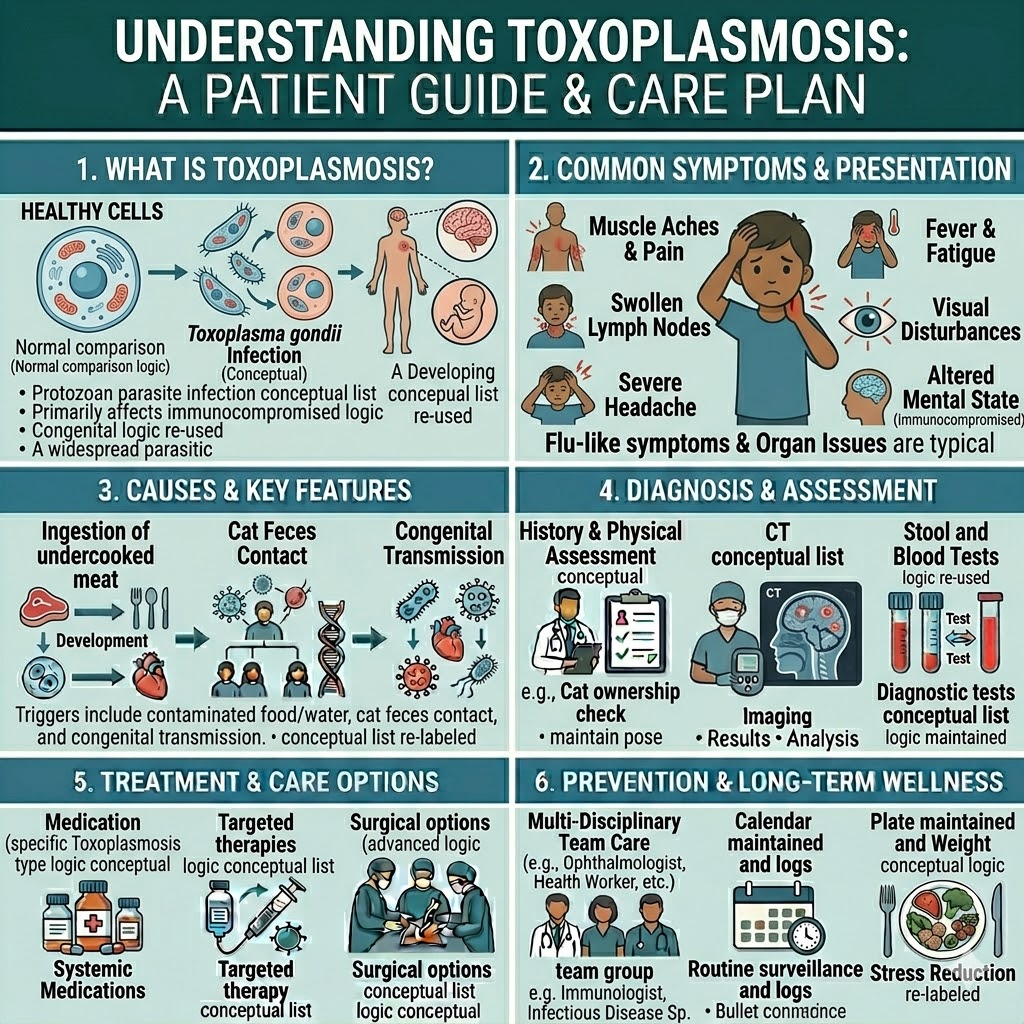
Toxoplasmosis is an infection caused by a common parasite called Toxoplasma gondii. While most healthy individuals experience no symptoms or mild flu-like illness, it can be serious for pregnant individuals, newborns, and those with weakened immune systems, potentially leading to severe complications like birth defects or organ damage. The infection often comes from eating undercooked meat or contact with cat feces.
Understanding the Condition
Toxoplasmosis: Understanding the Infection and How to Stay Safe
Understanding the Condition
Toxoplasmosis is an infection caused by a common parasite called Toxoplasma gondii. While most healthy individuals experience no symptoms or mild flu-like illness, it can be serious for pregnant individuals, newborns, and those with weakened immune systems, potentially leading to severe complications like birth defects or organ damage. The infection often comes from eating undercooked meat or contact with cat feces.
Common Symptoms
Mild or No Symptoms: Most healthy people infected with toxoplasmosis experience no symptoms or mild, flu-like illness (swollen lymph nodes, muscle aches) and often don't know they're infected.
Ocular Toxoplasmosis (Eye Infection): The parasite can infect the eyes, causing poor vision and 'floaters'. This 'ocular toxoplasmosis' can lead to blindness if untreated, especially in those with weakened immune systems.
Symptoms in Weakened Immune Systems: In individuals with compromised immunity (e.g., HIV/AIDS, cancer treatment, organ transplant), an older, inactive infection can reactivate. This causes severe disease, including serious eye, lung, or brain infections, or rarely, spread to other tissues.
Symptoms in Infants (Congenital Toxoplasmosis): If a pregnant individual contracts toxoplasmosis, the parasite can pass to the baby, potentially causing miscarriage, stillbirth, or severe birth defects affecting the brain, eyes, and other organs. Some problems may appear at birth, others months or years later.
Consultation Guide
Which Specialist to Meet
If you suspect you have toxoplasmosis, especially if you are pregnant, have a weakened immune system, or experience eye symptoms, consult your primary care doctor. They may refer you to an infectious disease specialist, an ophthalmologist (eye doctor), or an obstetrician/gynecologist (for pregnant individuals).
Preparations Before Your Visit
Before your visit, be prepared to discuss any recent symptoms, your diet (especially consumption of undercooked meats), any contact with cats or cat litter boxes, gardening activities, and travel history. Make a list of all medications you are taking and any questions you have for your doctor.
Book a doctor visit near me
Rest and Symptom Management: For mild flu-like symptoms, rest, hydration, and over-the-counter pain relief are recommended. Regular medical follow-ups are crucial for high-risk individuals or those on treatment to monitor progression. (Duration: As needed for symptoms; ongoing monitoring for high-risk groups.)
Diagnostic Procedures
A blood test detects Toxoplasma gondii antibodies, indicating recent, past, or immune status.
What to Expect
A quick procedure where a small blood sample is drawn, usually from the arm. Expect a brief pinch; normal activities can resume immediately.
A pregnancy test for parasite presence or genetic issues in amniotic fluid, typically done between 14-20 weeks when infection is suspected.
What to Expect
An ultrasound guides a thin needle to withdraw amniotic fluid from the uterus. Expect pressure/cramping; post-procedure rest is often recommended. Baby's heart rate is monitored.
Diagnostic Ultrasound
Uses sound waves to create internal body images, useful for monitoring fetal development or assessing organ involvement in severe cases.
What to Expect
Gel is applied to the skin, and a handheld transducer is moved over the area, displaying images. Generally painless, may require specific preparation like a full bladder or fasting.
Regular Medical Check-ups: Individuals with weakened immune systems, those with a history of ocular toxoplasmosis, or babies diagnosed with congenital toxoplasmosis require ongoing medical surveillance. This involves regular check-ups to monitor for potential reactivation of the infection and manage long-term complications. Adherence to prescribed maintenance therapy is crucial.
Treatment Options
Medications
Anti-parasitic Medications: Medications are prescribed for severe cases, pregnant individuals (to protect the baby), newborns, and those with weakened immune systems. These anti-parasitic drugs target and eliminate the parasite. (Duration: Duration varies: weeks to months for pregnant individuals or newborns; longer for severe or immunocompromised cases, often until the infection is controlled.)
Supportive Care and Monitoring
Prevention & Long-Term Wellbeing
Prevention
Practice Food Safety: Cook meats thoroughly to safe temperatures (e.g., ground meat 160°F, poultry 165°F). Avoid raw/undercooked meats, raw shellfish, unpasteurized milk, and untreated water. Wash fruits, vegetables, and kitchen utensils diligently.
Handle Cat Feces Safely: Avoid cleaning litter boxes, especially if pregnant or immunocompromised; if necessary, wear gloves and wash hands. Change litter daily. Keep cats indoors and avoid feeding raw meat. Cover sandboxes.
Maintain Good Personal Hygiene: Wash hands thoroughly with soap and water after gardening, handling soil, outdoor activities, or any contact with cat feces. Always wash hands before and after preparing food.
Long-Term Monitoring
Tags & Topics
Notice an error or need an update?
Help us keep medical information accurate. Report incorrect info or suggest an edit.


