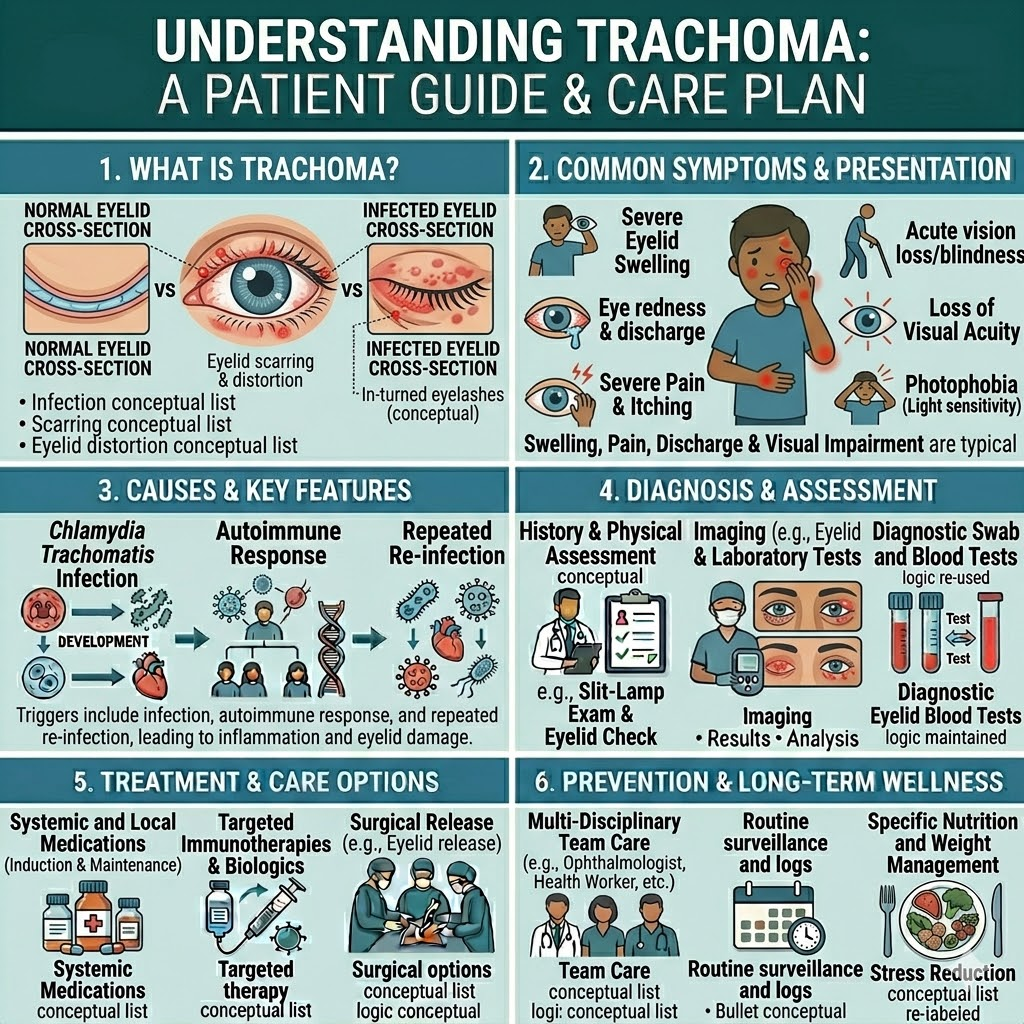
Trachoma is a highly contagious bacterial infection that affects the eyes, caused by the bacterium Chlamydia trachomatis. Initially, it may cause mild itching and irritation, followed by swollen eyelids and pus discharge. If left untreated, trachoma is the world's leading preventable cause of blindness. It is most common in impoverished regions, particularly in Africa, where young children are highly susceptible. Early detection and treatment are crucial to prevent serious complications and preserve vision.
Understanding the Condition
Trachoma: Understanding and Preventing a Serious Eye Infection
Understanding the Condition
Common Symptoms
Mild Itching and Irritation: A feeling of discomfort, itchiness, or irritation in both eyes and eyelids.
Eye Discharge: Release of mucus or pus from the eyes.
Eyelid Swelling: Noticeable puffiness or swelling of the eyelids.
Light Sensitivity (Photophobia): Discomfort or pain when exposed to bright light.
Eye Redness: Red or bloodshot appearance of the eyes.
Vision Loss: Gradual reduction in the ability to see clearly, occurring in later stages.
Early Inflammation (Follicular Stage): Small, raised bumps appear on the inner surface of the upper eyelid, visible with magnification, indicating early inflammation.
Intense Inflammation: The eye becomes highly irritated and contagious, with noticeable thickening and swelling of the upper eyelid.
Before your appointment, prepare a list of your symptoms, including when they started and how severe they are. Note any recent travel, especially to regions where trachoma is common. Bring your medical history, including any previous eye conditions and all current medications. It's also helpful to write down any questions you have for the doctor.
Book a doctor visit near me
Awareness of Reinfection Symptoms: Being vigilant for returning symptoms (itching, redness, discharge, irritation) helps in seeking early treatment for potential reinfection, a common concern in endemic areas.
Consultation Guide
Trachoma is a highly contagious bacterial infection that affects the eyes, caused by the bacterium Chlamydia trachomatis. Initially, it may cause mild itching and irritation, followed by swollen eyelids and pus discharge. If left untreated, trachoma is the world's leading preventable cause of blindness. It is most common in impoverished regions, particularly in Africa, where young children are highly susceptible. Early detection and treatment are crucial to prevent serious complications and preserve vision.
Eyelid Scarring: Repeated infections cause scar tissue to form on the inner eyelid, often appearing as white lines. This can distort the eyelid, causing it to turn inward (entropion).
In-Turned Eyelashes (Trichiasis): Eyelashes begin to grow inward due to scarring, constantly rubbing and scratching the clear front surface of the eye (cornea).
Corneal Clouding (Opacity): Persistent inflammation and damage from in-turned eyelashes cause the cornea to become cloudy or hazy, leading to vision impairment or blindness.
Consultation Guide
Which Specialist to Meet
Diagnostic Procedures
For any eye concerns, start by seeing a general practitioner or an optometrist. If trachoma is suspected or diagnosed, you will likely be referred to an ophthalmologist, an eye medical doctor specializing in eye diseases and surgery.
Preparations Before Your Visit
Clinical Eye Examination
An eye care specialist will carefully examine your eyes using a specialized microscope called a slit lamp. They will look for characteristic signs of trachoma, such as small bumps (follicles), inflammation, scarring on the inner eyelids, in-turned eyelashes, and cloudiness of the cornea.
What to Expect
You will sit in front of the slit lamp, resting your chin and forehead on a support. The doctor will shine a bright light into your eyes and use a magnifying lens to examine different parts of your eye. They may gently pull on your eyelids to get a better view. This examination is usually painless, though the bright light can be intense for a moment, and your eyes might feel a bit dry afterward.
To confirm the presence of the Chlamydia trachomatis bacterium, a sterile swab is used to collect a sample of cells or discharge from the affected eye. This sample is then sent to a laboratory for analysis.
What to Expect
The doctor will gently rub a small, sterile cotton swab along the inner surface of your eyelid or on the eye's discharge. You might feel a brief, mild tickling or scratchy sensation. It is a quick procedure, usually causing minimal discomfort, and is essential for identifying the specific bacteria causing the infection.
Screening and Treatment of Family Members: If diagnosed, close contacts should be screened and treated if necessary to prevent reinfection and further spread.
Long-Term Management and Monitoring
Treatment Options
Medications
Oral Antibiotics: Medication taken by mouth to eliminate the bacterial infection from the body, often used for widespread infection or community treatment. (Duration: Typically a single dose, or a course lasting 1 to 6 weeks, depending on the specific antibiotic and severity.)
Topical Antibiotics (Eye Ointments/Drops): Antibiotic preparations applied directly to the eyes to kill bacteria and reduce inflammation, often used with oral antibiotics or for milder cases. (Duration: Usually applied twice daily for 3 to 6 weeks.)
Surgical Procedures
Eyelid Repositioning Surgery (for Entropion): A surgical procedure to correct eyelids that have turned inward (entropion), repositioning them to their normal outward position to prevent constant irritation. (Duration: One-time procedure, with several weeks for full recovery.)
Corneal Surgery: In advanced cases of severe corneal scarring and cloudiness, a corneal transplant may replace damaged tissue with healthy donor tissue, aiming to restore vision. (Duration: One-time major surgery, followed by a prolonged recovery period of several months to a year.)
Regular Eye Check-ups: Even after successful treatment, periodic eye examinations are important to monitor for reinfection or complication progression, especially in affected regions.
Prevention & Long-Term Wellbeing
Eyelash Correction (for Trichiasis): A procedure to remove or redirect in-turned eyelashes that scratch the cornea, using methods like manual removal, freezing, or electrical current to destroy the hair follicle. (Duration: May require repeat sessions depending on lash regrowth, with quick recovery for each session.)
Prevention of Infection
Facial Cleanliness and Handwashing: Regularly washing faces (especially children's) and practicing good hand hygiene with soap and water can reduce bacterial spread.
Improved Access to Clean Water: Ensuring communities have easy access to safe, clean water is fundamental for hygiene and infection prevention.
Proper Sanitation and Waste Management: Proper disposal of human and animal waste reduces fly breeding grounds, limiting infection transmission.
Fly Control: Reducing fly populations cuts down on a major route of disease transmission.
Community-wide Antibiotic Distribution: In widespread areas, health programs often distribute antibiotics to entire communities to treat and prevent new infections.
Tags & Topics
Notice an error or need an update?
Help us keep medical information accurate. Report incorrect info or suggest an edit.


