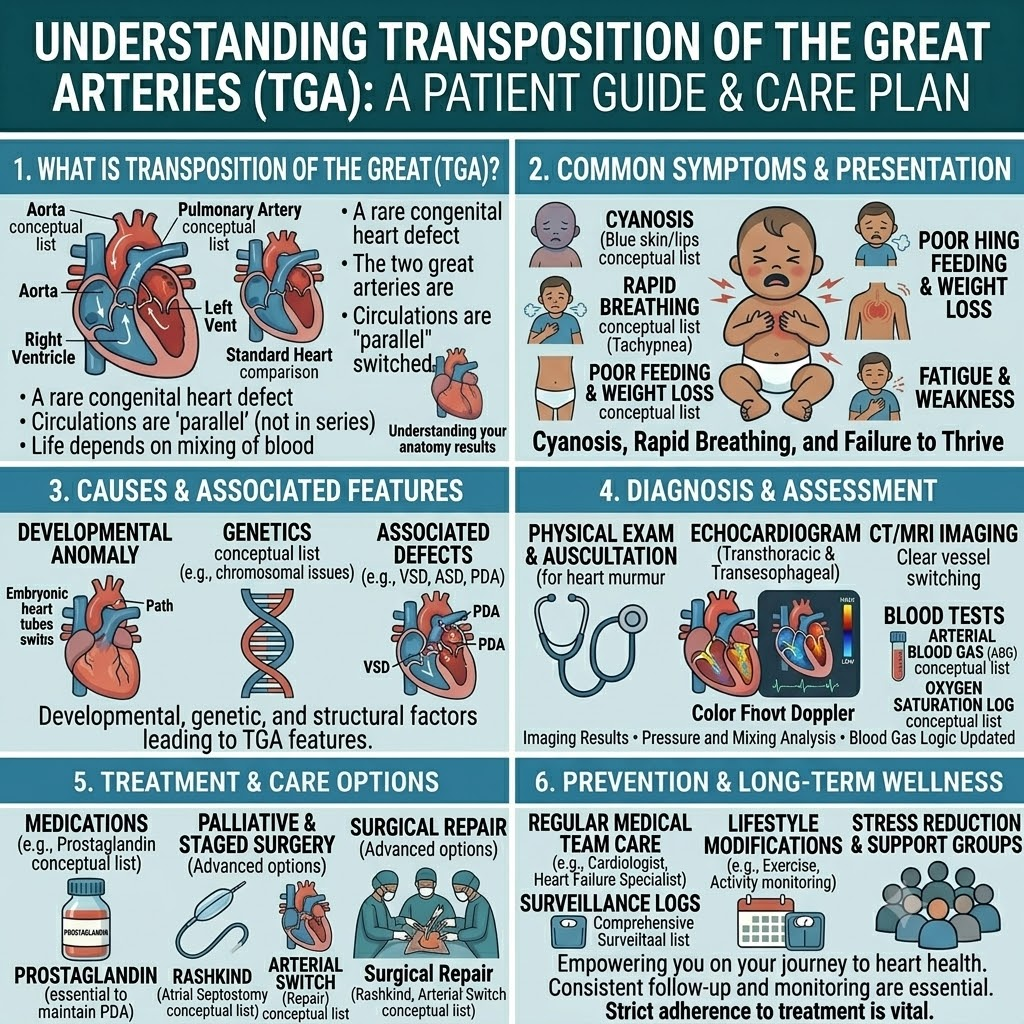
Transposition of the Great Arteries (TGA) is a serious, rare heart condition present at birth, meaning it's a congenital heart defect. It occurs when the two main arteries leaving the heart are switched from their normal positions. There are two main types: 'd-TGA' where oxygen-poor blood is pumped to the body, leading to low oxygen levels and requiring immediate treatment, often diagnosed during pregnancy or soon after birth. The less common 'l-TGA' involves both switched arteries and reversed lower heart chambers; symptoms may not appear right away, and treatment depends on the specific heart structure and other heart conditions. Surgery to correct the artery positions is the usual treatment, typically performed shortly after birth.
Understanding the Condition
Transposition of the Great Arteries (TGA): A Guide for Non-Medical Individuals
Understanding the Condition
Transposition of the Great Arteries (TGA) is a serious, rare heart condition present at birth, meaning it's a congenital heart defect. It occurs when the two main arteries leaving the heart are switched from their normal positions. There are two main types: 'd-TGA' where oxygen-poor blood is pumped to the body, leading to low oxygen levels and requiring immediate treatment, often diagnosed during pregnancy or soon after birth. The less common 'l-TGA' involves both switched arteries and reversed lower heart chambers; symptoms may not appear right away, and treatment depends on the specific heart structure and other heart conditions. Surgery to correct the artery positions is the usual treatment, typically performed shortly after birth.
Common Symptoms
Blue or Gray Skin (Cyanosis): Due to low oxygen levels in the blood. The visibility of these color changes can vary depending on a person's natural skin tone.
Pounding Heartbeat: A noticeably strong and rapid heart rhythm.
Weak Pulse: A faint or barely detectable pulse, indicating less efficient blood circulation.
Lack of Appetite: Difficulty feeding or a general disinterest in eating, particularly in infants.
Poor Weight Gain: Failure to gain weight adequately, especially in infants, due to the body not receiving enough oxygen and nutrients.
Delayed Symptoms: Some individuals with the congenitally corrected type (l-TGA) may not show symptoms for many years. Also, if a baby with TGA has other heart defects that allow some oxygen-rich blood to mix, skin color changes might not be immediately obvious but become more noticeable as the baby becomes more active and oxygen levels drop. Get help right away if a child has trouble breathing.
Consultation Guide
Which Specialist to Meet
Anatomical Repair (for l-TGA): For 'l-TGA', this is a more complex surgery that aims to create a more normal heart structure. It involves switching the positions of the great arteries and also correcting the reversed lower heart chambers. (Duration: The timing of this surgery varies and can be performed later in childhood or even adulthood, depending on the patient's condition and symptoms.)
Interventional Procedures
Consultation Guide
Avoid Harmful Substances: Refrain from alcohol consumption and smoking during pregnancy, as these are known risk factors for congenital heart defects and other birth conditions.
Healthy Pregnancy Practices: Receive proper prenatal care and start taking a multivitamin with folic acid before becoming pregnant. Folic acid has been shown to help prevent certain birth defects and may also reduce the risk of congenital heart defects.
Genetic Counseling: If there is a family history of heart conditions present at birth, consult with a genetic counselor and a healthcare professional specializing in congenital heart defects before becoming pregnant.
Long-Term Monitoring and Management
Diagnostic Procedures
If TGA is suspected or diagnosed, you will likely need to consult with a pediatric cardiologist (a heart specialist for children), a cardiac surgeon, and potentially a genetic counselor if there's a family history of heart conditions. For prenatal diagnoses, an obstetrician specializing in high-risk pregnancies may also be involved.
Preparations Before Your Visit
Electrocardiogram (ECG or EKG)
An ECG is a quick, non-invasive test that records the electrical signals of the heart. It shows how fast or slow the heart is beating and helps diagnose irregular heartbeats or signs of heart strain.
What to Expect
Small, sticky patches called electrodes will be placed on your chest, and sometimes on your arms or legs. These patches are connected by wires to an ECG machine, which records the electrical activity. The test is painless and usually takes only a few minutes to complete while you lie still.
An echocardiogram uses sound waves to create moving pictures of the heart. This test provides detailed images of the heart's chambers, valves, and blood vessels, showing how blood flows through the heart and helping to identify any structural problems.
What to Expect
You'll lie on an examination table. A gel will be applied to your chest, and a handheld device called a transducer will be moved over the area. This device sends and receives sound waves, which are converted into images on a screen. You may hear whooshing sounds, which are normal heart sounds. The test is painless and typically lasts between 30 to 60 minutes. For pregnant individuals, a fetal echocardiogram can be performed to view the baby's heart.
A chest X-ray uses radiation to produce images of your heart, lungs, blood vessels, airways, and the bones of your chest and spine. It can help detect problems like an enlarged heart, fluid in the lungs, or other issues related to heart or lung health.
What to Expect
You will be asked to stand or lie still in front of an X-ray machine. The technician will position you correctly and ask you to hold your breath for a very short moment while the image is taken. The procedure is quick, painless, and usually takes just a few minutes.
Cardiac Catheterization
Cardiac catheterization is a more invasive procedure that involves guiding a thin, flexible tube (catheter) through a blood vessel, usually in the groin, to the heart. It allows doctors to get very detailed information about the heart's pressures, blood flow, and oxygen levels, and can also be used to perform certain corrective procedures.
What to Expect
You will receive a local anesthetic to numb the area where the catheter will be inserted (often the groin). You might also be given a mild sedative to help you relax. The doctor will make a small incision and insert the catheter into a blood vessel, guiding it to your heart using X-ray imaging. You might feel some pressure but generally no pain during the insertion. Depending on the purpose, the procedure can take from one hour to several hours. For TGA, it might be used to perform a balloon atrial septostomy to create a hole between heart chambers.
Treatment Options
Before your visit, gather as much information as possible about your family's medical history, especially any heart conditions present at birth. If you are pregnant or recently had a baby, list any medications taken during pregnancy. Prepare a list of questions or concerns you have for the medical team to ensure all your queries are addressed.
Book a doctor visit near me
Surgical Procedures
Arterial Switch Operation (ASO): This is the most common surgery for 'd-TGA'. Surgeons reconnect the switched main arteries (aorta and pulmonary artery) to their correct lower heart chambers. The coronary arteries, which supply blood to the heart muscle, are also reattached. (Duration: Typically performed soon after birth, often within the first few weeks of life.)
Atrial Switch Operation (Senning or Mustard Procedure): An older surgical method for 'd-TGA', this procedure involves rerouting blood flow within the upper heart chambers (atria) using patches. It directs oxygen-poor blood to the lungs and oxygen-rich blood to the body, but the original switched arteries are not moved. (Duration: Usually performed in infancy, though it's less common now due to the success of the Arterial Switch Operation.)
Balloon Atrial Septostomy: This non-surgical procedure is often done shortly after birth for 'd-TGA' as an emergency measure. A catheter with a balloon on its tip is guided into the heart to create or enlarge a hole between the upper heart chambers. This allows oxygen-rich and oxygen-poor blood to mix, temporarily improving oxygen levels in the body until definitive surgery can be performed. (Duration: Performed typically within hours or days of birth, often during a cardiac catheterization procedure.)
Oxygen Therapy: Some babies with TGA may temporarily need supplemental oxygen to help improve their blood oxygen levels, especially before or immediately after surgery. (Duration: As advised)
Medications to Support Heart Function: In some cases, medications may be used to help the heart work more efficiently, manage fluid balance, or regulate heart rhythm, either before surgery or as part of long-term management for certain complications. (Duration: As advised)
Regular Follow-Up Care: Individuals who have undergone treatment for TGA, especially surgical repair, will require lifelong follow-up with a heart specialist (cardiologist) to monitor heart function and address any potential late complications.
Monitoring for Complications: Regular check-ups will screen for potential issues such as complete heart block (where electrical signals are disrupted), heart valve disease (e.g., tricuspid valve regurgitation in l-TGA), or heart failure (when the heart cannot pump enough blood to meet the body's needs).
Pregnancy Considerations: If you are an adult who had TGA and wish to become pregnant, it is crucial to discuss this with your healthcare professional. While a healthy pregnancy may be possible, special care and monitoring will likely be needed. Pregnancy is generally not recommended for individuals with severe TGA complications, even after surgery.
Prevention & Long-Term Wellbeing
Prevention
Vaccinations: Ensure you are up-to-date on all recommended immunizations, especially for rubella (German measles) before or during early pregnancy, as rubella infection during pregnancy can affect fetal heart development.
Manage Existing Health Conditions: If you have conditions like diabetes, ensure careful control of blood sugar levels before and throughout pregnancy to reduce the risk of congenital heart defects in the baby.
Tags & Topics
Notice an error or need an update?
Help us keep medical information accurate. Report incorrect info or suggest an edit.


