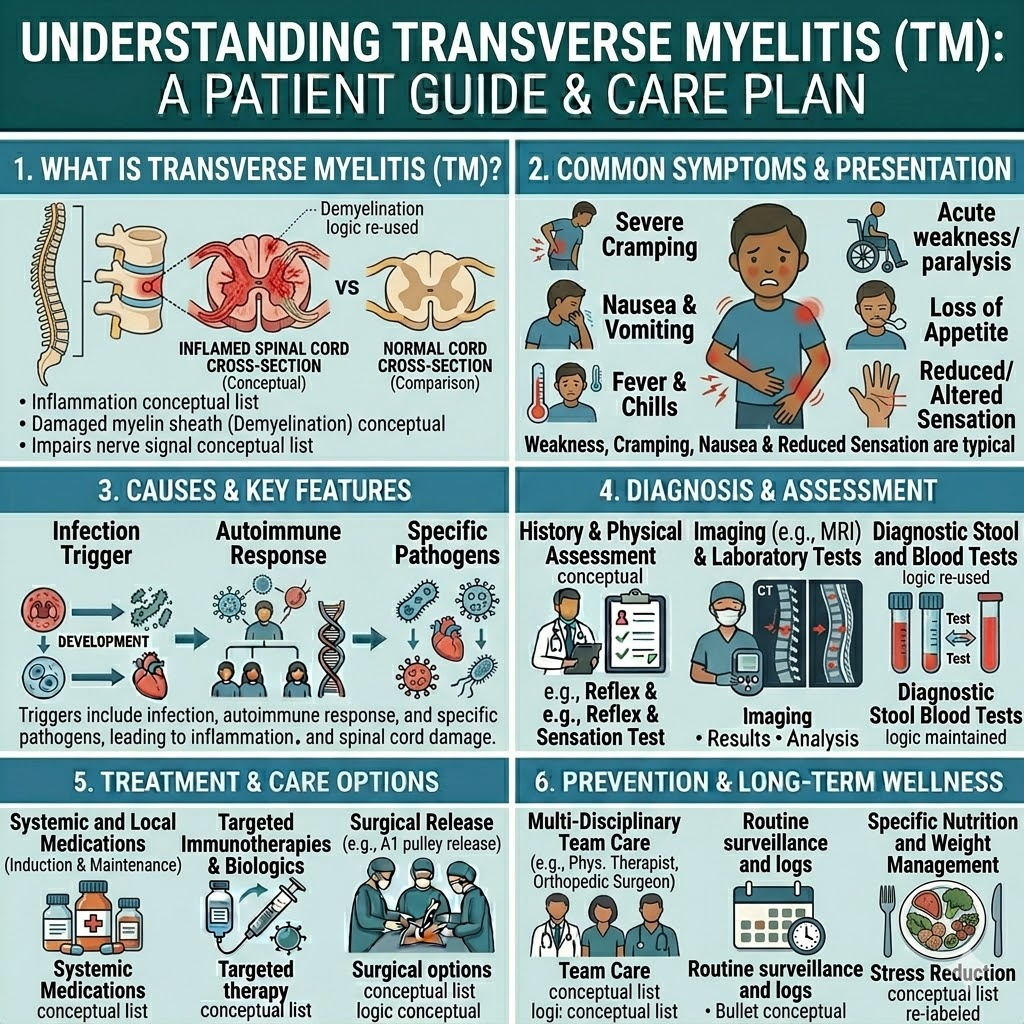
Transverse myelitis is a rare neurological disorder characterized by inflammation that affects both sides of a specific section of the spinal cord. This inflammation often damages the myelin, which is the protective insulating material covering nerve cell fibers. When myelin is damaged, it disrupts the flow of messages between the spinal cord and the rest of the body. This interruption can lead to a range of symptoms including pain, muscle weakness, paralysis, problems with sensation, and difficulties with bladder and bowel control. Causes vary, encompassing infections and immune system disorders where the body mistakenly attacks its own tissues. It can also be linked to other conditions that affect myelin, such as multiple sclerosis. It's important to distinguish transverse myelitis from other conditions, like a stroke affecting the spinal cord or spinal cord compression, as these require different treatment approaches. Treatment typically involves medications and rehabilitative therapy. While most individuals experience at least some recovery, those with severe attacks may face significant long-term disabilities. Symptoms usually appear rapidly, over a few hours to a few days, though they can sometimes progress more gradually over several weeks.
Understanding the Condition
Transverse Myelitis: Understanding a Spinal Cord Condition
Understanding the Condition
Transverse myelitis is a rare neurological disorder characterized by inflammation that affects both sides of a specific section of the spinal cord. This inflammation often damages the myelin, which is the protective insulating material covering nerve cell fibers. When myelin is damaged, it disrupts the flow of messages between the spinal cord and the rest of the body. This interruption can lead to a range of symptoms including pain, muscle weakness, paralysis, problems with sensation, and difficulties with bladder and bowel control. Causes vary, encompassing infections and immune system disorders where the body mistakenly attacks its own tissues. It can also be linked to other conditions that affect myelin, such as multiple sclerosis. It's important to distinguish transverse myelitis from other conditions, like a stroke affecting the spinal cord or spinal cord compression, as these require different treatment approaches. Treatment typically involves medications and rehabilitative therapy. While most individuals experience at least some recovery, those with severe attacks may face significant long-term disabilities. Symptoms usually appear rapidly, over a few hours to a few days, though they can sometimes progress more gradually over several weeks.
Common Symptoms
Pain: Many people with transverse myelitis experience pain that can begin suddenly in the lower back. This pain may feel sharp, shooting, or like a tight band around the chest, abdomen, legs, or arms.
Weakness in Arms or Legs: Individuals often notice sudden weakness in their legs, which can lead to stumbling or feeling as if their legs are heavy. This weakness often affects both sides of the body below the inflamed spinal cord section, but occasionally impacts only one side. In severe cases, it can progress to complete paralysis.
Sensory Changes: Common sensory symptoms include numbness, tingling, coldness, or a burning sensation. Some may experience heightened sensitivity to light touch, or feel as if a tight band is wrapped around their torso or legs.
Bladder and Bowel Problems: Disruptions to nerve signals can lead to an urgent need to urinate, difficulty emptying the bladder (urinary retention), loss of bladder control (incontinence), or constipation.
Consultation Guide
Which Specialist to Meet
If you experience symptoms suggesting transverse myelitis, it's crucial to seek prompt medical attention. You will likely consult a neurologist, a doctor specializing in conditions of the brain, spinal cord, and nerves. If symptoms develop suddenly or are severe, emergency medical care is recommended.
Preparations Before Your Visit
Before your appointment, prepare a detailed list of your symptoms, including when they started, how they have progressed, and any factors that seem to worsen or improve them. Provide your complete medical history, including any recent infections, vaccinations, or other medical conditions. Make a list of all medications, supplements, and vitamins you are currently taking. It's also helpful to write down any questions you have for the doctor.
Book a doctor visit near me
During the exam, the doctor will review your medical history and symptoms. They will then perform various tests to check your mental status, coordination, reflexes, muscle strength, balance, and sensation. This might involve walking in a straight line, touching your finger to your nose, or having your reflexes checked with a small hammer. The exam can range from a few minutes to an hour or more, depending on your symptoms and findings. Based on the results, further diagnostic tests, such as imaging scans, may be ordered.
Magnetic Resonance Imaging (MRI)
An MRI scan uses powerful magnets and radio waves to create detailed images of organs and soft tissues inside the body, including the brain and spinal cord. It is essential for detecting inflammation or damage to the spinal cord consistent with transverse myelitis and for ruling out other conditions that can mimic its symptoms, such as spinal cord tumors or stroke.
Bladder and Bowel Management Strategies: Specific medications or techniques are used to address issues like urinary urgency, incontinence, or constipation. (Duration: Ongoing as needed to manage symptoms.)
Ongoing Rehabilitation: Continuing with physical, occupational, and other therapies is vital to maintain function, improve strength, and manage any persistent symptoms or disabilities.
Regular Medical Follow-ups: Consistent monitoring by healthcare professionals is important to track symptom progression, adjust treatments as needed, and screen for potential complications or recurrence.
Mental Health Support: Engaging in psychotherapy, joining support groups, or seeking counseling can provide valuable emotional support and coping strategies for living with a chronic condition.
Consultation Guide
A neurological exam is a series of tests performed by a healthcare professional to assess the function of your nervous system, including your brain, spinal cord, nerves, and muscles. It helps identify issues within the nervous system and determine their potential cause.
Other Immunosuppressants: If corticosteroids are ineffective or if the condition is linked to an underlying autoimmune disorder, other medications that suppress the immune system may be used to prevent further damage. (Duration: Can be long-term, depending on the cause and individual response.)
Plasma Exchange (Plasmapheresis): This procedure involves removing a portion of your blood, separating the plasma (the liquid part of the blood containing antibodies) from blood cells, and then returning the blood cells and a plasma substitute to your body. It is believed to remove harmful antibodies that may be contributing to the inflammation. (Duration: Typically involves several sessions over one to two weeks.)
Diagnostic Procedures
Neurological Examinations
What to Expect
What to Expect
You will lie still on a movable table that slides into a large, tube-shaped scanner. The machine can be noisy, so earplugs or headphones are often provided. You might receive an injection of a contrast dye into a vein, which helps make certain areas, like inflamed sections of the spinal cord, more visible. The procedure is painless and typically lasts between 30 and 60 minutes or longer. You will be asked to remain very still during the scan to ensure clear images.
Lumbar Puncture (Spinal Tap)
A lumbar puncture is a procedure where a small sample of cerebrospinal fluid (CSF) is collected from your lower back. CSF is the fluid that surrounds and protects your brain and spinal cord. Analyzing this fluid can help diagnose infections (like meningitis), other central nervous system disorders (such as multiple sclerosis), bleeding around the brain, or certain cancers. It can also be used to administer medications.
What to Expect
You will typically lie on your side with your knees drawn up to your chest, or sit leaning forward. The doctor will clean and numb a small area of skin on your lower back. A thin needle is then carefully inserted between two bones (vertebrae) in your lower spine to access the spinal canal and collect a small amount of CSF. You may feel pressure or a brief sting. The procedure usually takes about 30 to 45 minutes. Afterwards, you might be asked to lie flat for a period to help prevent a headache.
Management of Autoimmune Conditions: For individuals diagnosed with underlying autoimmune disorders, effectively managing these conditions can help reduce the likelihood of flare-ups that might lead to transverse myelitis.
Treatment Options
Medications
Corticosteroids: These medications are often given intravenously (through a vein) to reduce inflammation in the spinal cord. They work by suppressing the immune system's activity. (Duration: Typically administered for several days, often as a short course.)
Pain Relievers: Various medications can be used to manage the sharp, shooting, or chronic pain associated with transverse myelitis. (Duration: As needed, can be long-term depending on pain severity and type.)
Prompt Treatment of Infections: Addressing and treating infections quickly can help reduce the risk of transverse myelitis, particularly for those infections known to trigger the condition in some individuals.
Prevention & Long-Term Wellbeing
Rehabilitative Therapy: This includes physical therapy to regain strength, coordination, and balance; occupational therapy to learn new ways to perform daily activities; and sometimes speech therapy if needed. Rehabilitation is crucial for maximizing recovery and managing disabilities. (Duration: Ongoing for weeks to months or longer, tailored to individual needs.)
Psychotherapy (Talk Therapy): Talking with a mental health professional can help individuals cope with the emotional and psychological impact of a chronic illness, address anxiety, depression, and develop healthy coping mechanisms. (Duration: Weekly or bi-weekly sessions for several months or as needed.)
Prevention
Healthy Lifestyle Practices: Maintaining a balanced diet, engaging in regular exercise adapted to your abilities, and ensuring adequate sleep can support overall physical and mental health.
Utilize Assistive Devices: Employing mobility aids, making home modifications, or using adaptive equipment can significantly enhance independence and quality of life for those with persistent physical challenges.
Tags & Topics
Notice an error or need an update?
Help us keep medical information accurate. Report incorrect info or suggest an edit.


