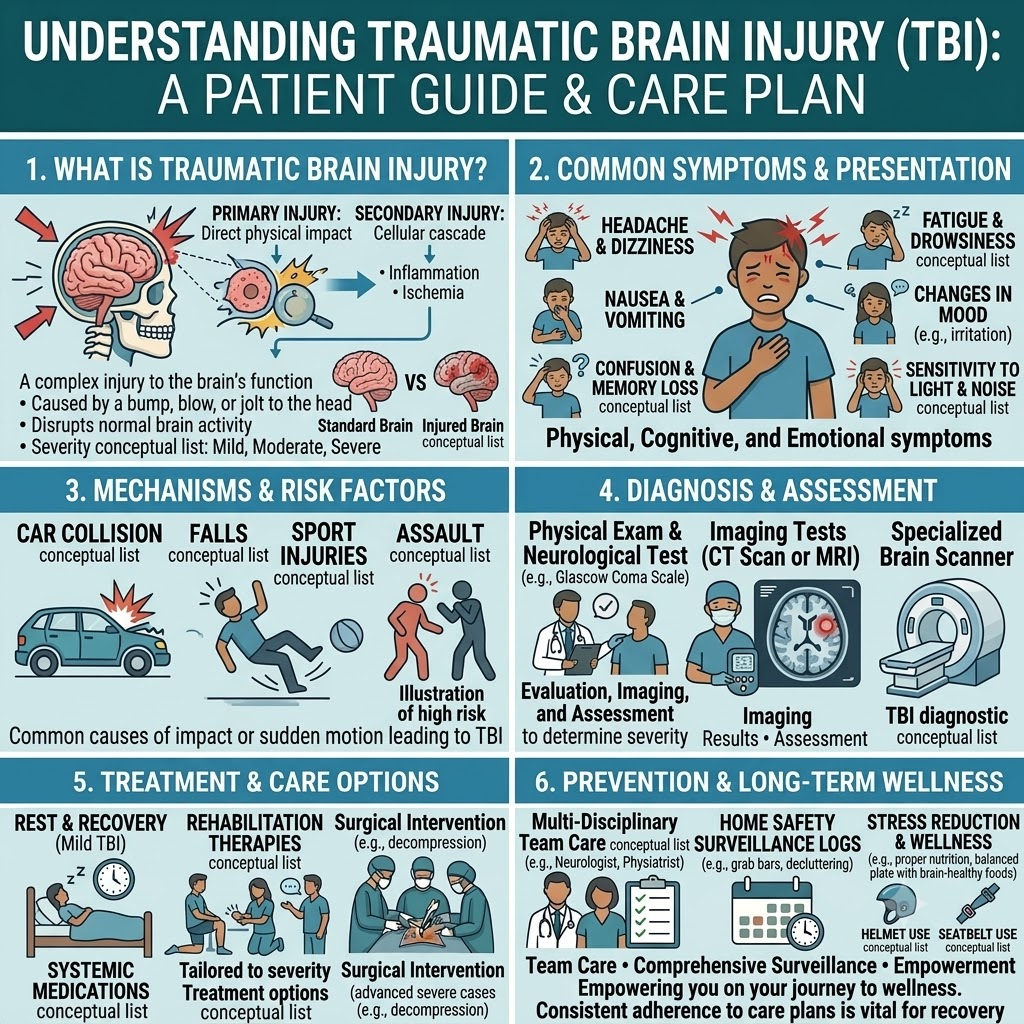
A traumatic brain injury (TBI) occurs from a violent blow or jolt to the head or body, or when an object penetrates the brain. Mild TBIs temporarily affect brain cells; severe ones cause bruising, tears, and bleeding, potentially leading to long-term complications or death. Effects can be physical and psychological, appearing immediately or weeks later.
Understanding the Condition
Common Symptoms
Mild Traumatic Brain Injury Symptoms: Symptoms may include brief loss of consciousness, confusion, headache, dizziness, balance issues, nausea, fatigue, slurred speech, sleep problems, blurred vision, ringing in ears, changes in taste/smell, light/sound sensitivity, mood changes, anxiety, irritability, or trouble with memory/concentration.
Moderate to Severe Traumatic Brain Injury Symptoms: These include any mild symptoms plus: loss of consciousness lasting minutes to hours, worsening headache, repeated vomiting, seizures, dilated pupils, clear fluid from nose/ears, inability to awaken, weakness/numbness in limbs, loss of coordination, profound confusion, agitation, or unusual behavior.
Symptoms in Infants and Young Children: Young children can't express symptoms, so observe: changes in eating/nursing, unusual irritability, persistent crying, difficulty paying attention, sleep changes, sadness/lack of interest in play, or loss of new skills.
Consultation Guide
Which Specialist to Meet
Consult a doctor for concerning head/body injuries or behavioral changes. For significant symptoms, you may be referred to specialists like a neurologist (brain and nervous system doctor), neurosurgeon (brain surgeon), or rehabilitation specialist (recovery of function).
Preparations Before Your Visit
List all symptoms (when started, progression), injury details (how/when), medications, and medical history. Prepare questions for your doctor.
Book a doctor visit near me
Rest and Observation: For mild injuries, physical and mental rest is vital for brain healing. Avoid strenuous activities and monitor for worsening symptoms for days or weeks, depending on recovery. (Duration: Days to weeks, depending on symptom resolution.)
Symptom-Specific Medications: Medications may be prescribed to manage specific symptoms such as headaches, nausea, anxiety, or sleep disturbances. (Duration: As needed, typically short-term or for persistent issues.)
Regular Medical Follow-ups: Maintain regular appointments to monitor recovery, manage symptoms, and adjust care plans.
Consultation Guide
A traumatic brain injury (TBI) occurs from a violent blow or jolt to the head or body, or when an object penetrates the brain. Mild TBIs temporarily affect brain cells; severe ones cause bruising, tears, and bleeding, potentially leading to long-term complications or death. Effects can be physical and psychological, appearing immediately or weeks later.
Diagnostic Procedures
Neurological Examination
This exam assesses your brain, spinal cord, nerve, and muscle function to identify nervous system issues.
What to Expect
The doctor checks reflexes, strength, balance, coordination, sensation, memory, and thinking skills. Can take minutes to over an hour.
Brain CT Scan (Computerized Tomography)
Uses X-rays and computer to create detailed cross-sectional images (slices) of the head, including brain, bone, blood vessels, and soft tissues. Often the first test post-head injury.
What to Expect
You lie on a table sliding into a donut-shaped machine. The scanner rotates, taking X-ray images; lie still. Contrast dye (warm sensation) may highlight tissues. Scan is quick, usually minutes.
Brain MRI (Magnetic Resonance Imaging)
Uses powerful magnets, radio waves, and computer to produce detailed brain images without radiation. Creates precise 'slices' and can also image the neck and spine.
What to Expect
You lie on a table inside a loud, tube-shaped machine; earplugs provided. Must remain very still. Some find enclosed spaces uncomfortable. Contrast dye may be injected. Scan typically takes 30-60 minutes or more.
Treatment Options
Supportive Care and Management
External Ventricular Drain (EVD): An EVD is a temporary tube placed in the brain to drain excess fluid and monitor pressure. Used in emergencies when fluid buildup from injury, bleeding, or infection creates dangerous pressure. (Duration: Days to weeks, until body manages fluid or other treatment is ready.)
Surgical Interventions
Emergency Surgery: For severe TBI, emergency surgery may be needed. This includes removing blood clots, repairing skull fractures, stopping bleeding, or opening the skull to relieve severe swelling. (Duration: Single procedure, followed by extensive recovery.)
Rehabilitation Therapies
Brain Rehabilitation Therapy: Therapy helps regain lost functions (physical, mental, behavioral) for independence. Includes physical, occupational, speech, cognitive therapy, and counseling. Duration varies from weeks to years, often starting in the hospital. (Duration: Weeks, months, or years, depending on injury severity and progress.)
Prevention & Long-Term Wellbeing
Traumatic Brain Injury: Understanding and Recovery
- Understanding the Condition
Prevention of Traumatic Brain Injury
Wear Protective Gear: Always wear a helmet for activities like biking, sports, or risky work environments.
Ensure Vehicle Safety: Always wear seat belts; secure children in car seats. Avoid distracted or impaired driving.
Prevent Falls: Install handrails, use non-slip mats, remove hazards, ensure good lighting. Exercise for balance helps reduce fall risk, especially for older adults.
Long-Term Management and Support
Adhere to Rehabilitation Plans: Consistently follow prescribed therapies (physical, occupational, speech, cognitive) for maximum recovery and improved functioning.
Lifestyle Adjustments: Maintain healthy nutrition, adequate sleep, and avoid substances hindering brain recovery. Reintroduce activities as advised.
Seek Mental Health Support: Seek counseling, support groups, or evaluation for emotional/cognitive challenges (mood, anxiety, depression).
Tags & Topics
Notice an error or need an update?
Help us keep medical information accurate. Report incorrect info or suggest an edit.


