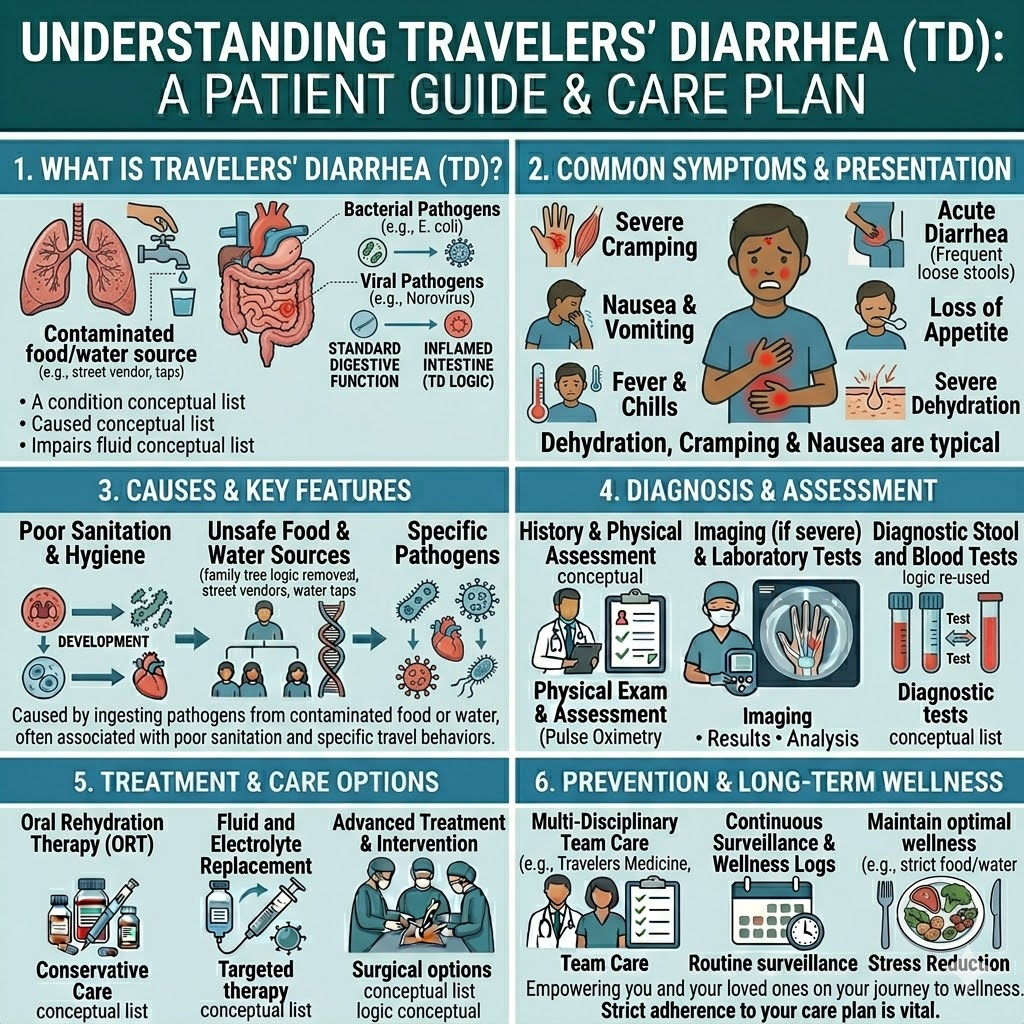
Traveler's Diarrhea is a common digestive problem that can affect individuals visiting new places, especially where the climate or sanitation practices differ from home. It typically causes sudden loose stools and stomach cramps. This condition primarily results from consuming food or water contaminated with germs like bacteria, viruses, or parasites. While generally not serious, it can be unpleasant and disrupt travel plans. Most cases resolve on their own, but being prepared with preventative measures and knowing when to seek medical help can ensure a smoother trip and quicker recovery.
Understanding the Condition
Traveler's Diarrhea: Understanding and Preventing 'Vacation Sickness'
Understanding the Condition
Common Symptoms
Common Symptoms
When to Seek Medical Attention (Adults): While often mild, some symptoms warrant a visit to a healthcare professional. For adults, see a doctor if:* Your diarrhea lasts longer than two days.* You show signs of dehydration (e.g., very dry mouth, intense thirst, little to no urination, dizziness, extreme weakness).* You have severe stomach or rectal pain.* You notice blood or black color in your stools.* You have a fever above 102°F (39°C).
When to Seek Medical Attention (Children): Children are more vulnerable to dehydration. If your child experiences any of the severe symptoms listed above, or if their diarrhea lasts longer than a day, it's crucial to consult a healthcare professional immediately.
Consultation Guide
Which Specialist to Meet
For general concerns or typical cases of Traveler's Diarrhea, you should initially consult a general practitioner or family doctor. If symptoms are severe, persistent, or if there are complications, they may refer you to an infectious disease specialist or a gastroenterologist (a doctor specializing in digestive health). For children, a pediatrician is the appropriate specialist.
Preparations Before Your Visit
Before your visit, be prepared to discuss your symptoms in detail, including when they started, their severity, and any changes you've noticed. Mention your recent travel history, including specific destinations and dates. List all foods and drinks you've consumed recently, especially anything you suspect might be contaminated. Also, bring a complete list of all medications you are currently taking, including any over-the-counter drugs, supplements, or pre-travel vaccinations.
Book a doctor visit near me
Your doctor will ask about your symptoms, recent travel history, dietary habits during travel, and any existing medical conditions. This initial assessment often provides enough information to diagnose Traveler's Diarrhea, especially if your symptoms are typical and your travel was to a high-risk area.
You will have a conversation with your doctor about your experiences. They will inquire about the onset, duration, and specific characteristics of your diarrhea, such as frequency, consistency, and presence of blood. They will also ask about any other accompanying symptoms like fever, vomiting, or abdominal pain, and any medications you have taken. This is a non-invasive part of the diagnostic process.
Stool Sample Analysis (Stool Culture and Parasite Exam)
If your symptoms are severe, persistent, or if your doctor suspects a specific bacterial or parasitic infection, a stool sample may be requested. This laboratory test involves analyzing a small sample of your stool to identify the exact infectious agent, such as specific bacteria, viruses, or parasites. This helps guide targeted treatment, especially if standard therapies are not effective.
Dietary Adjustments: Consume bland, easily digestible foods such as rice, bananas, toast, and plain crackers. Avoid dairy products, spicy, greasy, or high-fiber foods, and caffeine until your symptoms improve. (Duration: Follow until symptoms subside, usually for 2-5 days.)
Rest: Allowing your body ample rest can aid in recovery and conserve energy. (Duration: As needed, until symptoms improve and you regain strength.)
Antimotility Agents: These medications help slow down bowel movements and reduce the frequency of diarrhea, offering symptomatic relief. (Duration: Typically used for short periods, 1-2 days, to manage acute symptoms. Not recommended if you have a fever or bloody stools.)
Antibiotics (Prescription): If bacterial infection is suspected or confirmed, or if symptoms are severe, your doctor may prescribe antibiotics to eliminate the bacteria. (Duration: Typically 1-5 days, strictly as prescribed by your doctor. It's crucial to complete the full course even if you feel better.)
Monitor for Persistent Symptoms: While most cases resolve completely, if diarrhea or other digestive issues persist for weeks or months after returning home, it's important to see a doctor. This could indicate a persistent infection or the development of post-infectious conditions like irritable bowel syndrome (IBS).
Replenish Gut Health: After an episode, consider consuming probiotic-rich foods or supplements, as advised by your doctor, to help restore the balance of beneficial bacteria in your gut.
Consultation Guide
Traveler's Diarrhea is a common digestive problem that can affect individuals visiting new places, especially where the climate or sanitation practices differ from home. It typically causes sudden loose stools and stomach cramps. This condition primarily results from consuming food or water contaminated with germs like bacteria, viruses, or parasites. While generally not serious, it can be unpleasant and disrupt travel plans. Most cases resolve on their own, but being prepared with preventative measures and knowing when to seek medical help can ensure a smoother trip and quicker recovery.
You will be provided with a sterile container and clear instructions on how to collect a small amount of your stool at home. It's important to collect the sample cleanly and without contamination from urine or toilet water. The sample then needs to be promptly delivered to the laboratory for analysis. This process is generally straightforward and causes no discomfort, requiring no special preparation other than following the hygiene guidelines provided.
Antiparasitic Medications (Prescription): For cases where parasites are identified as the cause, specific prescription medications are used to treat the parasitic infection. (Duration: Varies depending on the parasite and medication, often 3-10 days, strictly as prescribed by your doctor.)
Diagnostic Procedures
Clinical Evaluation and Travel History
What to Expect
What to Expect
Treatment Options
Home Remedies and Supportive Care
Oral Rehydration Solutions (ORS): Drinking fluids containing balanced salts and sugars helps replace lost fluids and electrolytes, preventing dehydration. Options include commercial ORS packets, clear broths, and diluted fruit juices. (Duration: Continue consuming small, frequent amounts until diarrhea resolves and you are fully rehydrated, typically for 1-5 days.)
Medications (Over-the-Counter and Prescription)
Bismuth Subsalicylate: An over-the-counter medicine that can reduce the severity and duration of diarrhea, and may have mild antibacterial effects. (Duration: Can be taken as directed for up to 2 days for treatment, or for prevention during travel.)
Pre-Travel Medical Consultation: Before traveling to high-risk areas, consult your doctor. They can provide personalized advice, discuss preventative medications (prophylaxis), and prescribe 'standby' antibiotics to take if you develop severe diarrhea during your trip.
Long-Term Wellbeing and Monitoring
Prevention & Long-Term Wellbeing
Prevention Strategies
Observe the 'Boil it, Cook it, Peel it, or Forget it' Rule: This general guideline is crucial for preventing illness. Ensure food is thoroughly cooked and served hot. If you can't peel fruits or vegetables yourself (like grapes or berries), it's safer to avoid them. Avoid raw or undercooked meats, fish, and shellfish.
Avoid Contaminated Water and Ice: Drink only bottled water with an unbroken seal, carbonated beverages from sealed cans, or hot coffee and tea. Avoid tap water, ice cubes made from tap water, and unpasteurized milk or dairy products, including ice cream. Remember, alcohol in drinks does not make contaminated water or ice safe.
Be Wary of Street Food and Buffets: Food from street vendors or moist foods kept at room temperature, such as sauces and buffet offerings, are often high-risk sources of contamination. Stick to well-cooked, hot foods from reputable establishments.
Practice Excellent Hand Hygiene: Wash your hands thoroughly with soap and water before eating and after using the restroom. If soap and water are unavailable, use an alcohol-based hand sanitizer containing at least 60% alcohol.
Tags & Topics
Notice an error or need an update?
Help us keep medical information accurate. Report incorrect info or suggest an edit.


