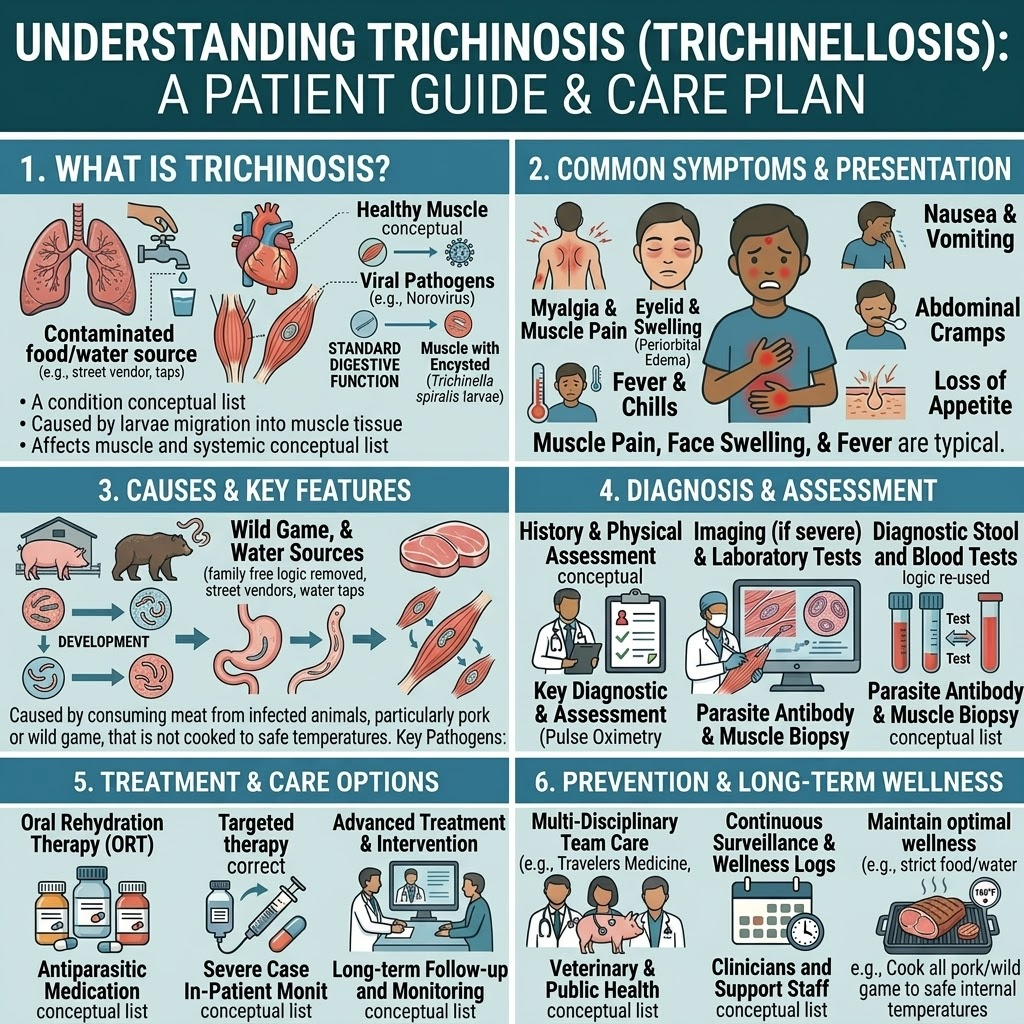
Trichinosis, also known as trichinellosis, is an infection caused by a type of parasitic roundworm. People get this infection by eating raw or undercooked meat from infected animals, such as wild game or domestic pigs. Once consumed, the worm larvae mature in the intestines and then spread throughout the body, settling in muscle tissue. While treatments are available, preventing trichinosis through proper food preparation, especially thorough cooking of meat, is key.
Understanding the Condition
Trichinosis: A Parasitic Roundworm Infection
Understanding the Condition
Common Symptoms
Early Digestive Symptoms (1-2 days after infection): These symptoms appear shortly after consuming infected meat, as the worms begin to grow in the digestive system. They can vary in intensity depending on the number of parasites ingested. Common early symptoms include: diarrhea, stomach pain or cramping, feeling sick to your stomach (nausea), throwing up (vomiting), unusual tiredness or fatigue, and fever.
Later Muscle-Related Symptoms (about 1 week after infection): As the adult worms in the intestine produce new larvae, these larvae travel through the bloodstream and settle into muscle tissue throughout the body. The severity of these symptoms often depends on how many larvae have invaded the muscles. Symptoms during this stage can include: muscle aches and pain, muscle weakness, tenderness in the muscles, swelling around the eyes, and sensitivity to bright light.
Asymptomatic Cases: It's important to note that if only a small number of parasites are consumed, a person may experience no symptoms at all.
Consultation Guide
Which Specialist to Meet
Initially, you should consult your primary care physician. If trichinosis is suspected, they may refer you to an infectious disease specialist who has expertise in treating parasitic infections.
Preparations Before Your Visit
Before your appointment, gather information about your symptoms, including when they started and how they've changed. Prepare a list of all medications, vitamins, and supplements you are taking. Be ready to discuss your recent diet, especially any consumption of raw or undercooked meat, and any recent travel. Writing down questions beforehand can also help ensure you cover all your concerns during the visit.
Book a doctor visit near me
Pain Relievers: Over-the-counter or prescription pain relievers can help manage muscle pain and discomfort caused by the larvae settling in the muscles. (Duration: As needed, until muscle symptoms subside.)
Follow-up with Your Doctor: After treatment, it's important to follow up with your doctor to ensure the infection has cleared and to monitor for any persistent symptoms. While most people recover fully, some may experience lingering muscle discomfort or weakness for an extended period.
Manage Lingering Symptoms: If residual muscle pain or fatigue persists, your doctor can advise on strategies to manage these symptoms, which might include continued use of pain relievers or physical therapy.
Consultation Guide
Trichinosis, also known as trichinellosis, is an infection caused by a type of parasitic roundworm. People get this infection by eating raw or undercooked meat from infected animals, such as wild game or domestic pigs. Once consumed, the worm larvae mature in the intestines and then spread throughout the body, settling in muscle tissue. While treatments are available, preventing trichinosis through proper food preparation, especially thorough cooking of meat, is key.
Diagnostic Procedures
Blood tests can help detect signs of an infection, such as an increased number of certain white blood cells (eosinophils) that often rise during parasitic infections. Specific antibody tests can also identify antibodies the body produces in response to the Trichinella parasite, which typically appear a few weeks after infection.
What to Expect
A healthcare professional will draw a small sample of blood, usually from a vein in your arm, using a needle. You might feel a brief sting or pinch. The sample is then sent to a laboratory for analysis.
In some cases, if blood tests are inconclusive or to confirm the diagnosis, a muscle biopsy may be performed. This procedure involves taking a tiny sample of muscle tissue to examine under a microscope for the presence of Trichinella larvae, which encapsulate themselves in cysts within the muscle.
What to Expect
This is a minor surgical procedure usually performed in a doctor's office or clinic. The area where the biopsy will be taken (often the biceps or deltoid muscle) will be numbed with a local anesthetic. A small incision will be made, and a tiny piece of muscle tissue will be removed. The incision is then closed with stitches or adhesive strips. You may experience some mild soreness or bruising at the site afterwards.
Antiparasitic Medications: These medicines work to kill the adult worms in your intestine and can also be effective against some larvae. They help reduce the number of parasites in your body. (Duration: Typically several days to two weeks, depending on the specific medication and severity of the infection.)
Treatment Options
Medications
Anti-inflammatory Agents: Medications to reduce inflammation may be prescribed to lessen swelling and discomfort, especially if there is significant inflammation around the muscles where larvae have settled. (Duration: As needed or for a prescribed period, usually until inflammation decreases.)
Prevention & Long-Term Wellbeing
Prevention
Cook Meat Thoroughly: Always cook pork, wild game, and other meats to safe internal temperatures. Use a meat thermometer to ensure the thickest part of the meat reaches at least 145°F (63°C) for whole cuts of pork, 160°F (71°C) for ground meat, and 165°F (74°C) for poultry. Cooking until juices run clear and meat is no longer pink inside is a good visual indicator, but a thermometer is more reliable.
Freeze Pork: Freezing pork less than 6 inches thick at 5°F (-15°C) for 20 days, or -4°F (-20°C) for 3 days, can kill most Trichinella larvae. This method is less effective for wild game as some species of Trichinella found in wild animals are more resistant to freezing.
Avoid Cross-Contamination: Use separate cutting boards and utensils for raw meat to prevent the spread of parasites to other foods.
Practice Good Hygiene: Wash your hands thoroughly with soap and water after handling raw meat.
Avoid Feeding Uncooked Scraps to Animals: Do not feed raw or undercooked meat scraps to pigs or other animals, as this can perpetuate the parasite's life cycle in animal populations.
Cure or Smoke Meat Safely: Curing, drying, smoking, or microwaving meat does not reliably kill Trichinella larvae. Always cook meat to safe temperatures regardless of other preparation methods.
Long-Term Monitoring
Tags & Topics
Notice an error or need an update?
Help us keep medical information accurate. Report incorrect info or suggest an edit.


