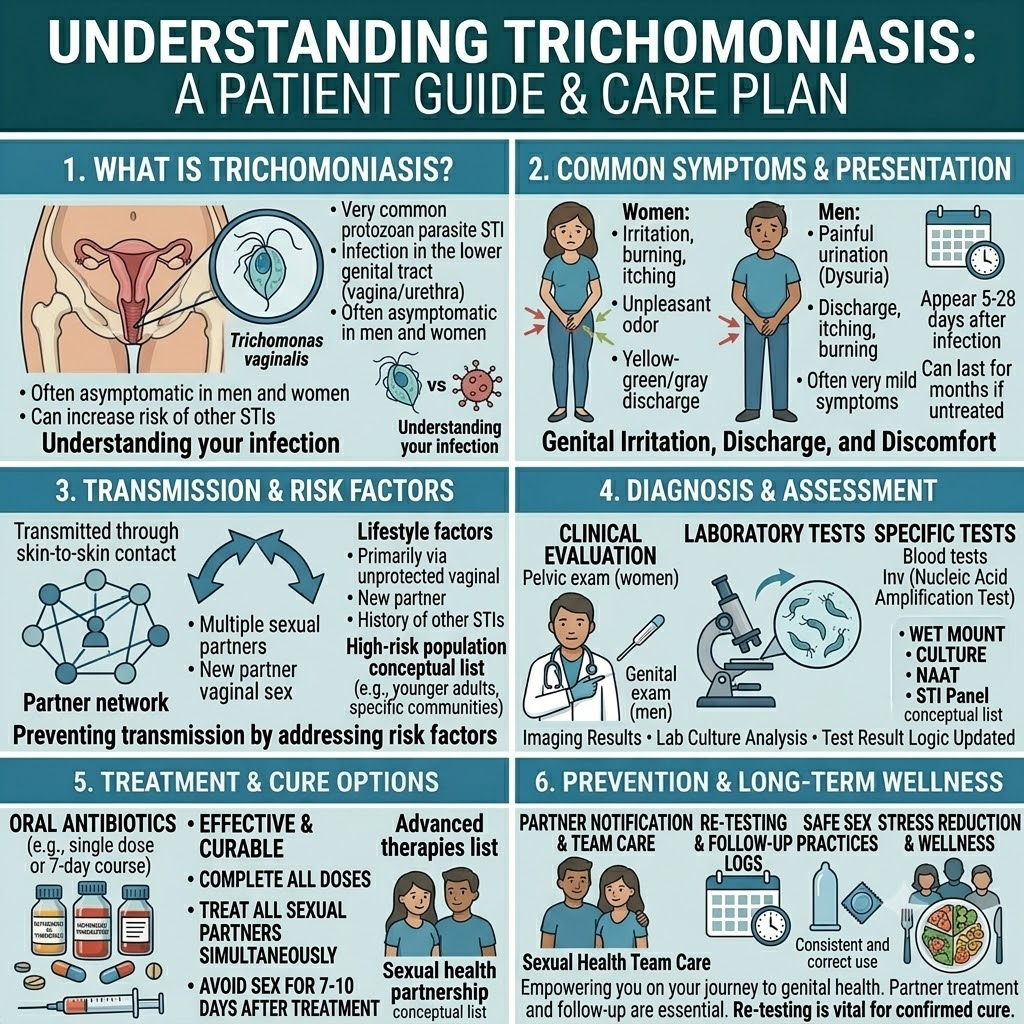
Trichomoniasis is a very common sexually transmitted infection (STI) caused by a tiny parasite. It primarily spreads through sexual contact and genital touching without protection. In women, it can lead to noticeable symptoms like an unusual vaginal discharge, itching, and pain during urination. However, men often show no symptoms at all, even though they can still spread the parasite. Having trichomoniasis can increase your risk of getting or giving other STIs, including HIV. For pregnant individuals, the infection might increase the risk of giving birth early (premature birth). Treatment involves taking specific medication, and it's essential for all sexual partners to be treated simultaneously to prevent reinfection. Practicing safe sex, like consistent condom use and regular STI testing, can help lower your risk.
Understanding the Condition
Trichomoniasis: A Common Sexually Transmitted Infection Explained
Understanding the Condition
Trichomoniasis is a very common sexually transmitted infection (STI) caused by a tiny parasite. It primarily spreads through sexual contact and genital touching without protection. In women, it can lead to noticeable symptoms like an unusual vaginal discharge, itching, and pain during urination. However, men often show no symptoms at all, even though they can still spread the parasite. Having trichomoniasis can increase your risk of getting or giving other STIs, including HIV. For pregnant individuals, the infection might increase the risk of giving birth early (premature birth). Treatment involves taking specific medication, and it's essential for all sexual partners to be treated simultaneously to prevent reinfection. Practicing safe sex, like consistent condom use and regular STI testing, can help lower your risk.
Common Symptoms
Symptom Onset and Asymptomatic Cases: Symptoms may begin anywhere from 5 to 28 days after infection, or sometimes much later. Many individuals, particularly men, might not experience any symptoms at all. Despite this, the parasite can still be spread to others.
Symptoms in Women: For women, common symptoms include a frothy vaginal discharge that might be yellow-green or gray, often accompanied by a strong, unpleasant (foul-smelling) odor. Other signs can involve vaginal itching, burning, redness or soreness, discomfort or pain during urination, and pain during sexual intercourse.
Symptoms in Men: Men rarely develop symptoms with trichomoniasis. However, when symptoms do occur, they can include irritation inside the penis, a mild discharge from the penis, and a burning sensation during urination or after ejaculation.
Consultation Guide
Which Specialist to Meet
Before your visit, make a list of all your symptoms, including when they started and how severe they are. Be prepared to discuss your sexual history, including the number of partners and any recent unprotected sexual encounters. Also, list any medications, vitamins, or supplements you are currently taking. Write down any questions you have for the doctor.
Book a doctor visit near me
Oral Antibiotic Treatment: Trichomoniasis is effectively treated with a specific type of oral antibiotic medication that kills the parasite. It is critical that the infected individual and all current sexual partners receive treatment at the same time, even if partners do not have symptoms, to prevent reinfection. (Duration: Typically given as a single large dose, or a smaller dose taken twice daily for 5 to 7 days.)
Abstinence During Treatment: To ensure the treatment is fully effective and to prevent spreading the infection or getting reinfected, it is strongly recommended to avoid all sexual activity until both you and all your sexual partners have completed the full course of medication and all symptoms have completely resolved. (Duration: Typically until about 7 days after the single dose treatment or after completing the 7-day course, and when symptoms have cleared.)
Follow-Up Testing: While rare, reinfection can occur. Your doctor might recommend follow-up testing, particularly if your symptoms return or if you are at a high risk of reinfection, to ensure the infection has completely cleared and to monitor for any recurrence.
Consultation Guide
For women, a healthcare professional will use a soft swab to gently collect a sample of fluid from your vagina. For men, a similar swab might be used inside the penis, or you may be asked to provide a urine sample. The collection is usually quick and might cause brief, mild discomfort. The sample is then sent to a laboratory where it is either examined under a microscope for the presence of the parasite or tested using rapid diagnostic methods to detect its genetic material.
Diagnostic Procedures
You should consult a general practitioner, a gynecologist (for women), a urologist (for men), or visit a sexual health clinic. These specialists can accurately diagnose and treat sexually transmitted infections.
Preparations Before Your Visit
Parasite Identification Test for Trichomoniasis
This test directly looks for the trichomoniasis parasite. For women, a sample of vaginal fluid is typically collected. For men, a sample might be taken from inside the penis (urethral swab) or a urine sample may be used.
What to Expect
Urinalysis (Urine Test)
A urinalysis is a general test of your urine. It helps detect and manage a wide range of conditions, such as urinary tract infections, kidney disease, and diabetes, by checking the appearance, concentration, and content of your urine.
What to Expect
You will be asked to provide a 'clean-catch' urine sample. This means you will clean your genital area first, then start to urinate into the toilet, and finally collect the middle part of your urine stream into a sterile cup. This helps prevent contamination of the sample. The sample is then sent to a lab where it will be visually inspected (e.g., for cloudiness), chemically tested using dipsticks for substances like protein or blood, and examined under a microscope to look for cells, bacteria, or other microscopic elements.
Regular STI Testing and Partner Communication: If you are sexually active, especially with new or multiple partners, getting tested regularly for sexually transmitted infections is important. Openly discuss your STI status and testing history with your partner(s) before engaging in sexual activity.
Mutual Monogamy: Being in a long-term, mutually monogamous relationship with a partner who has been tested and is known to be free of STIs can effectively reduce your risk of contracting trichomoniasis.
Avoid Sharing Sex Toys: If sex toys are shared, they should be thoroughly cleaned and covered with a new condom between each person's use to prevent the transmission of infections.
Addressing Co-existing STIs: Having trichomoniasis can unfortunately increase your risk of getting or transmitting other sexually transmitted infections, including HIV. It's important to be tested for other STIs and to manage any co-existing infections for your overall sexual health.
Special Support for Pregnant Individuals: Pregnant individuals diagnosed with trichomoniasis will receive specific care to manage the infection safely and reduce the risk of complications such as premature birth. Close monitoring by a healthcare provider is crucial during this time.
Treatment Options
Medications
Prevention & Long-Term Wellbeing
Prevention
Consistent Condom Use: Using a new condom correctly every time you have sex significantly reduces your risk of getting or spreading trichomoniasis and other sexually transmitted infections. Condoms create a physical barrier against the transmission of the parasite.
Tags & Topics
Notice an error or need an update?
Help us keep medical information accurate. Report incorrect info or suggest an edit.


