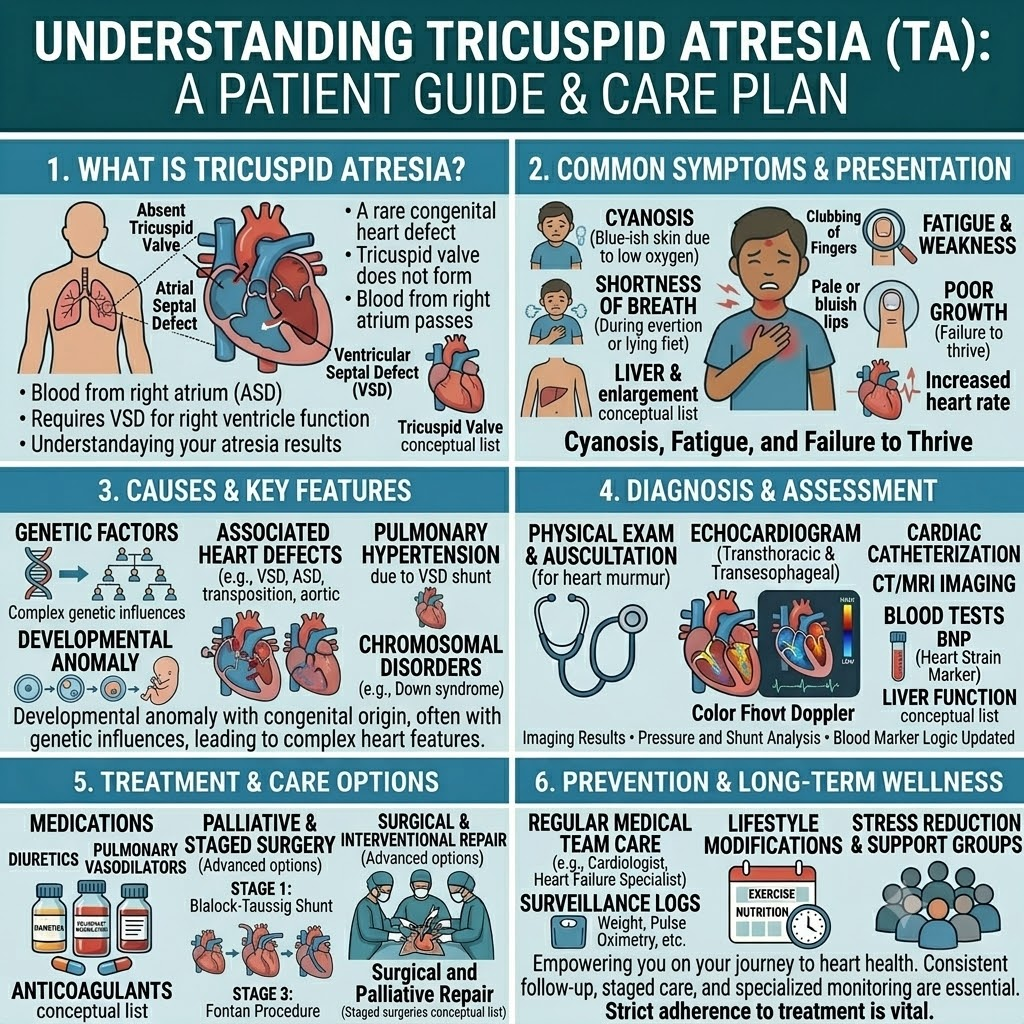
Tricuspid atresia is a serious heart problem present at birth, meaning it's a congenital heart defect. In a healthy heart, the tricuspid valve allows blood to flow from the upper right chamber (right atrium) to the lower right chamber (right ventricle). With tricuspid atresia, this valve is missing or not fully formed; instead, a solid sheet of tissue blocks the pathway. This prevents blood from flowing normally to the right lower heart chamber, which often leads to it being underdeveloped. As a result, blood can't reach the lungs effectively to pick up oxygen, meaning the body doesn't get enough oxygen. Babies with this condition often have other heart defects, such as a hole between the upper heart chambers (atrial septal defect) or the lower heart chambers (ventricular septal defect), which allow some blood to circulate.
Understanding the Condition
Tricuspid Atresia: Understanding a Congenital Heart Condition
Understanding the Condition
Tricuspid atresia is a serious heart problem present at birth, meaning it's a congenital heart defect. In a healthy heart, the tricuspid valve allows blood to flow from the upper right chamber (right atrium) to the lower right chamber (right ventricle). With tricuspid atresia, this valve is missing or not fully formed; instead, a solid sheet of tissue blocks the pathway. This prevents blood from flowing normally to the right lower heart chamber, which often leads to it being underdeveloped. As a result, blood can't reach the lungs effectively to pick up oxygen, meaning the body doesn't get enough oxygen. Babies with this condition often have other heart defects, such as a hole between the upper heart chambers (atrial septal defect) or the lower heart chambers (ventricular septal defect), which allow some blood to circulate.
Common Symptoms
Symptoms of Heart Failure (in some cases): These can include swelling in the legs, ankles, feet, or belly area, persistent shortness of breath, and extreme tiredness, indicating the heart is struggling to pump enough blood.
Consultation Guide
Which Specialist to Meet
Before your visit, gather any available medical records related to the diagnosis, including prenatal screening results or postnatal test reports. Prepare a list of questions you have regarding the condition, its treatment, and long-term outlook. Note down any symptoms your baby or child is experiencing, including details about their frequency and severity. Knowing your family medical history, especially regarding heart conditions, can also be helpful.
Book a doctor visit near me
Symptom Monitoring and Reporting: Caregivers and individuals should remain vigilant for symptoms like changes in skin color, breathing difficulties, unusual tiredness, or growth issues. Promptly reporting any new or worsening symptoms to the healthcare team is essential for timely intervention.
Consultation Guide
Bluish or Grayish Skin and Lips (Cyanosis): This occurs because the body is not receiving enough oxygen, causing the skin, lips, and nail beds to appear blue or gray.
Trouble Breathing (Dyspnea): Babies may breathe rapidly or struggle to catch their breath due to the heart's inability to efficiently deliver oxygen-rich blood.
Tiring Easily: Lack of oxygen makes even simple activities exhausting. Babies might become tired quickly during feeding or crying.
Slow Growth and Poor Weight Gain: The increased effort required for the heart to function and the body's lack of oxygen can hinder normal development and weight gain.
Diagnostic Procedures
If tricuspid atresia is suspected or diagnosed, you will likely consult with a pediatric cardiologist, a doctor specializing in heart conditions in children. For adults living with tricuspid atresia, an adult congenital cardiologist, who specializes in congenital heart defects in adults, is the appropriate specialist. Other specialists may include cardiac surgeons and genetic counselors.
Preparations Before Your Visit
An echocardiogram is a common and non-invasive test that uses sound waves to create moving pictures of the heart. These pictures show the heart's structure, how well the chambers and valves are working, and how blood flows through the heart. It is crucial for diagnosing tricuspid atresia as it can clearly visualize the missing tricuspid valve and associated heart defects.
What to Expect
During the procedure, you or your child will lie on an exam table. A gel will be applied to the chest, and a handheld device called a transducer will be gently moved over the skin. The transducer sends and receives sound waves, which are converted into images on a screen. You may feel slight pressure from the transducer, but the test is generally painless. Sensors may also be attached to the chest or legs to monitor heart rhythm. The entire test usually takes 30 to 60 minutes.
Diagnostic ultrasound, also known as sonography, uses high-frequency sound waves to create images of structures inside the body. In the context of tricuspid atresia, ultrasound can be used during pregnancy (fetal ultrasound) to detect heart abnormalities in the developing baby before birth. Postnatally, it can be used to assess the heart or other body systems, complementing an echocardiogram.
What to Expect
For most ultrasounds, you'll lie on an exam table. A gel will be applied to your skin over the area being examined, and a transducer will be moved across the skin to capture images. You might feel some pressure. Depending on the area being examined, some preparation might be required, such as not eating or drinking for a few hours prior, or drinking water to ensure a full bladder. Wear loose, comfortable clothing, as you may be asked to remove jewelry or change into a gown. The procedure is typically safe and painless, lasting about 15 to 60 minutes.
Treatment Options
Surgical Procedures
Corrective Heart Surgeries: Tricuspid atresia requires a series of surgical procedures to redirect blood flow within the heart and to the lungs. These operations aim to ensure the body receives enough oxygen. Typically, multiple surgeries are performed in stages, starting in infancy, to gradually improve the heart's function and circulation. The exact procedures vary based on the individual’s condition and specific heart structure, with the goal of creating a pathway for deoxygenated blood to flow directly to the lungs. (Duration: A series of procedures over childhood, with ongoing monitoring and potential for future surgeries throughout life.)
Regular Medical Follow-up: Ongoing visits with a pediatric or adult congenital cardiologist are crucial. These regular check-ups help monitor heart health, manage any complications, and plan for potential future interventions or follow-up surgeries, which are often needed.
Prevention & Long-Term Wellbeing
Long-Term Management
Healthy Lifestyle Choices: Maintaining a balanced, nutritious diet and engaging in physical activity as advised by a doctor are important for overall heart health. For adults, avoiding smoking and excessive alcohol consumption is also recommended.
Emotional and Psychological Support: Living with a chronic heart condition can be challenging. Seeking support from family, friends, support groups, or mental health professionals can provide valuable coping strategies and improve quality of life.
Tags & Topics
Notice an error or need an update?
Help us keep medical information accurate. Report incorrect info or suggest an edit.


