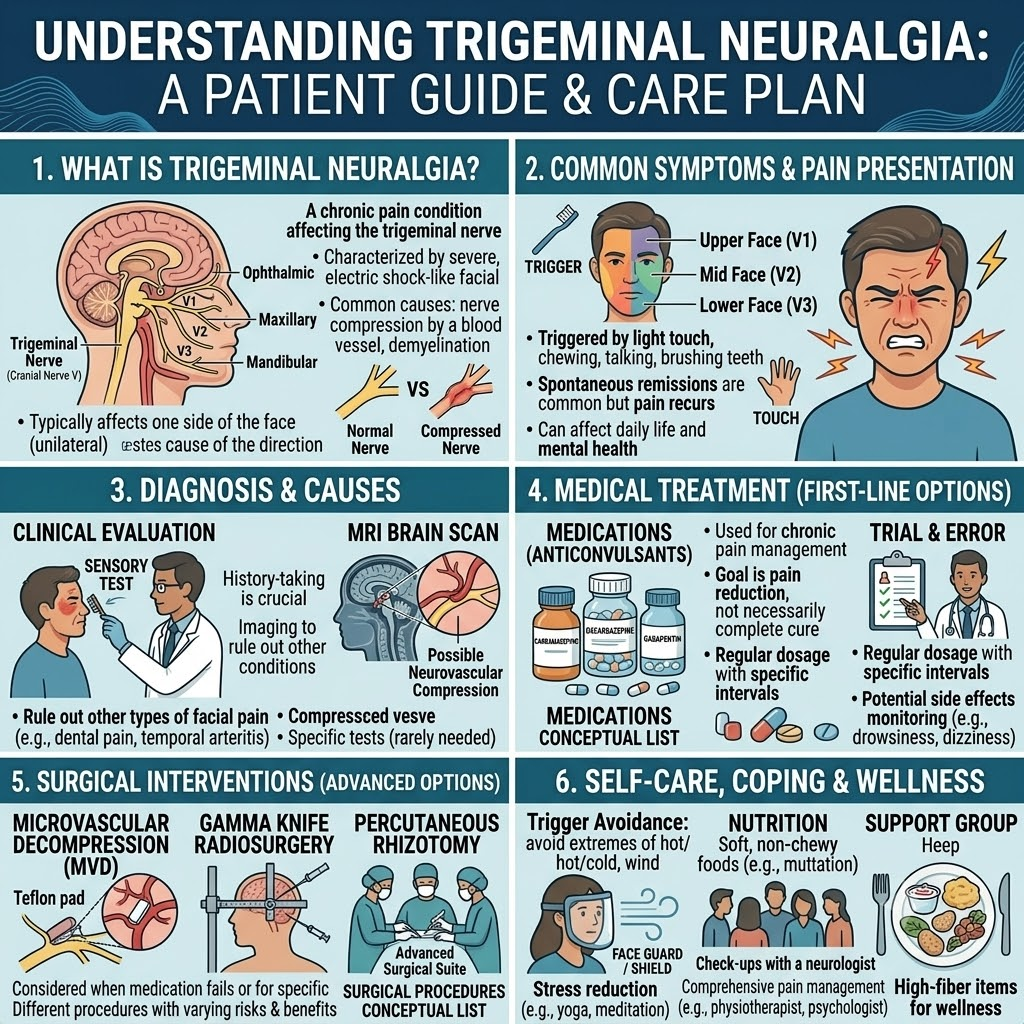
Trigeminal neuralgia (pronounced try-JEM-ih-nul nu-RAL-juh) is a condition causing sudden, intense facial pain, often described as an electric shock. This pain typically affects one side of the face and is linked to the trigeminal nerve, which sends sensation signals from the face to the brain. Even a light touch, like brushing teeth or applying makeup, can set off a painful jolt. Trigeminal neuralgia is a long-lasting (chronic) pain condition. Initially, pain episodes might be brief and mild, but they can become more frequent and severe over time. It's more common in women and individuals over the age of 50. While challenging, trigeminal neuralgia is usually manageable with appropriate treatment, allowing for a better quality of life.
Understanding the Condition
Trigeminal Neuralgia: Understanding and Managing Severe Facial Pain
Understanding the Condition
Common Symptoms
Intense Shock-like Pain: Sudden, severe shooting or jabbing pain, often feeling like an electric shock.
Triggered Pain Episodes: Pain onset can be sudden or brought on by activities such as touching the face, chewing, speaking, or brushing teeth.
Varying Duration: Pain episodes typically last from a few seconds to several minutes.
Facial Spasms: Pain may occur alongside involuntary muscle twitches or spasms in the face.
Fluctuating Pain Periods: Episodes can last days, weeks, or even months, sometimes with periods of complete pain relief in between.
Pain Location: Affects areas served by the trigeminal nerve, commonly the cheek, jaw, teeth, gums, or lips. Less often, it can involve the eye and forehead.
One-Sided Pain: Pain nearly always occurs on only one side of the face at a time.
Localized or Widespread: Pain may be concentrated in a single spot or spread across a wider facial area.
Rare During Sleep: Pain seldom occurs while sleeping.
Worsening Over Time: Pain episodes tend to become more frequent and intense as the condition progresses.
Consultation Guide
Which Specialist to Meet
You should consult a neurologist, a specialist in brain and nerve disorders. Depending on your needs, a pain management specialist or a neurosurgeon (a surgeon specializing in the brain and nervous system) may also be involved in your care.
Preparations Before Your Visit
Consistent Medical Follow-up: Regular visits with your healthcare provider are crucial to monitor your condition, adjust medications, evaluate treatment effectiveness, and address any new symptoms or concerns.
Consultation Guide
A doctor will evaluate your face to identify the exact areas affected by pain and determine which branch of the trigeminal nerve might be involved. They will also perform a neurological exam, testing your reflexes and checking for any signs of nerve damage. This helps rule out other conditions that might cause similar pain.
An MRI scan uses powerful magnets and radio waves to create detailed images of your brain. This imaging helps doctors look for a blood vessel pressing on the trigeminal nerve, or identify other potential causes like a tumor or signs of multiple sclerosis that could be affecting the nerve.
Anticonvulsants: These medications, originally developed to treat seizures, are often the first-line treatment for trigeminal neuralgia because they can calm overactive nerves, reducing pain signals. (Duration: Ongoing, adjusted as needed)
Muscle Relaxants: These can be used alone or in combination with anticonvulsants to help alleviate facial muscle spasms and pain. (Duration: Ongoing, adjusted as needed)
Proactive Management of Risk Factors: If you have conditions like high blood pressure or multiple sclerosis, working closely with your doctor to manage these can contribute to overall nerve health and potentially reduce the severity or frequency of trigeminal neuralgia episodes.
Diagnostic Procedures
Neurological Examination
What to Expect
The doctor will gently touch different parts of your face, particularly the areas where you experience pain, and observe your reactions. They may ask you to make certain facial expressions or chew. They will also conduct standard neurological checks, like testing your arm and leg reflexes and strength. This examination is usually quick and non-invasive.
Magnetic Resonance Imaging (MRI)
What to Expect
You will lie on a movable table that slides into a large, tunnel-shaped machine. It's crucial to remain very still during the scan, which can take 30 to 60 minutes. You might hear loud banging or humming noises from the machine, and you may be offered earplugs or headphones. In some cases, a contrast dye might be injected into a vein to make certain structures more visible. You will be able to communicate with the technician through an intercom.
Treatment Options
Trigeminal neuralgia (pronounced try-JEM-ih-nul nu-RAL-juh) is a condition causing sudden, intense facial pain, often described as an electric shock. This pain typically affects one side of the face and is linked to the trigeminal nerve, which sends sensation signals from the face to the brain. Even a light touch, like brushing teeth or applying makeup, can set off a painful jolt. Trigeminal neuralgia is a long-lasting (chronic) pain condition. Initially, pain episodes might be brief and mild, but they can become more frequent and severe over time. It's more common in women and individuals over the age of 50. While challenging, trigeminal neuralgia is usually manageable with appropriate treatment, allowing for a better quality of life.
Before your appointment, it's helpful to keep a detailed pain diary, noting when pain episodes occur, what triggers them, their duration, and intensity. Prepare a list of all current medications, including supplements, and any medical conditions you have. Write down any questions you have for the doctor.
Book a doctor visit near me
Trigger Avoidance: Identifying and avoiding specific actions, foods, or environmental factors that trigger pain episodes can significantly reduce their frequency and severity. This might include avoiding very hot or cold foods, protecting your face from wind, or using soft-bristled toothbrushes. (Duration: Ongoing)
Medications
Tricyclic Antidepressants: While primarily used for depression, these medications in lower doses can help manage chronic pain by influencing brain chemicals involved in pain perception. (Duration: Ongoing, adjusted as needed)
Therapies
Acupuncture: This traditional practice involves inserting very thin needles into specific points on the body. It is believed to balance energy flow or stimulate nerves, muscles, and connective tissue, potentially boosting the body's natural pain-relieving mechanisms. (Duration: Typically a course of several sessions, with maintenance sessions as needed.)
Biofeedback: A mind-body technique where you learn to control involuntary body functions like heart rate or muscle tension using real-time information provided by electronic sensors. It can help you manage stress and pain responses. (Duration: Usually involves several training sessions, followed by ongoing self-practice.)
Surgical Procedures
Brain Stereotactic Radiosurgery (SRS): This non-invasive procedure delivers highly focused beams of radiation to the trigeminal nerve root, aiming to damage the nerve just enough to block pain signals without an incision. It is precisely guided by advanced imaging and computer software. (Duration: A single treatment session, with pain relief taking weeks to months to become noticeable.)
Pain Management Strategies: Beyond medication and procedures, explore complementary approaches like mindfulness, meditation, or gentle exercise (if tolerated) to help cope with chronic pain and improve quality of life.
Stress Reduction Techniques: Stress can exacerbate pain. Incorporate relaxation techniques such as deep breathing, yoga, or hobbies to manage stress levels effectively.
Support Networks: Connecting with others who have trigeminal neuralgia through support groups can provide emotional comfort, practical advice, and a sense of community.
Prevention & Long-Term Wellbeing
Prevention
Identify and Avoid Triggers: Keep a diary to pinpoint specific activities, foods, temperatures, or environmental factors that provoke pain. Once identified, consciously avoid or minimize exposure to these triggers to prevent episodes.
Tags & Topics
Notice an error or need an update?
Help us keep medical information accurate. Report incorrect info or suggest an edit.


