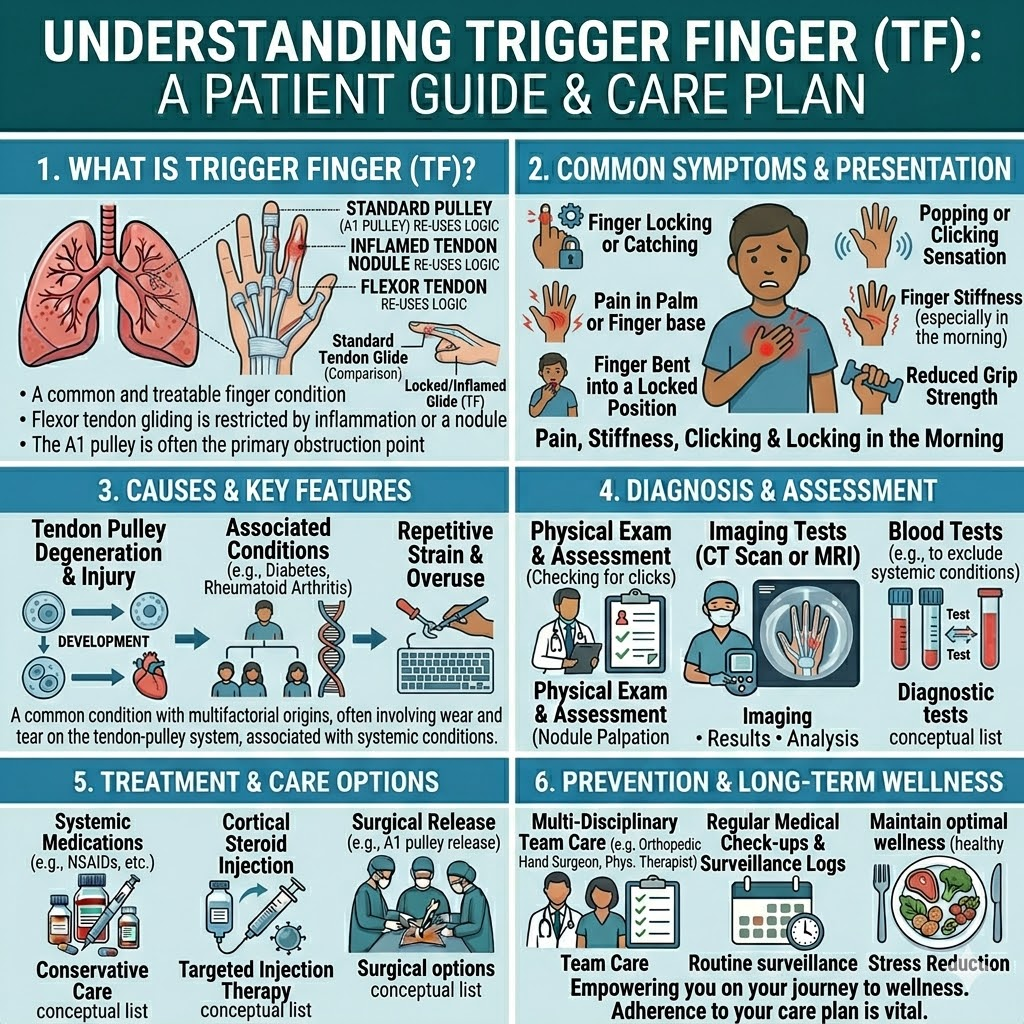
Trigger finger is a common condition that causes a finger or thumb to get stuck in a bent position, making it difficult to straighten. When it does straighten, it may do so suddenly with a snapping sensation, similar to a trigger being pulled. This occurs because the tendon, which connects muscle to bone and allows the finger to move, cannot glide smoothly within its protective tunnel, called a sheath. This difficulty arises from inflammation and swelling of the tendon sheath, or the formation of a small lump (nodule) on the tendon itself, blocking its path. While any finger can be affected, the ring finger and thumb are most common. Risk factors include being a woman over 50, engaging in activities with repetitive gripping, and certain health conditions like diabetes, low thyroid function, or rheumatoid arthritis. Trigger finger can significantly impact daily tasks, but it is a treatable condition.
Understanding the Condition
Understanding the Condition
Common Symptoms
Finger Stiffness: A feeling of stiffness in the affected finger, especially noticeable first thing in the morning.
Popping or Clicking Sensation: A noticeable popping or clicking sound or feeling as you attempt to bend or straighten the affected finger.
Tenderness or Bump: Tenderness or a small, noticeable bump (nodule) located in the palm of the hand at the base of the affected finger.
Finger Catching or Locking: The finger may catch or lock in a bent position, and then suddenly release and pop straight. This can range from mild catching to severe locking.
Finger Locked in Bent Position: In more advanced cases, the finger may become completely locked in a bent position, making it impossible to straighten without assistance.
Consultation Guide
Which Specialist to Meet
Begin by consulting your primary care doctor. Depending on the severity and characteristics of your symptoms, your primary care doctor may refer you to a hand specialist, an orthopedic surgeon (a doctor specializing in bone and joint conditions), or a rheumatologist (if an underlying inflammatory condition like rheumatoid arthritis is suspected).
Preparations Before Your Visit
Before your appointment, prepare a list of your symptoms, noting when they first appeared, how they have progressed, and any activities that worsen or improve them. Include a list of all medications you are currently taking, any significant medical conditions you have, and a list of questions you wish to ask your doctor. This information will help the doctor accurately diagnose your condition and recommend the best course of action.
Book a doctor visit near me
Follow-up Care: If symptoms recur or worsen after treatment, consult your doctor for further evaluation and management.
Consultation Guide
Trigger finger is a common condition that causes a finger or thumb to get stuck in a bent position, making it difficult to straighten. When it does straighten, it may do so suddenly with a snapping sensation, similar to a trigger being pulled. This occurs because the tendon, which connects muscle to bone and allows the finger to move, cannot glide smoothly within its protective tunnel, called a sheath. This difficulty arises from inflammation and swelling of the tendon sheath, or the formation of a small lump (nodule) on the tendon itself, blocking its path. While any finger can be affected, the ring finger and thumb are most common. Risk factors include being a woman over 50, engaging in activities with repetitive gripping, and certain health conditions like diabetes, low thyroid function, or rheumatoid arthritis. Trigger finger can significantly impact daily tasks, but it is a treatable condition.
Diagnostic Procedures
Trigger finger is primarily diagnosed through a physical examination of your hand and fingers by a healthcare professional. There are typically no specialized imaging tests like X-rays needed for diagnosis, as the condition affects soft tissues (tendons) rather than bones.
What to Expect
During the examination, your doctor will carefully observe your fingers as you try to bend and straighten them. They will gently press on the palm of your hand at the base of the affected finger to feel for any tenderness, swelling, or a palpable lump (nodule). They may ask you to perform certain hand movements to assess for clicking, catching, or locking sensations. The examination is generally quick and does not involve any painful procedures.
Treatment Options
Rest and Activity Modification: Avoid or modify activities that involve repetitive gripping, grasping, or prolonged use of the affected finger. This can help reduce inflammation and irritation of the tendon. (Duration: Ongoing, as needed)
Warm Soaks or Ice Application: Applying warmth (e.g., warm water soaks) can help reduce stiffness, while ice packs can help decrease swelling and pain. (Duration: As needed for comfort)
Gentle Finger Exercises: Perform gentle stretching exercises to maintain flexibility and improve the range of motion in your finger. (Duration: Daily)
Medications
Oral Anti-inflammatory Drugs: Over-the-counter or prescribed oral medications can help reduce pain and inflammation in the affected tendon and sheath. (Duration: Short-term, as prescribed (typically days to weeks))
Therapies
Splinting: Wearing a splint, often at night, can help keep the affected finger in a straightened position, allowing the tendon to rest and reduce inflammation. (Duration: Typically 2 to 6 weeks)
Hand Exercises and Physical Therapy: A physical or occupational therapist can teach you specific exercises to stretch and strengthen the hand and finger muscles, improving flexibility and reducing recurrence. (Duration: Weeks to months, as directed)
Corticosteroid Injections: An injection of a potent anti-inflammatory medication directly into the tendon sheath can reduce swelling and allow the tendon to glide more freely. (Duration: Relief often lasts several months; may be repeated once or twice, but not indefinitely)
Surgical Procedures
Open Release Surgery: A small incision is made in the palm of the hand to surgically cut open the constricted part of the tendon sheath, providing more space for the tendon to glide. This is also performed under local anesthesia. (Duration: Quick procedure, recovery typically weeks for grip strength, full recovery can take months)
Continue Gentle Exercises: Even after successful treatment, continuing gentle hand and finger exercises can help prevent recurrence and maintain mobility.
Listen to Your Body: Be mindful of any discomfort or catching sensations in your fingers and adjust activities accordingly to avoid overexertion.
Prevention & Long-Term Wellbeing
Percutaneous Release: This minimally invasive procedure involves inserting a needle into the affected tendon sheath to release the constricted area, allowing the tendon to move freely. It is performed under local anesthesia. (Duration: Quick procedure, recovery typically a few weeks for full hand use)
Prevention
Modify Repetitive Activities: If your activities involve repetitive hand gripping, try to take frequent breaks, use ergonomic tools, or vary your tasks to reduce strain on your tendons.
Manage Underlying Health Conditions: Effectively managing conditions like diabetes, rheumatoid arthritis, or thyroid dysfunction can help reduce your risk of developing trigger finger.
Regular Hand and Finger Stretches: Incorporate gentle stretching and strengthening exercises for your hands and fingers into your daily routine to maintain flexibility and tendon health.
Long-Term Monitoring
Tags & Topics
Notice an error or need an update?
Help us keep medical information accurate. Report incorrect info or suggest an edit.


