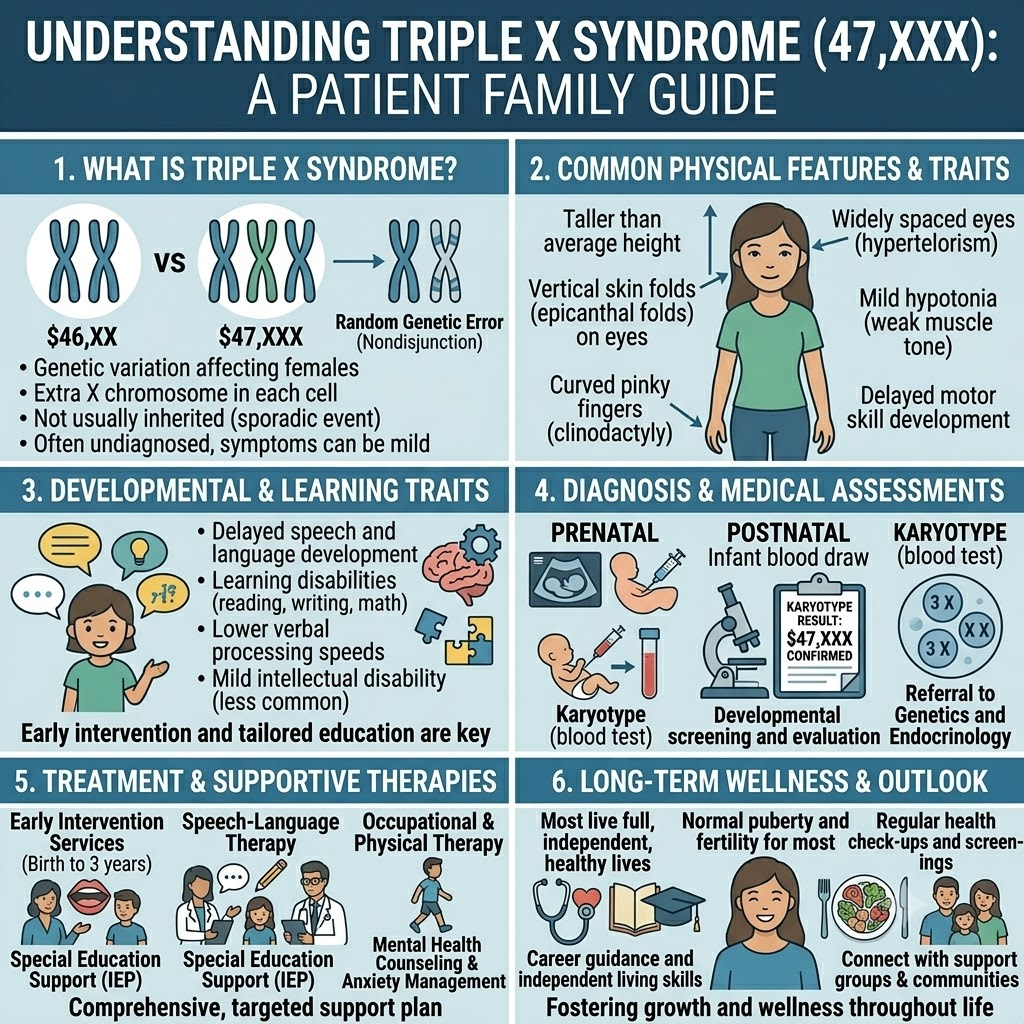
Triple X syndrome, also known as 47,XXX, is a genetic condition that affects females. Normally, females have two X chromosomes, but those with Triple X syndrome have three X chromosomes in some or all of their cells. This condition affects about 1 in 1,000 females. While many individuals with Triple X syndrome may have no noticeable symptoms or only mild ones, others might experience more apparent challenges, such as developmental delays or learning difficulties. Treatment focuses on managing specific symptoms as they arise.
Understanding the Condition
Understanding Triple X Syndrome (47,XXX)
Understanding the Condition
Triple X syndrome, also known as 47,XXX, is a genetic condition that affects females. Normally, females have two X chromosomes, but those with Triple X syndrome have three X chromosomes in some or all of their cells. This condition affects about 1 in 1,000 females. While many individuals with Triple X syndrome may have no noticeable symptoms or only mild ones, others might experience more apparent challenges, such as developmental delays or learning difficulties. Treatment focuses on managing specific symptoms as they arise.
Common Symptoms
Height: Being taller than average height is the most common physical characteristic.
Sexual Development and Fertility: Most females with Triple X syndrome experience normal sexual development and are able to have children.
Cognitive and Learning Abilities: Intelligence is often in the normal range, though it may sometimes be slightly lower compared to siblings. Some individuals may have intellectual disabilities and specific learning challenges, particularly in reading and math.
Developmental Delays: This can include slower development of skills like speaking, walking, or sitting up.
Muscle Tone: Some individuals may have weak muscle tone.
Behavioral Differences: Challenges with attention, anxiety, and sometimes behavioral problems may occur.
Physical Features: Less common physical features can include a pinky finger that curves inward, widely spaced eyes, flat feet, and an unusually small head size.
Other Health Issues: A small number of individuals may experience seizures, kidney problems, abdominal pain, or frequent ear infections.
Consultation Guide
Which Specialist to Meet
If you are concerned about any signs or symptoms, your first step should be to talk with your family doctor or pediatrician. They can help determine the cause and guide you to specialized care if needed. Depending on the symptoms, you might be referred to a geneticist (a doctor specializing in genetic conditions), a developmental pediatrician (who focuses on childhood development), an endocrinologist (for hormone-related issues), an educational psychologist, or various therapists (e.g., speech, occupational, physical therapists).
Preparations Before Your Visit
Before your appointment, it's helpful to write down all observed symptoms, noting when they started and how severe they are. Bring a list of your child's medical history, any family medical history, and a list of questions you have for the doctor. Thinking about how the symptoms impact daily life or learning can also be useful information to share.
Book a doctor visit near me
Medication for Specific Symptoms: Prescribed to manage particular symptoms such as seizures or significant behavioral issues, if they occur. (Duration: Ongoing, as needed, determined by a physician)
Consultation Guide
Genetic testing examines your DNA, which contains the instructions for your body's functions. It can identify changes in your genes that may cause a medical condition. For Triple X syndrome, genetic testing specifically looks for the presence of an extra X chromosome. It's important to discuss the potential results and their implications with a doctor or genetic counselor before testing.
Diagnostic Procedures
What to Expect
Genetic testing typically involves a simple blood test or a cheek swab. For a blood test, a small sample of blood is drawn from a vein, usually in your arm, similar to a routine blood test. For a cheek swab, a soft brush or cotton swab is rubbed gently inside your cheek to collect cells. Both procedures are quick and involve very little discomfort or risk.
Amniocentesis is a test performed during pregnancy to gather information about the baby's health. It involves taking a small sample of amniotic fluid, the liquid that surrounds and protects the baby in the womb. This fluid contains fetal cells that can be tested for genetic conditions like Triple X syndrome. This test is usually offered when there's a higher risk of genetic conditions, such as if the mother is over 35, has abnormal prenatal screening results, or a family history of genetic disorders. It's typically done between 14 and 20 weeks of pregnancy.
What to Expect
Early Diagnosis and Intervention: Early identification of Triple X syndrome allows for prompt access to therapies and support services, which can significantly improve developmental outcomes.
Regular Medical Check-ups: Ongoing monitoring of growth, development, kidney function, and overall health to address any emerging concerns proactively.
Supportive Environment: Creating a nurturing and encouraging home and school environment tailored to the individual's learning style and emotional needs.
Access to Support Groups: Connecting with other families or individuals affected by Triple X syndrome can provide valuable emotional support, shared experiences, and practical advice.
Treatment Options
During an amniocentesis, you will lie on your back. An ultrasound machine will be used to show the baby's position on a monitor. The doctor will clean a small area of your abdomen, and sometimes a local numbing medication is applied. Then, a thin needle is guided by the ultrasound through your abdomen and into the uterus to withdraw a small amount of amniotic fluid. You might feel some pressure or mild cramping during the procedure. The entire process usually takes about 20-30 minutes, with the needle insertion itself lasting only a minute or two. Afterward, you may be advised to rest for a day.
Therapies and Support
Speech and Language Therapy: Helps improve communication skills, especially for individuals with delayed speech or language difficulties. (Duration: Ongoing, as needed throughout childhood and adolescence)
Occupational Therapy: Supports the development of fine motor skills, coordination, and daily living activities. (Duration: Ongoing, as needed, typically in childhood)
Physical Therapy: Aids in improving muscle strength, balance, and gross motor skills, particularly for individuals with weak muscle tone or developmental delays. (Duration: Ongoing, as needed, particularly in early childhood)
Educational Support: Specialized educational plans and resources to address learning disabilities and ensure academic success. (Duration: Throughout schooling years)
Behavioral and Emotional Counseling: Provides strategies and support for managing behavioral challenges, anxiety, or emotional difficulties. (Duration: As needed, for varying periods)
Prevention & Long-Term Wellbeing
Long-Term Management and Support
Promoting Healthy Lifestyle: Encouraging regular physical activity, a balanced diet, and sufficient rest to support overall physical and mental well-being.
Tags & Topics
Notice an error or need an update?
Help us keep medical information accurate. Report incorrect info or suggest an edit.


