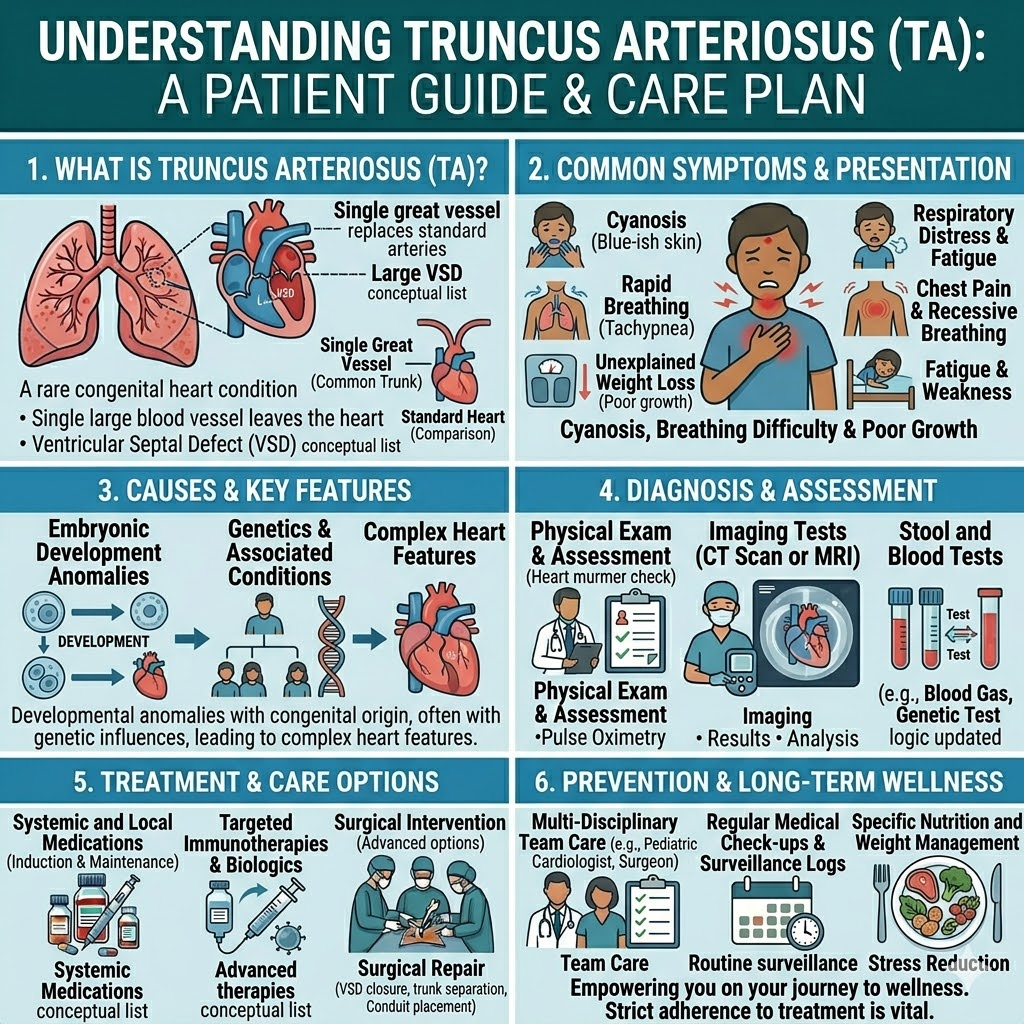
Truncus arteriosus (TRUNG-kus ahr-teer-e-O-sus) is a rare and serious heart condition that babies are born with, known as a congenital heart defect. Instead of the heart having two separate large blood vessels to carry blood to the body and lungs, babies with truncus arteriosus have only one main vessel. This single vessel allows oxygen-rich and oxygen-poor blood to mix, which means the body doesn't receive enough oxygen. It also often causes too much blood to flow into the lungs, making the heart work much harder. Most babies with this condition also have a hole in the wall between their two lower heart chambers, called a ventricular septal defect. This condition is sometimes called common arterial trunk.
Understanding the Condition
Truncus Arteriosus: A Congenital Heart Condition
Understanding the Condition
Common Symptoms
Blue or Gray Skin (Cyanosis): A bluish or grayish tint to the skin, lips, and nail beds, due to low oxygen levels in the blood.
Extreme Sleepiness: The baby appears unusually tired or lethargic.
Poor Feeding: Difficulty feeding, lack of interest in nursing or bottle-feeding, or tiring quickly during feeds.
Poor Growth: Failing to gain weight as expected.
Pounding Heartbeat: A noticeably strong or rapid heart rhythm.
Fast Breathing: Rapid, shallow breathing.
Shortness of Breath: Labored breathing, or difficulty catching breath. If you are concerned about your baby's feeding, sleep, or growth, contact a healthcare professional promptly. Always seek emergency medical care if your baby shows any severe signs of distress, such as significant blueness of the skin, extreme lethargy, or severe difficulty breathing.
Consultation Guide
Which Specialist to Meet
If truncus arteriosus is suspected, you will likely need to consult with a pediatric cardiologist (a heart doctor specializing in children). A genetic counselor may also be recommended, especially if there's a family history of heart conditions or other genetic concerns.
Preparations Before Your Visit
Before your appointment, it's helpful to: write down all your baby's symptoms, when they started, and how severe they are; list any medicines you took during pregnancy, including over-the-counter drugs and supplements; note your family's medical history, particularly any congenital heart conditions; and prepare a list of questions to ask the doctor.
Book a doctor visit near me
Supportive Medications: Before surgery, medications may be used to manage symptoms and improve the baby's condition. These can include diuretics to reduce fluid buildup in the lungs and other medications to help strengthen heart contractions or control blood pressure. (Duration: Typically short-term, used until surgery can be performed, but some medications may be continued post-surgery or for long-term management of complications.)
Consultation Guide
Truncus arteriosus (TRUNG-kus ahr-teer-e-O-sus) is a rare and serious heart condition that babies are born with, known as a congenital heart defect. Instead of the heart having two separate large blood vessels to carry blood to the body and lungs, babies with truncus arteriosus have only one main vessel. This single vessel allows oxygen-rich and oxygen-poor blood to mix, which means the body doesn't receive enough oxygen. It also often causes too much blood to flow into the lungs, making the heart work much harder. Most babies with this condition also have a hole in the wall between their two lower heart chambers, called a ventricular septal defect. This condition is sometimes called common arterial trunk.
Diagnostic Procedures
A doctor will examine your baby, listen to their heart for murmurs, check skin color, and assess overall health.
What to Expect
The doctor uses a stethoscope to listen to the chest, feels pulses, and gently examines the body. It’s a routine, painless examination.
Measures oxygen levels in your baby's blood using a sensor placed on the skin.
What to Expect
A small clip or adhesive sensor is gently placed on a finger or toe. It's quick and painless.
Images of the heart and lungs, showing their size and shape, and if there's extra blood flow to the lungs.
What to Expect
Your baby lies on a table while images are taken. Gentle restraints may be used to keep them still for a few seconds. It’s quick and painless, and sometimes a parent helps hold the baby in position while wearing a protective apron.
Electrocardiogram (ECG or EKG)
Records the electrical activity of the heart, detecting abnormal rhythms or signs of heart strain.
What to Expect
Small, sticky electrode patches are placed on the baby's chest and limbs, connected to a machine. The test is painless and takes a few minutes.
Echocardiogram (Echo)
An ultrasound of the heart that uses sound waves to create detailed images of the heart's structure, blood vessels, and blood flow. This is the primary test for diagnosing truncus arteriosus, allowing doctors to visualize the single great vessel, the hole (ventricular septal defect), and how blood is moving.
What to Expect
Your baby lies quietly while a technician applies a special gel to the chest and moves a handheld device (transducer) over it. Images appear on a screen. It's painless, lasts 30-60 minutes, and sometimes mild sedation may be given to keep the baby still.
A specialized ultrasound of the baby's heart performed during pregnancy (typically 18-24 weeks of gestation) if a heart defect is suspected.
What to Expect
Similar to a regular pregnancy ultrasound, a transducer is moved over the pregnant parent's abdomen. This is a non-invasive, painless procedure focused specifically on visualizing the baby's heart.
Long-Term Wellbeing (After Diagnosis/Surgery)
Lifelong Cardiac Follow-up: Regular, lifelong check-ups with a cardiologist specializing in congenital heart disease are essential. These visits monitor heart function, valve health, potential conduit issues, and complications like pulmonary hypertension or irregular heartbeats. Early detection and management of complications improve outcomes.
Treatment Options
Surgical Procedures
Corrective Heart Surgery: This is the main treatment, usually performed within the first few weeks or months of life. The surgeon separates the single large vessel into two (aorta and pulmonary artery) and closes the hole between the lower heart chambers (ventricular septal defect) with a patch. The pulmonary arteries are then connected to the right lower heart chamber, often using a tube (conduit), to restore proper blood flow. Any faulty heart valves may also be repaired or replaced. (Duration: Initial recovery takes several weeks, but lifelong follow-up with a cardiologist is essential, as additional procedures may be needed as the child grows, especially to replace the conduit.)
Medications
Nutritional Support: Babies with truncus arteriosus often have difficulty feeding and gaining weight due to the extra work their heart is doing. Special high-calorie formulas or fortified breast milk may be prescribed. Some babies might need temporary feeding tubes to ensure adequate nutrition. (Duration: As needed, often until surgery and during the recovery period, potentially longer if growth remains a challenge.)
Pre-conception Health Planning: Before pregnancy, consult a healthcare professional, especially if there's a family history of heart defects. A genetic counselor can assess risks. Ensure you are up-to-date on vaccinations (e.g., rubella). Discuss all medications with your doctor, as some can affect fetal development. Take a daily multivitamin with folic acid to reduce the risk of birth defects.
Prevention & Long-Term Wellbeing
Prevention (Before and During Pregnancy)
Lifestyle Management During Pregnancy: If you have diabetes, meticulously control blood sugar levels. Avoid smoking, alcohol consumption, and illicit drugs. Maintain a healthy weight to reduce the risk of congenital heart problems.
Infection Prevention and Healthy Lifestyle: Follow vaccination schedules and practice good hygiene to prevent infections. Adopt a heart-healthy lifestyle, including a balanced diet and appropriate physical activity, as guided by your cardiologist, for sustained heart health.
Tags & Topics
Notice an error or need an update?
Help us keep medical information accurate. Report incorrect info or suggest an edit.


