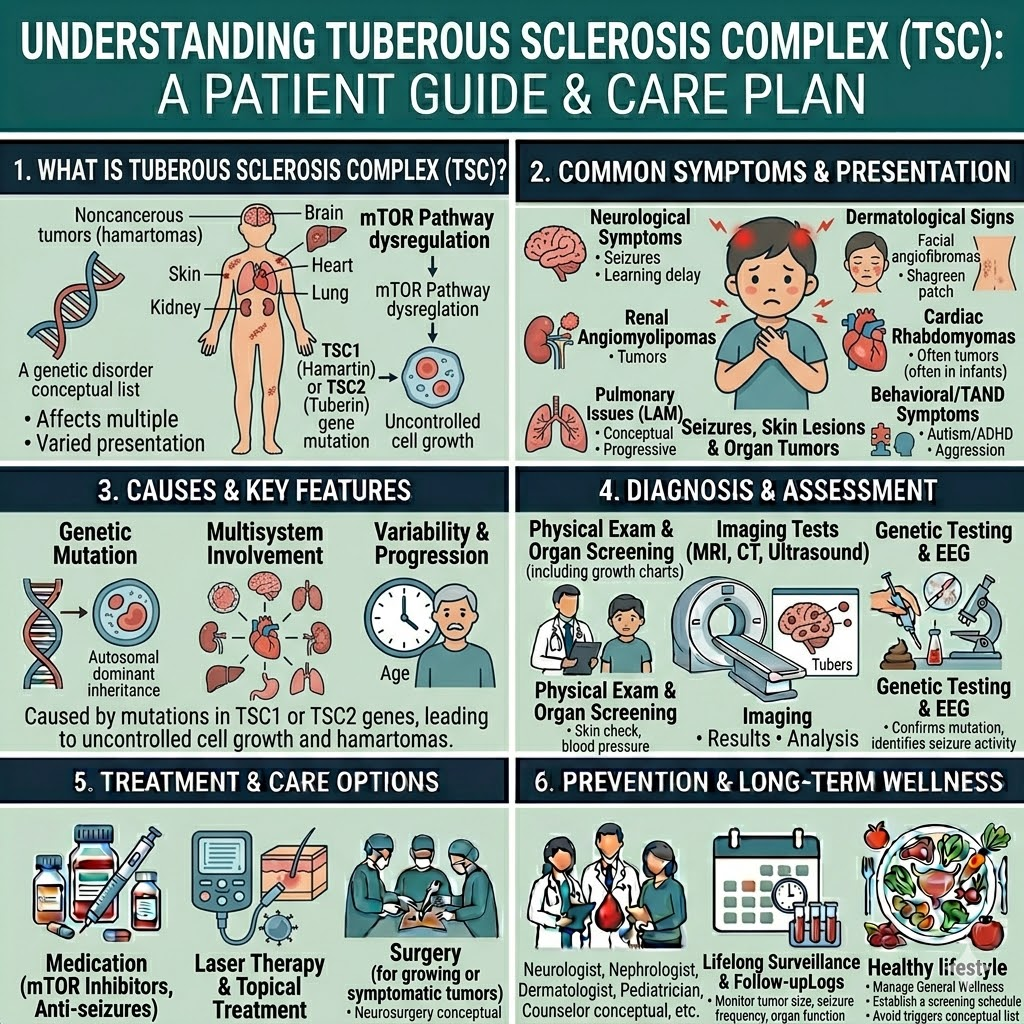
Tuberous Sclerosis Complex (TSC) is a rare genetic condition causing non-cancerous growths, often called benign tumors, to develop in various body parts, including the brain, skin, kidneys, heart, and lungs. While these growths are typically not cancerous, their size and location determine the wide range of symptoms, which can vary from very mild to severe disabilities. TSC is often diagnosed in infancy or childhood, though mild cases might not be identified until adulthood or at all. There is currently no cure, and the condition's progression is unpredictable, but effective treatments are available to manage its symptoms.
Understanding the Condition
Tuberous Sclerosis Complex: Understanding a Genetic Condition
Understanding the Condition
Tuberous Sclerosis Complex (TSC) is a rare genetic condition causing non-cancerous growths, often called benign tumors, to develop in various body parts, including the brain, skin, kidneys, heart, and lungs. While these growths are typically not cancerous, their size and location determine the wide range of symptoms, which can vary from very mild to severe disabilities. TSC is often diagnosed in infancy or childhood, though mild cases might not be identified until adulthood or at all. There is currently no cure, and the condition's progression is unpredictable, but effective treatments are available to manage its symptoms.
Common Symptoms
Skin Changes: Lighter skin patches, thickened or bumpy skin areas, raised discolored spots on the forehead, small soft bumps near nails, and acne-like growths on the face common in childhood.
Seizures: Often the first symptom, caused by brain growths; infantile spasms (stiff arms/legs, arched back/head) are common in young children.
Thinking and Learning Difficulties: Developmental delays; challenges with thinking, reasoning, learning; and mental health conditions like autism spectrum disorder or attention-deficit/hyperactivity disorder (ADHD).
Behavioral Issues: Hyperactivity, self-injury, aggression, and difficulties with social or emotional adjustment.
Kidney Problems: Common growths that can increase in number with age.
Heart Issues: Growths usually largest at birth, tending to shrink with age.
Lung Problems: Growths, more common in females, causing coughing or breathing difficulty, especially during activity.
Eye Problems: White patches on the retina (light-sensitive tissue at the back of the eye), typically not affecting vision.
Dental Changes: Pits on tooth surfaces and small growths on gums, inner cheeks, or tongue.
Consultation Guide
Which Specialist to Meet
Given the multi-systemic nature of TSC, a team of specialists is usually involved. This may include a Neurologist (for brain and seizure issues), Dermatologist (for skin concerns), Nephrologist (kidney specialist), Cardiologist (heart specialist), Pulmonologist (lung specialist), Ophthalmologist (eye specialist), Dentist, Genetic Counselor (to discuss inheritance and family planning), and potentially a Psychologist or Psychiatrist for developmental and behavioral challenges.
Preparations Before Your Visit
To make the most of your visit, be ready to discuss your full medical history, a detailed list of all symptoms you or your child are experiencing (even minor ones), any family history of TSC or similar conditions, and a list of questions you have for the doctor. Bringing past medical records or imaging results can also be helpful.
Book a doctor visit near me
Consultation Guide
A small blood or saliva sample is collected, similar to a routine lab test. It's generally quick and causes minimal discomfort.
CT Scan (Computed Tomography Scan)
Uses X-rays and computer processing to generate detailed cross-sectional images of internal organs, bones, and soft tissues, helping detect growths.
Anti-seizure Medications: These medicines help control or reduce the frequency and severity of seizures caused by brain growths. (Duration: Long-term, often lifelong, with dosage adjustments as needed.)
Kidney Growth Surgery: Surgical removal or other interventions may be necessary for large kidney growths that cause significant problems like bleeding, high blood pressure, or kidney failure. (Duration: A single surgical procedure, followed by a recovery period of several weeks.)
Heart Growth Intervention: While heart growths often shrink naturally, in rare cases where they cause severe blood flow blockages or rhythm problems, surgical intervention might be considered. (Duration: Typically, monitoring, with rare surgical intervention as a single procedure if needed.)
Diagnostic Procedures
Identifies specific changes in the TSC1 or TSC2 genes, confirming a Tuberous Sclerosis Complex diagnosis.
What to Expect
What to Expect
You lie on a table that slides into a large, ring-shaped scanner. You'll need to stay still, and might briefly hold your breath. The scan is painless and takes 10-30 minutes.
Echocardiogram (Echo)
Creates live images of the heart using sound waves to assess its structure and blood flow, particularly useful for detecting heart growths.
What to Expect
A technician applies gel to your chest and moves a handheld device (transducer) over the area. The test is painless and typically lasts 30-60 minutes.
EEG (Electroencephalogram)
Measures the brain's electrical activity through electrodes on the scalp, helping detect abnormal patterns associated with seizures.
What to Expect
Small electrodes are attached to your scalp. You'll remain relaxed, possibly with closed eyes. The test is painless and usually takes 20-40 minutes.
ECG (Electrocardiogram or EKG)
Records the heart's electrical signals to check its rhythm and rate, helping identify any cardiac abnormalities.
What to Expect
Sticky patches (electrodes) are placed on your chest and limbs, connected to an ECG machine. You lie still for a few minutes. The test is quick, painless, and takes 5-10 minutes.
Ultrasound (Sonography)
Uses sound waves to produce images of internal body structures, especially soft tissues and organs like kidneys, for monitoring growths.
What to Expect
Gel is applied to the skin, and a handheld device is moved over the area. It's generally painless, and takes 15-30 minutes.
Heart and Kidney Health Monitoring: Regular cardiac evaluations and kidney function tests, including blood pressure monitoring, are important to manage potential complications from growths in these vital organs.
Treatment Options
Medications
Dermabrasion: A skin treatment using a fast-spinning tool to gently scrape off the top layer of skin, aiming to make skin growths and irregularities less noticeable. (Duration: A single session, though multiple sessions might be recommended for optimal results, with several weeks for recovery of new skin.)
Psychotherapy (Talk Therapy): A treatment approach where an individual discusses their mental health, behavioral issues, or developmental challenges with a mental health professional to build coping skills and manage difficulties. (Duration: Varies widely, from a few weeks to several months or longer, depending on individual needs and goals.)
Developmental and Behavioral Therapies: A range of therapies (e.g., occupational therapy, speech therapy, physical therapy, applied behavior analysis) designed to address developmental delays, learning difficulties, and specific behavioral challenges. (Duration: Often ongoing for months or years, tailored to the individual's progress and changing needs.)
Surgical Procedures
Brain Growth/Shunt Surgery: If brain growths block fluid flow, surgery may be performed to remove the growth or place a shunt to drain excess fluid (hydrocephalus). (Duration: A single surgical procedure, with recovery typically lasting several weeks.)
Epilepsy Management: Consistent adherence to anti-seizure medication regimens and regular neurological follow-ups are vital for controlling seizures and improving quality of life.
Support Networks: Connecting with support groups, patient organizations, and online communities can provide emotional support, shared experiences, and valuable resources for individuals and families affected by TSC.
Educational and Therapeutic Support: Ensuring access to appropriate educational programs, special education services, and ongoing therapies (e.g., speech, occupational, physical therapy) is critical for maximizing developmental potential and addressing specific challenges.
Prevention & Long-Term Wellbeing
Laser Resurfacing: Uses focused light energy to improve skin texture and appearance, reducing the visibility of skin growths and spots. Fractional lasers are often preferred. (Duration: One or more sessions, with recovery time varying from a few days to several weeks per session.)
Prevention / Long-Term Monitoring
Genetic Counseling: For individuals with TSC or a family history, genetic counseling provides information on inheritance patterns, recurrence risks, and family planning options.
Regular Medical Check-ups: Due to the potential for growths in multiple organs, ongoing, multidisciplinary medical care is crucial. This involves regular visits with specialists and periodic imaging to monitor existing growths and detect new ones.
Developmental and Behavioral Assessments: Routine screenings and assessments for developmental delays, learning disabilities, and behavioral issues are essential, especially in children, to enable early intervention and support.
Tags & Topics
Notice an error or need an update?
Help us keep medical information accurate. Report incorrect info or suggest an edit.


