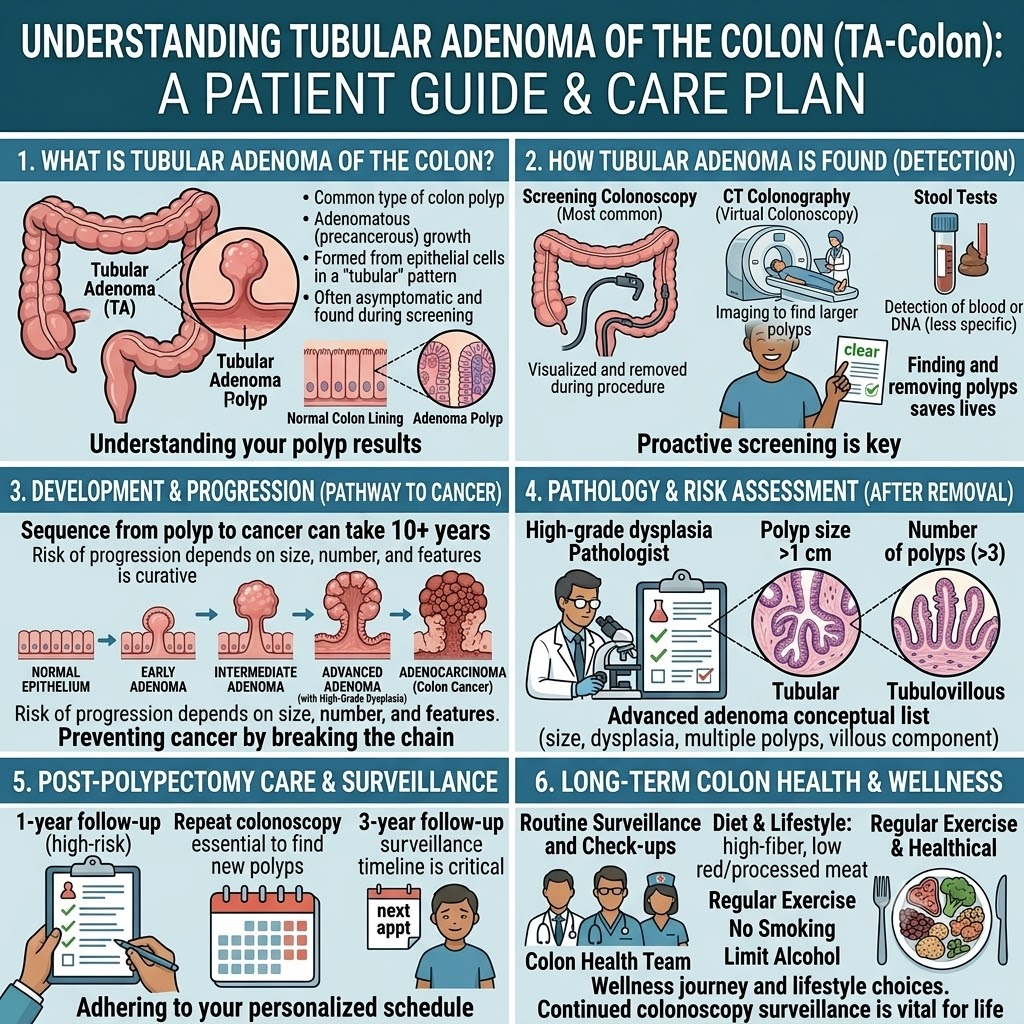
A tubular adenoma is a common type of growth, often called a polyp, found on the inner lining of the large intestine (colon). While not cancer itself, it is considered "precancerous," meaning it has the potential to slowly change into colon cancer over time if not removed. These growths are typically discovered during routine colon screenings, as they often don't cause any symptoms. Early detection and removal are crucial for preventing colon cancer. About one-third of adults over 50 will develop at least one such growth. Tubular adenomas are the most common type of precancerous polyp.
Understanding the Condition
Understanding Tubular Adenomas: Precancerous Growths in the Colon
Understanding the Condition
A tubular adenoma is a common type of growth, often called a polyp, found on the inner lining of the large intestine (colon). While not cancer itself, it is considered "precancerous," meaning it has the potential to slowly change into colon cancer over time if not removed. These growths are typically discovered during routine colon screenings, as they often don't cause any symptoms. Early detection and removal are crucial for preventing colon cancer. About one-third of adults over 50 will develop at least one such growth. Tubular adenomas are the most common type of precancerous polyp.
Common Symptoms
No Symptoms (Often): Most tubular adenomas grow very slowly and do not cause any noticeable problems. They are frequently found during routine screening colonoscopies.
Blood in Stool: Small amounts of blood on toilet paper or mixed with stool.
Changes in Bowel Habits: New or unexplained constipation or diarrhea that lasts for several days.
Abdominal Pain or Discomfort: Persistent pain, cramping, or general discomfort in the stomach area.
Changes in Stool Shape or Size: Stools that appear narrower or unusually shaped than normal.
Consultation Guide
Which Specialist to Meet
Before your visit, be ready to discuss your personal and family medical history, especially any history of polyps or colon cancer. Mention any symptoms you may have experienced. If a colonoscopy is planned, specific bowel preparation instructions will be provided, which typically involve a liquid diet and laxatives to clear the colon completely.
Book a doctor visit near me
Be Aware of and Report Symptoms: Even after polyp removal, it's important to pay attention to your body. Report any new or returning symptoms like blood in your stool, persistent changes in bowel habits, or abdominal discomfort to your doctor promptly.
Consultation Guide
Limit Alcohol and Avoid Smoking: Excessive alcohol consumption and smoking are known risk factors for colon polyps and colorectal cancer. Reducing alcohol intake and quitting smoking can significantly decrease your risk.
Manage Chronic Health Conditions: If you have conditions like diabetes or inflammatory bowel disease (such as Crohn's disease or ulcerative colitis), work closely with your doctor to manage them effectively, as these can increase your risk of polyps.
Adhere to Recommended Screening: Follow your doctor's recommendations for colorectal cancer screening, usually starting at age 45 for average-risk individuals, or earlier if you have specific risk factors. Regular screening colonoscopies are the most effective way to find and remove precancerous polyps early.
Diagnostic Procedures
A colonoscopy is a medical procedure used to examine the entire length of your large intestine (colon) and rectum. It helps doctors look for abnormal growths (polyps), inflamed tissue, or early signs of cancer. A long, flexible tube with a tiny camera (called a colonoscope) is gently inserted into the rectum and advanced through the colon.
What to Expect
What to Expect
This is not a procedure you "experience" directly. It happens in the lab after your colonoscopy. The pathologist provides a detailed report to your doctor, typically within a few days to a couple of weeks. Your doctor will then review these results with you and explain what they mean for your health and future monitoring.
Discuss Family History and Genetic Risk: If you have a strong family history of colon polyps or cancer, especially at younger ages, talk to your doctor about genetic counseling or testing. This can identify inherited conditions that might require earlier or more frequent screenings.
Treatment Options
You would primarily consult with a Gastroenterologist, a doctor specializing in digestive system health, who performs colonoscopies. If surgery beyond a colonoscopy is needed, a Colorectal Surgeon might be involved. Your Primary Care Provider can help with initial discussions and referrals.
Preparations Before Your Visit
Before the procedure, you'll follow a special diet and take laxatives to thoroughly clean your colon. On the day of the procedure, you'll receive medication to help you relax or fall asleep (sedation). The doctor will then insert the colonoscope. The camera allows them to view the inner lining of your colon on a screen. If any polyps or suspicious tissues are found, they can be removed using small tools passed through the scope (polypectomy) or tiny tissue samples (biopsies) can be taken for further examination. The procedure usually takes 30-60 minutes. Afterward, you'll recover from the sedation and may feel some mild bloating or gas. You'll need someone to drive you home.
Biopsy and Pathology Report
After a polyp is removed during a colonoscopy, it is sent to a pathology lab. A specialist called a pathologist examines the tissue under a microscope. This examination determines the exact type of growth (e.g., tubular adenoma), whether it shows any irregular cell growth (dysplasia), and if there are any signs of cancer. This report is crucial for guiding your follow-up care.
Surgical Procedures
Polyp Removal (Polypectomy) during Colonoscopy: This is the most common and often the only treatment needed for tubular adenomas. During a colonoscopy, the doctor uses specialized instruments, such as a wire loop or forceps, passed through the scope to safely remove the polyp(s). The removed tissue is then sent for lab analysis. (Duration: Typically completed during the colonoscopy procedure itself, which lasts 30-60 minutes.)
Prevention & Long-Term Wellbeing
Surgical Resection (Partial Colectomy): In rare cases, if an adenoma is very large, complex, or contains early cancer that cannot be fully removed during a colonoscopy, a surgical procedure may be necessary. This involves removing a section of the colon where the adenoma or cancerous growth is located. (Duration: Requires a hospital stay and a recovery period that can last several weeks to months.)
Regular Follow-up Colonoscopies: After polyps are found and removed, ongoing monitoring with regular colonoscopies is essential. This helps detect any new polyps or changes early. The frequency of these follow-up exams depends on factors like the number, size, and type of adenomas found, as well as your personal and family history. (Duration: Lifelong monitoring, with intervals typically ranging from one to five years, as advised by your doctor.)
Prevention
Adopt a Healthy Lifestyle: Maintain a healthy body weight through a balanced diet and regular physical activity. A diet rich in fruits, vegetables, and whole grains, and low in red and processed meats, can lower your risk of colon polyps and cancer.
Tags & Topics
Notice an error or need an update?
Help us keep medical information accurate. Report incorrect info or suggest an edit.


