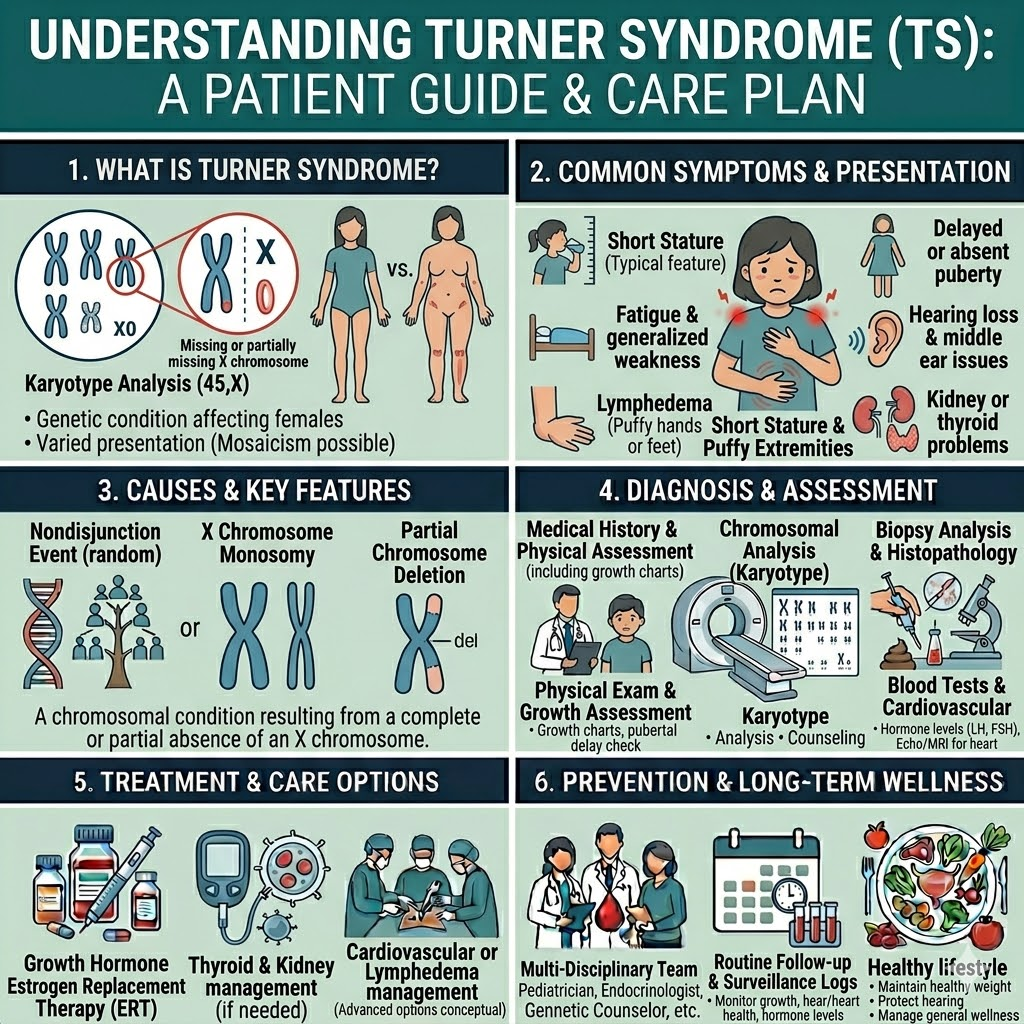
Turner syndrome is a genetic condition that exclusively affects females. It occurs when one of the two X chromosomes (which determine a person's biological sex) is either completely missing or partially missing/altered. This chromosomal change can lead to a range of medical and developmental challenges, including shorter height, problems with the ovaries, and heart conditions.Diagnosis can happen at various stages: before birth through prenatal tests, during infancy, or in early childhood. For some females with milder signs, the diagnosis might be delayed until their teenage or young adult years.Girls and women with Turner syndrome often require ongoing medical attention from different specialists. With regular check-ups and appropriate care, most individuals can lead healthy, independent lives.
Understanding the Condition
Turner Syndrome: Understanding the Condition and Care
Understanding the Condition
Common Symptoms
Physical Features at Birth or Infancy: Some girls with Turner syndrome may show specific physical traits early on. These can include a wide or web-like neck, low-set ears, a broad chest with widely spaced nipples, and arms that turn outward at the elbows. Swelling of the hands and feet is also common. Less commonly, babies may have heart defects or kidney problems that are apparent early.
Primary Characteristics in Childhood and Adulthood: Almost all individuals with Turner syndrome experience significantly shorter height, often noticeable by early childhood. Another common feature is ovarian insufficiency, meaning the ovaries do not develop or function correctly. This leads to a lack of female hormones, causing delayed puberty, irregular or absent menstrual periods, and often infertility without medical assistance.
Signs During Pregnancy (Prenatal): If suspected before birth, an ultrasound might reveal certain indicators, such as unusual fluid collections around the baby's neck or other areas, or abnormalities in the heart or kidneys.
Consultation Guide
Which Specialist to Meet
Prepare a list of your questions and concerns, along with a detailed medical history and any observed symptoms. This helps the doctors address your specific needs effectively.
Book a doctor visit near me
Diagnostic Procedures
Turner syndrome is a genetic condition that exclusively affects females. It occurs when one of the two X chromosomes (which determine a person's biological sex) is either completely missing or partially missing/altered. This chromosomal change can lead to a range of medical and developmental challenges, including shorter height, problems with the ovaries, and heart conditions.Diagnosis can happen at various stages: before birth through prenatal tests, during infancy, or in early childhood. For some females with milder signs, the diagnosis might be delayed until their teenage or young adult years.Girls and women with Turner syndrome often require ongoing medical attention from different specialists. With regular check-ups and appropriate care, most individuals can lead healthy, independent lives.
You will likely see a team of specialists for diagnosis and ongoing care. A geneticist (specialist in genetic conditions) can confirm the diagnosis. An endocrinologist (hormone specialist) manages growth hormone and estrogen therapy. Other specialists might include a cardiologist (heart), nephrologist (kidneys), audiologist (hearing), ophthalmologist (vision), or reproductive endocrinologist (fertility).
Preparations Before Your Visit
Prenatal Screening Tests (Cell-Free DNA & Ultrasound)
These non-invasive tests during pregnancy can indicate a higher risk of Turner syndrome. Cell-free DNA screening analyzes baby's DNA fragments in the mother's blood. Prenatal ultrasound uses sound waves to visualize the baby, looking for physical signs like fluid buildup or organ abnormalities.
What to Expect
For cell-free DNA, a routine blood draw from the mother's arm is performed. For ultrasound, a gel is applied to the abdomen, and a handheld device is moved over it to create images. Both are generally painless screening methods; a positive result requires further diagnostic confirmation.
A diagnostic procedure performed during pregnancy to confirm suspected Turner syndrome. It involves collecting a small sample of the amniotic fluid surrounding the baby for genetic analysis.
What to Expect
Typically done between 14-20 weeks, an ultrasound guides a thin needle through the mother's abdomen into the uterus to draw fluid. You may feel mild cramping. This procedure carries a small risk of complications, including miscarriage, which will be discussed.
Genetic Testing (Karyotype)
The definitive test for Turner syndrome. It involves analyzing a person's chromosomes (usually from a blood sample after birth, or from amniocentesis/CVS prenatally) to identify a missing or altered X chromosome.
What to Expect
A blood sample is drawn (post-birth) or fetal cells are obtained (pre-birth). These cells are analyzed in a lab to create a 'karyotype,' a map of the chromosomes, allowing specialists to definitively diagnose chromosomal abnormalities.
Treatment Options
Growth Hormone: Helps achieve a more typical adult height. (Duration: Started in early childhood (around 4-6 years) and continued until late teens or early adulthood.)
Estrogen Replacement: Initiates puberty, develops secondary sexual characteristics, maintains bone density, and supports uterine health. (Duration: Started around 12-15 years, continued throughout adulthood until typical menopause age.)
Medical and Surgical Interventions
Heart Defect Correction: Surgical repair for significant heart abnormalities, with ongoing monitoring. (Duration: Surgery is one-time if needed, followed by lifelong cardiac monitoring.)
Kidney Problem Management: Medical management or, rarely, surgery for kidney abnormalities. (Duration: Ongoing as needed.)
Reproductive Assistance: Donor eggs with assisted reproductive technologies for those wishing to conceive, with careful medical evaluation due to pregnancy risks. (Duration: Varies based on individual fertility journey.)
Hearing and Vision Correction: Regular screenings and aids like hearing aids or corrective lenses. (Duration: Ongoing as needed.)
Learning and Developmental Support: Educational support and therapy for specific learning differences. (Duration: As needed, often during childhood and adolescence.)
Regular Specialist Care: Consistent follow-ups with a multidisciplinary team are crucial for managing conditions, adjusting treatments, and monitoring for heart, kidney, bone, and endocrine health.
Bone and Endocrine Health Monitoring: Regular bone density checks, calcium/vitamin D intake, and screening for thyroid issues and type 2 diabetes are important due to increased risks.
Emotional and Social Support
Counseling and Support Groups: Psychological support and connecting with others through support groups can help manage the emotional impacts of living with a chronic condition, fostering self-esteem and community.
Prevention & Long-Term Wellbeing
Ongoing Health Management
Empowerment and Lifestyle
Healthy Lifestyle: A balanced diet, regular physical activity, and avoiding smoking/excessive alcohol are key for overall health and risk reduction.
Education and Self-Advocacy: Understanding Turner syndrome enables individuals to actively participate in their care and advocate for their needs in all aspects of life.
Tags & Topics
Notice an error or need an update?
Help us keep medical information accurate. Report incorrect info or suggest an edit.


