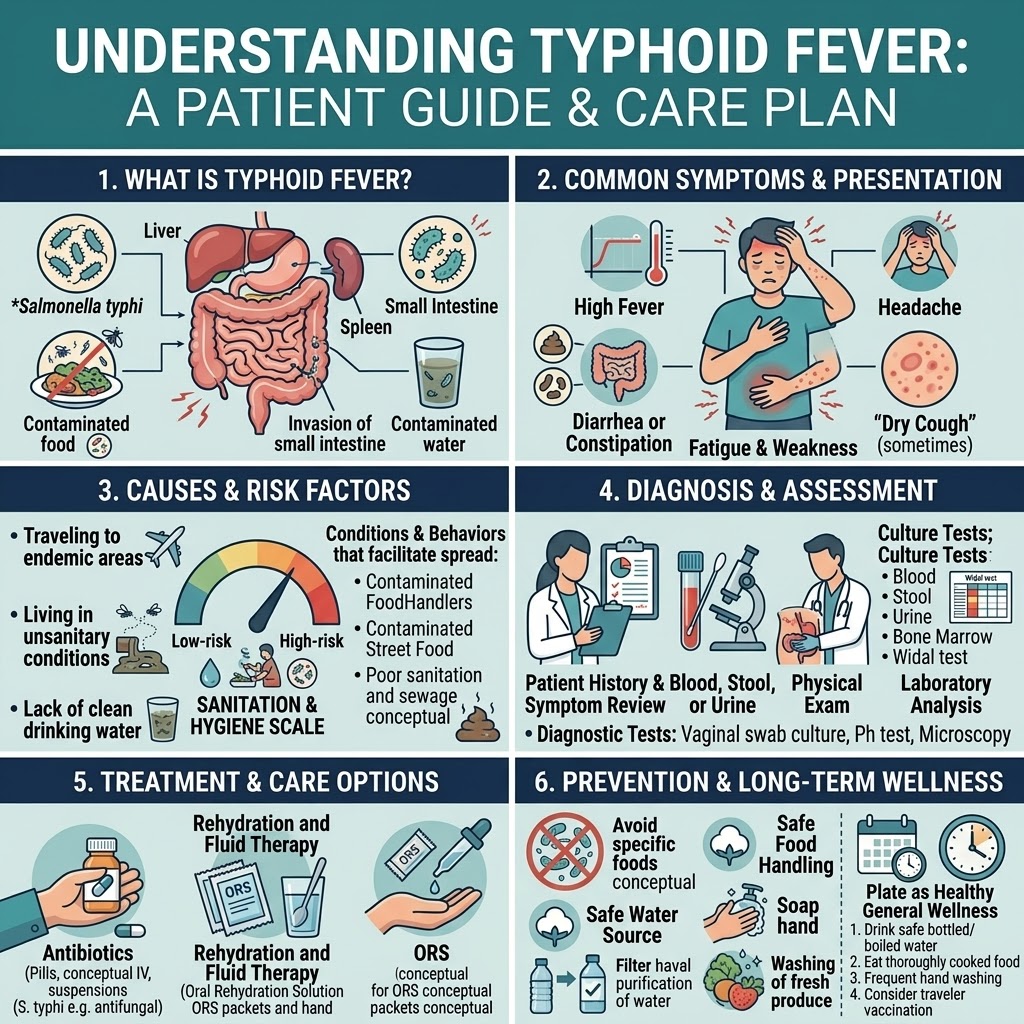
Typhoid fever is a serious infection caused by a specific type of Salmonella bacteria, known as Salmonella Typhi. This life-threatening illness affects millions globally each year, particularly in areas with limited access to clean water and proper waste management. While rare in countries like the United States due to advanced sanitation systems, it is more common in regions of Africa, South Asia, and other developing areas. Most cases in developed nations occur in individuals who have traveled to these high-risk areas. If left untreated, typhoid fever can lead to severe health problems, including potentially fatal complications. Effective antibiotics are available, though growing antibiotic resistance is a concern. Vaccination is an important preventative measure, especially for travelers.
Understanding the Condition
Typhoid Fever: Understanding, Symptoms, and Prevention
Understanding the Condition
Common Symptoms
Persistent High Fever: Steadily increasing fever, reaching up to 104°F (40°C).
Headache: A common and often severe symptom.
Fatigue and Weakness: General feeling of tiredness and being unwell.
Body Aches: Muscle pains and discomfort.
Stomach Pain: Abdominal discomfort or cramps.
Loss of Appetite: Reduced desire to eat.
Cough: A dry cough, especially in early stages.
Rose Spots: Small, flat, rose-colored rash on the chest and abdomen in some individuals.
Bowel Changes: Constipation often early, potentially followed by diarrhea.
Serious Complications: Without timely treatment, severe intestinal issues like internal bleeding (bloody stools) or a bowel perforation (hole) can occur, causing intense abdominal pain, nausea, and vomiting. These are life-threatening. Symptoms may also temporarily improve and then return.
Consultation Guide
Which Specialist to Meet
Before your visit, be prepared to discuss: Your recent travel history, including specific countries or regions you visited. A detailed timeline of your symptoms, noting when they started and how they have progressed. Any foods or drinks you consumed that you suspect might be contaminated. Any medications you are currently taking or have recently taken. A list of any allergies you have.
Book a doctor visit near me
Consultation Guide
Typhoid fever is a serious infection caused by a specific type of Salmonella bacteria, known as Salmonella Typhi. This life-threatening illness affects millions globally each year, particularly in areas with limited access to clean water and proper waste management. While rare in countries like the United States due to advanced sanitation systems, it is more common in regions of Africa, South Asia, and other developing areas. Most cases in developed nations occur in individuals who have traveled to these high-risk areas. If left untreated, typhoid fever can lead to severe health problems, including potentially fatal complications. Effective antibiotics are available, though growing antibiotic resistance is a concern. Vaccination is an important preventative measure, especially for travelers.
Diagnostic Procedures
You should first consult your primary care doctor or an urgent care provider if you suspect typhoid fever. If diagnosed, you may be referred to an infectious disease specialist for expert management, especially if your case is severe or resistant to initial treatments.
Preparations Before Your Visit
Often the most common and accurate test, especially early in the illness. A blood sample is cultured to grow any present bacteria.
What to Expect
A healthcare professional will draw a small amount of blood from your arm. You'll feel a brief pinch. The sample is sent to a lab; results take a few days.
Identifies bacteria in a stool sample, useful in later stages or to detect carriers.
What to Expect
You'll collect a small stool sample using a sterile container, following hygienic instructions. The sample is sent to a lab; results take several days.
Checks for Salmonella Typhi in urine, less commonly positive but a supplementary tool.
What to Expect
You'll provide a "clean-catch" urine sample (cleaning first, collecting mid-stream) into a sterile container. Sent to a lab.
The most sensitive test, even after antibiotics, but invasive. Reserved for complex cases.
What to Expect
After numbing, a doctor uses a special needle to draw a small bone marrow sample, usually from the hip bone. Expect pressure or brief sharp pain. Performed in a sterile clinical setting.
Surgery for Intestinal Complications: In rare, severe cases like internal bleeding or intestinal perforation, emergency surgery is required to repair damage and prevent further infection. (Duration: A one-time procedure, followed by a recovery period.)
Treatment Options
Medications
Oral or Intravenous Antibiotics: Essential for killing Salmonella Typhi. The specific antibiotic depends on infection severity and resistance patterns. Complete the full course, even if feeling better, to prevent recurrence and resistance. (Duration: Typically 7 to 14 days; longer for severe cases or complications. Intravenous for severe infections, followed by oral.)
Therapies
Post-Treatment Stool Cultures: Follow-up stool cultures ensure Salmonella Typhi is completely cleared, confirming you are no longer a carrier and preventing spread.
Management of Chronic Carriers: A small percentage become chronic carriers, shedding bacteria for a year or more. If identified, your doctor will advise on treatments and hygiene to eliminate the bacteria and prevent transmission.
Prevention & Long-Term Wellbeing
Hydration and Nutritional Support: Drink plenty of fluids to prevent dehydration. Intravenous fluids may be needed. Eat a light, easy-to-digest diet and get ample rest to support recovery. (Duration: Throughout the illness and recovery.)
Prevention
Vaccination: Significantly reduces typhoid risk. Injectable and oral vaccines are available. Highly recommended before travel to high-risk areas. Consult your doctor weeks before your trip.
Safe Food and Water Practices: Be cautious: "Boil it, cook it, peel it, or forget it." Drink only sealed bottled, carbonated, or disinfected water; avoid ice from unsafe sources. Eat only hot, thoroughly cooked food. Avoid raw, unpeeled fruits/vegetables and unpasteurized dairy.
Hand Hygiene: Wash hands thoroughly with soap and clean water, especially before eating and after using the toilet. Use alcohol-based hand sanitizer if soap and water aren't available.
Avoid Contact with Carriers: Recovered individuals can shed bacteria. Maintain personal hygiene, especially in public, to minimize transmission risk.
Long-Term Monitoring
Tags & Topics
Notice an error or need an update?
Help us keep medical information accurate. Report incorrect info or suggest an edit.


