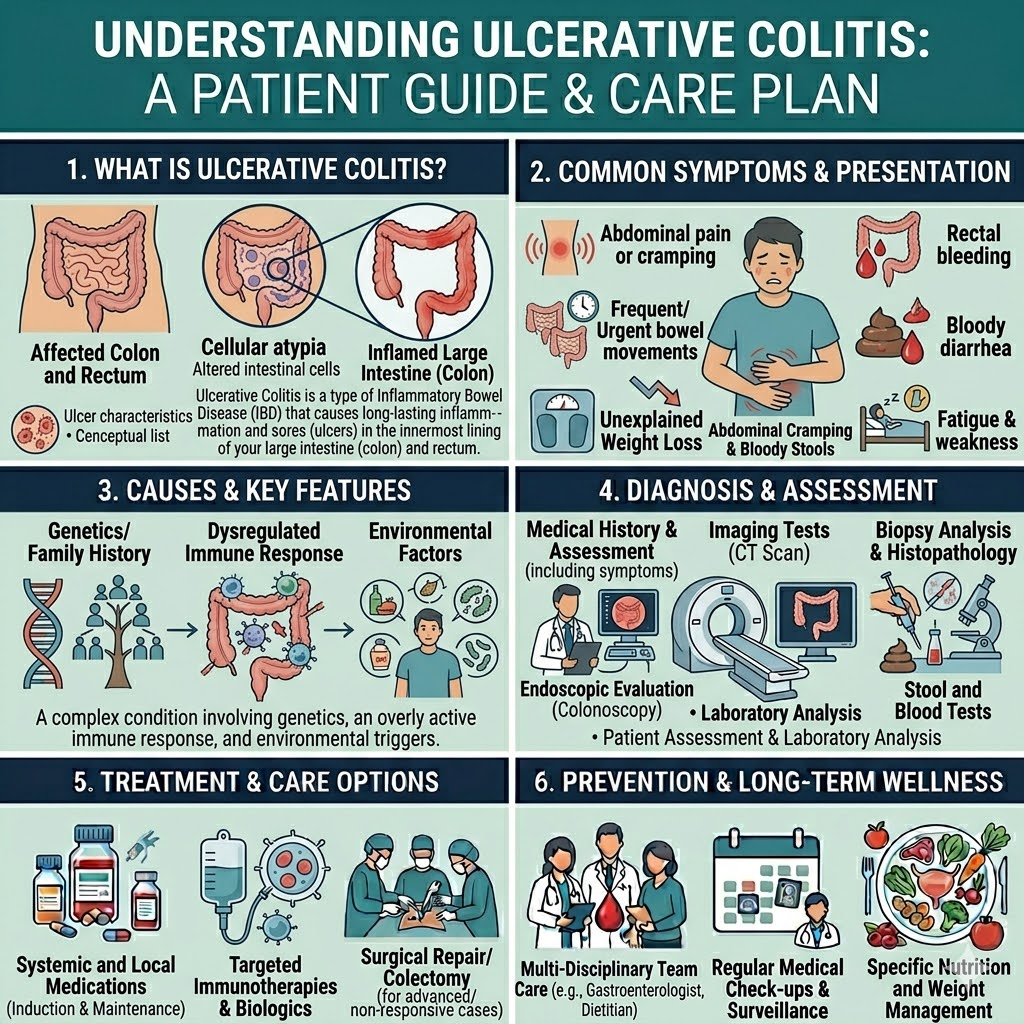
Ulcerative colitis (UC) is a chronic inflammatory bowel disease (IBD) affecting the large intestine (colon) and rectum. It causes inflammation and sores, called ulcers, specifically in the innermost lining. UC typically begins in the rectum and can spread upwards, sometimes affecting the entire colon. Symptoms usually develop gradually. While there's no cure, treatment can significantly reduce symptoms, heal the colon lining, and lead to long periods without symptoms (remission). UC is classified by its location: ulcerative proctitis (rectum only), left-sided colitis (rectum to descending colon), and widespread colitis (entire colon). It differs from Crohn's disease, which can affect any part of the digestive tract and deeper bowel layers, and microscopic colitis, visible only under a microscope.
Understanding the Condition
Ulcerative Colitis: Understanding a Chronic Bowel Condition
Understanding the Condition
Ulcerative colitis (UC) is a chronic inflammatory bowel disease (IBD) affecting the large intestine (colon) and rectum. It causes inflammation and sores, called ulcers, specifically in the innermost lining. UC typically begins in the rectum and can spread upwards, sometimes affecting the entire colon. Symptoms usually develop gradually. While there's no cure, treatment can significantly reduce symptoms, heal the colon lining, and lead to long periods without symptoms (remission). UC is classified by its location: ulcerative proctitis (rectum only), left-sided colitis (rectum to descending colon), and widespread colitis (entire colon). It differs from Crohn's disease, which can affect any part of the digestive tract and deeper bowel layers, and microscopic colitis, visible only under a microscope.
Common Symptoms
Diarrhea: Often with blood, mucus, or pus.
Abdominal Pain and Cramping: Discomfort in the belly.
Rectal Pain: Discomfort in the lower bowel area.
Urgent Bowel Movements: A strong, sudden need to pass stool.
Tenesmus: Feeling the need to pass stool but being unable to.
Weight Loss: Unintended decrease in body weight.
Delayed Growth: In children, failure to grow properly.
Anemia: Blood loss leading to low red blood cell count.
Fatigue: Persistent tiredness.
Consultation Guide
Which Specialist to Meet
Before your visit, keep a detailed diary of your symptoms, including frequency and severity, and how they relate to food or stress. List all medications, supplements, and provide your full medical history. Be ready to discuss your family medical history.
Book a doctor visit near me
Avoid Irritants: Limit alcohol, caffeine, and carbonated drinks, which can worsen symptoms. (Duration: Ongoing)
Stress Management: Incorporate stress-reducing activities like exercise, as stress can trigger or worsen flare-ups. (Duration: Ongoing)
Managing Symptoms and Maintaining Remission
Address Associated Conditions: Be vigilant for inflammation affecting the skin, joints, or eyes, and discuss any new symptoms with your doctor.
Mental Health Support: Seek support from mental health professionals or support groups to cope with the emotional challenges of living with a chronic condition.
Diagnostic Procedures
You should see a gastroenterologist, a doctor specializing in digestive system disorders. They can accurately diagnose and manage ulcerative colitis.
Preparations Before Your Visit
Analyzes blood to check for inflammation markers, anemia, and liver function abnormalities.
What to Expect
A healthcare professional will draw a small blood sample from a vein in your arm.
Examines stool for blood, signs of infection, or inflammation.
What to Expect
You'll collect a sample at home and submit it to a lab.
Flexible Sigmoidoscopy
A thin, flexible tube with a camera is used to examine the rectum and lower part of the large intestine.
What to Expect
Requires light bowel preparation. The scope is gently inserted; you may feel pressure or mild cramping. Deep sedation is often not required.
A flexible tube with a camera views the entire large intestine and rectum, allowing for biopsies and polyp removal.
What to Expect
What to Expect
You lie on a table that slides into a scanner. Contrast dye may be given. Stay still during the quick, painless scan.
X-rays (e.g., with Barium)
Imaging technique to visualize internal structures. A barium enema uses liquid barium to coat the colon for X-rays, helping detect abnormalities.
What to Expect
For barium enema, bowel prep is needed. Barium is introduced rectally while X-rays are taken. You might experience fullness.
Ileoanal Anastomosis (J-Pouch) Surgery: Removes the colon and rectum, creating an internal pouch from the small intestine to allow stool passage through the anus. (Duration: Permanent, usually a multi-stage procedure over months)
Ileostomy/Colostomy: Creates an opening (stoma) in the abdomen to divert waste into an external pouch. (Duration: Can be temporary (weeks to months) or permanent)
Bone Health Monitoring: Chronic inflammation and certain medications can affect bone density; periodic bone density tests may be advised.
Nutritional Support: Ensure adequate nutrition and hydration to prevent deficiencies, managing potential weight loss and dehydration.
Overall Health and Mental Wellbeing
Treatment Options
Medications
Anti-inflammatory Drugs: Reduce inflammation in the colon. (Duration: Often long-term for maintenance or short-term for flares)
Immune System Suppressors: Calm the immune system to reduce inflammation. (Duration: Typically long-term for sustained remission)
Biologic Therapies: Target specific inflammation-causing proteins. (Duration: Given periodically, often long-term)
Small Molecule Inhibitors: Oral medications that target inflammation pathways. (Duration: Often long-term)
Surgical Procedures
Colectomy: Surgical removal of part or all of the colon. (Duration: Permanent, may be done in stages)
Adhere to Treatment Plan: Consistently take prescribed medications and follow medical advice to prevent flare-ups and maintain remission.
Prevention & Long-Term Wellbeing
Thorough bowel cleansing (special diet and laxatives) is essential beforehand. You'll receive sedation. The procedure takes 30-60 minutes.
CT Scan (Computed Tomography)
Uses X-rays to create detailed 3D images of your abdomen, assessing inflammation and potential complications.
Home Remedies & Lifestyle Changes
Dietary Adjustments: Identify and avoid trigger foods (e.g., dairy, high-fiber during flares, nuts, seeds, corn, popcorn). Try steamed or cooked fruits/vegetables instead of raw. (Duration: Ongoing as needed)
Hydration: Drink plenty of water to prevent dehydration, especially during diarrhea. (Duration: Ongoing)
Dietary Awareness: Continue to avoid known trigger foods and maintain a balanced, UC-friendly diet.
Regular Exercise: Engage in regular physical activity to reduce stress, improve gut function, and boost overall well-being.
Monitoring for Complications
Regular Medical Check-ups: Frequent visits with your gastroenterologist are crucial to monitor disease activity and screen for potential complications.
Colon Cancer Screening: Due to an increased risk, regular colonoscopies for cancer screening will be recommended by your doctor.
Tags & Topics
Notice an error or need an update?
Help us keep medical information accurate. Report incorrect info or suggest an edit.


