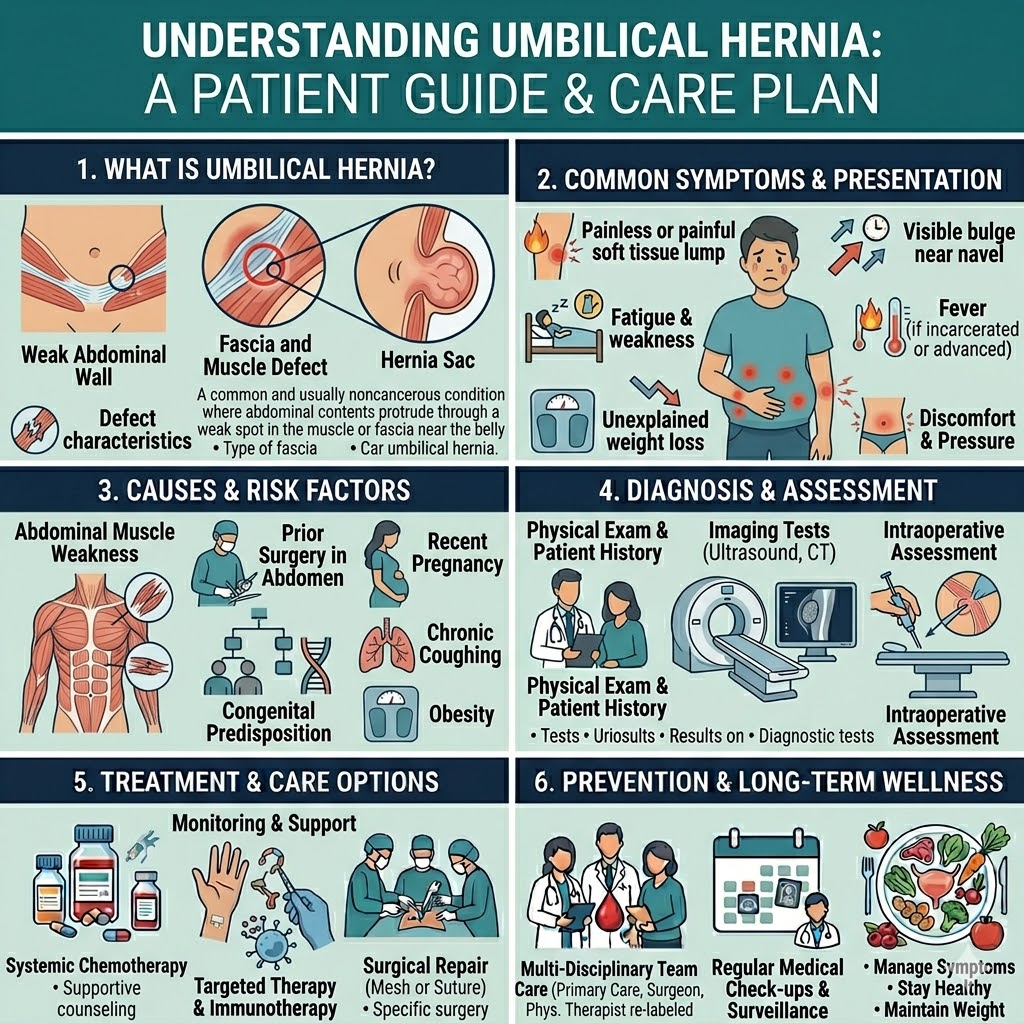
An umbilical hernia occurs when part of the intestine or fatty tissue pushes through a weak spot in the abdominal muscles near the bellybutton (navel). Extremely common in infants, these hernias are generally harmless and often resolve on their own. However, they can also develop in adults, where they are more likely to require medical evaluation and treatment to prevent complications.
Understanding the Condition
Understanding Umbilical Hernias: Causes, Symptoms, and Care
Understanding the Condition
Common Symptoms
Visible Bulge near the Bellybutton: A soft swelling or protrusion near the navel is the primary sign. In infants, this bulge may only be visible when they cry, cough, laugh, or strain during bowel movements.
Abdominal Discomfort in Adults: While usually painless in children, adults with an umbilical hernia may experience mild pain, pressure, or aching around the navel area, especially when bending over or lifting heavy objects.
Tenderness or Discoloration (Emergency Warning Signs): If the bulge becomes severely painful, firm, tender to the touch, or turns red, purple, or dark, it can indicate a trapped (incarcerated) or strangulated hernia. This requires immediate emergency medical attention.
Consultation Guide
Which Specialist to Meet
Consultation Guide
Before your appointment, note when you first noticed the bulge, whether it has grown in size, and if it causes any discomfort. Be prepared to discuss your medical history and wear loose-fitting, comfortable clothing that allows easy access to your abdomen during the examination.
Book a doctor visit near me
Diagnostic Procedures
You should consult a Pediatrician for infants and young children, a Primary Care Physician (PCP) for initial adult diagnosis, or a General Surgeon if a surgical evaluation is recommended.
Preparations Before Your Visit
A doctor physically examines the abdomen to locate the bulge, check its size, and determine if it can be gently pushed back into the abdominal cavity.
What to Expect
You or your child will lie down while the doctor gently presses on the abdominal area. The doctor may ask you to stand up, cough, or strain to make the hernia more visible during the evaluation.
An imaging test that uses high-frequency sound waves to create detailed, real-time pictures of the tissues and organs inside your abdomen, helping to rule out complications.
What to Expect
You will lie on an examination table. A technician will apply a warm, water-based gel to your stomach and glide a small, handheld probe (transducer) over the skin. The test is painless and typically takes 15 to 30 minutes.
An imaging scan that uses low doses of radiation to produce pictures of the structures inside the abdomen, helpful if the doctor suspects a bowel blockage.
What to Expect
You will stand or lie flat in front of an X-ray machine. You will need to remain perfectly still for a few seconds while the image is captured. It is quick, silent, and completely painless.
Treatment Options
Surgical Procedures and Monitoring
Watchful Waiting: For infants, doctors typically recommend monitoring the hernia rather than immediate treatment, as most pediatric umbilical hernias close naturally as the abdominal muscles strengthen. (Duration: Typically monitored until the child reaches 2 to 5 years of age.)
Surgical Hernia Repair (Herniorrhaphy): A routine, safe surgical procedure where an incision is made near the bellybutton to return the protruding tissue to its proper place. The weak abdominal wall is then stitched closed. In adults, a synthetic mesh is often inserted to reinforce the muscle wall. (Duration: The outpatient surgery takes 30 to 45 minutes; full recovery generally takes 2 to 4 weeks.)
Manual Reduction: A medical professional gently presses the protruding tissue back through the abdominal wall opening. This is a temporary measure and should never be attempted at home. (Duration: Takes only a few minutes during a clinical exam.)
Manage Chronic Coughing: Seek treatment for conditions causing a chronic cough, as repetitive coughing increases pressure inside the abdomen.
Prevention & Long-Term Wellbeing
Prevention and Long-Term Management
Avoid Heavy Lifting: Refrain from lifting heavy objects or performing strenuous activities that put excessive strain on your abdominal muscles.
Maintain a Healthy Weight: Incorporate a balanced diet and regular exercise to manage body weight, reducing constant pressure on the abdominal wall.
Prevent Constipation: Eat a fiber-rich diet and drink plenty of water to ensure smooth bowel movements, preventing straining.
Tags & Topics
Notice an error or need an update?
Help us keep medical information accurate. Report incorrect info or suggest an edit.


