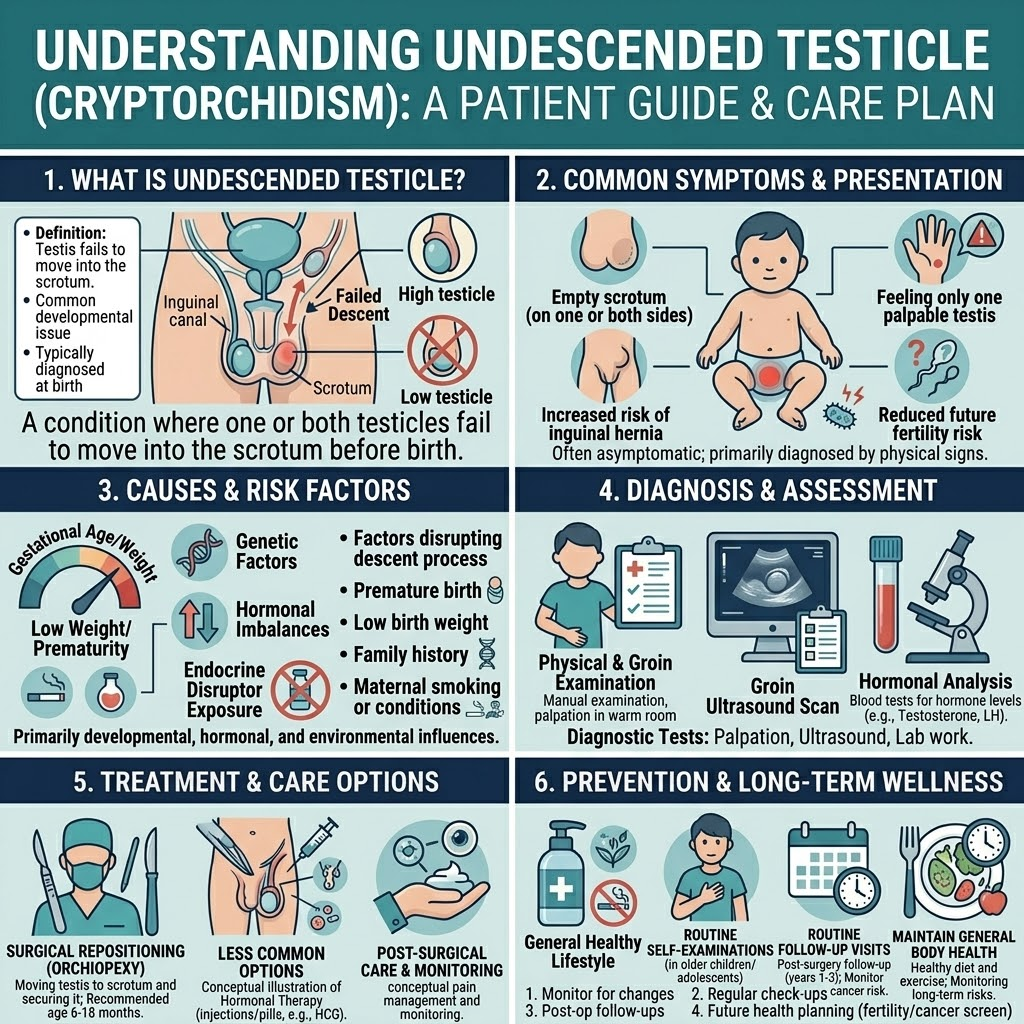
A testicle that does not move into its correct position in the scrotum before a baby is born is called an undescended testicle, also known as cryptorchidism. Most often, this affects only one testicle, but sometimes both can be involved. The scrotum is the loose bag of skin located below the penis. This condition is more common in babies born prematurely. In many cases, an undescended testicle will naturally descend into the scrotum within the first few months after birth. If it doesn't correct on its own, a surgical procedure can be performed to guide the testicle into its proper place.
Understanding the Condition
Common Symptoms
Main Symptom: The primary sign of an undescended testicle is not being able to see or feel a testicle in the scrotum.
Awareness of Complications: Be aware of the symptoms of testicular torsion (sudden, severe testicle pain, swelling, and redness), which requires immediate medical attention. Also, understand the symptoms of an inguinal hernia (a bulge in the groin). Early recognition and treatment of these conditions can prevent serious complications.
Fertility Counseling (as an adult): If fertility concerns arise in adulthood, specialized counseling and evaluations can help explore options and manage potential challenges.
Consultation Guide
Maternal Health During Pregnancy: While the exact cause is often unknown, certain factors during pregnancy can increase the risk. Maintaining good maternal health, including managing conditions like diabetes, avoiding alcohol consumption, not smoking or being exposed to secondhand smoke, and limiting exposure to certain pesticides, may help reduce the risk.
Diagnostic Procedures
Undescended Testicle (Cryptorchidism)
Understanding the Condition
A testicle that does not move into its correct position in the scrotum before a baby is born is called an undescended testicle, also known as cryptorchidism. Most often, this affects only one testicle, but sometimes both can be involved. The scrotum is the loose bag of skin located below the penis. This condition is more common in babies born prematurely. In many cases, an undescended testicle will naturally descend into the scrotum within the first few months after birth. If it doesn't correct on its own, a surgical procedure can be performed to guide the testicle into its proper place.
Normal Testicle Descent: Normally, a baby's testicles develop inside the lower abdomen. During the final months of pregnancy, they typically descend from the stomach area, passing through a channel in the groin (called the inguinal canal) into the scrotum. With an undescended testicle, this descent process is either incomplete or delayed.
When It's Found: This condition is usually identified during a physical examination shortly after birth. If a testicle has not moved into the scrotum by 3 to 4 months of age, it is unlikely to correct itself without intervention.
Importance of Early Treatment: Early treatment of an undescended testicle can significantly reduce the risk of future health complications, such as a type of testicular cancer and fertility issues (difficulty getting a partner pregnant).
Retractile Testicle: In older boys, from infants to preteens, a testicle that was once in the scrotum might later appear to be missing. A retractile testicle moves back and forth between the scrotum and the groin. It can often be gently guided back into the scrotum during an exam. This movement is due to a natural muscle reflex.
Ascending Testicle (Acquired Undescended Testicle): This testicle has permanently moved back into the groin and cannot be easily guided into the scrotum.
When to Consult a Doctor: If you notice any changes in your child's genitals or have other concerns, it's important to speak with your child's doctor or another member of their healthcare team.
Consultation Guide
Which Specialist to Meet
Your baby's pediatrician is usually the first doctor to identify an undescended testicle during routine check-ups. If the condition doesn't resolve naturally, your pediatrician may refer you to a pediatric urologist (a surgeon specializing in children's urinary and reproductive systems) or a general surgeon.
Preparations Before Your Visit
Before your visit, make a list of any questions you have. Be prepared to discuss your child's medical history and any observations you've made, such as when you last saw or felt the testicle in the scrotum.
Book a doctor visit near me
The primary way an undescended testicle is diagnosed is through a thorough physical examination by a doctor. The doctor will gently feel the scrotum and groin area to locate the testicle.
What to Expect
During a routine check-up, your baby will be undressed, and the doctor will carefully examine the genital area. They will gently palpate (feel) for the presence and location of the testicles in the scrotum and the groin. This exam is quick and generally not uncomfortable for the baby.
Ultrasound (Sonography)
An ultrasound uses high-frequency sound waves to create live images of internal body structures. It helps confirm the presence and location of a testicle that cannot be felt during a physical exam, or to rule out other issues. This is a safe procedure that uses low-power sound waves and has no known risks. However, sound waves don't travel well through air or bone, so an ultrasound may not be effective for very deep structures or those obscured by gas or bone.
What to Expect
Your child will lie down, and a clear gel will be applied to the skin over the area being examined (scrotum, groin, or lower abdomen). A small, handheld device called a transducer will be gently moved over the gelled skin. This device sends and receives sound waves, which are converted into images on a screen. The procedure is typically painless and takes about 15-30 minutes. You may be asked to remove any jewelry. It's best for your child to wear loose, comfortable clothing.
Watchful Waiting: For infants, if an undescended testicle is identified, doctors often recommend a period of watchful waiting. Many testicles descend on their own within the first few months after birth. (Duration: Up to 3 to 4 months of age)
Orchiopexy (Surgical Correction): If the testicle has not descended naturally by 3-4 months of age, or in cases of an ascending testicle, a surgical procedure called orchiopexy is typically recommended. During this surgery, a surgeon makes a small incision, locates the testicle, carefully brings it down into the scrotum, and stitches it in place to prevent it from moving back up. This procedure significantly reduces the risks of future complications. (Duration: Typically a single, outpatient procedure. Recovery usually takes a few days to a week.)
Regular Monitoring and Self-Exams: Even after surgical correction, individuals who have had an undescended testicle have a slightly higher risk of testicular cancer and potential fertility issues. Regular check-ups with a doctor and performing monthly testicular self-exams from puberty onward are crucial for early detection of any changes. Your doctor can teach you or your child how to perform these exams.
Treatment Options
Observation and Surgical Procedures
Prevention & Long-Term Wellbeing
Prevention and Long-Term Wellbeing
Tags & Topics
Notice an error or need an update?
Help us keep medical information accurate. Report incorrect info or suggest an edit.


