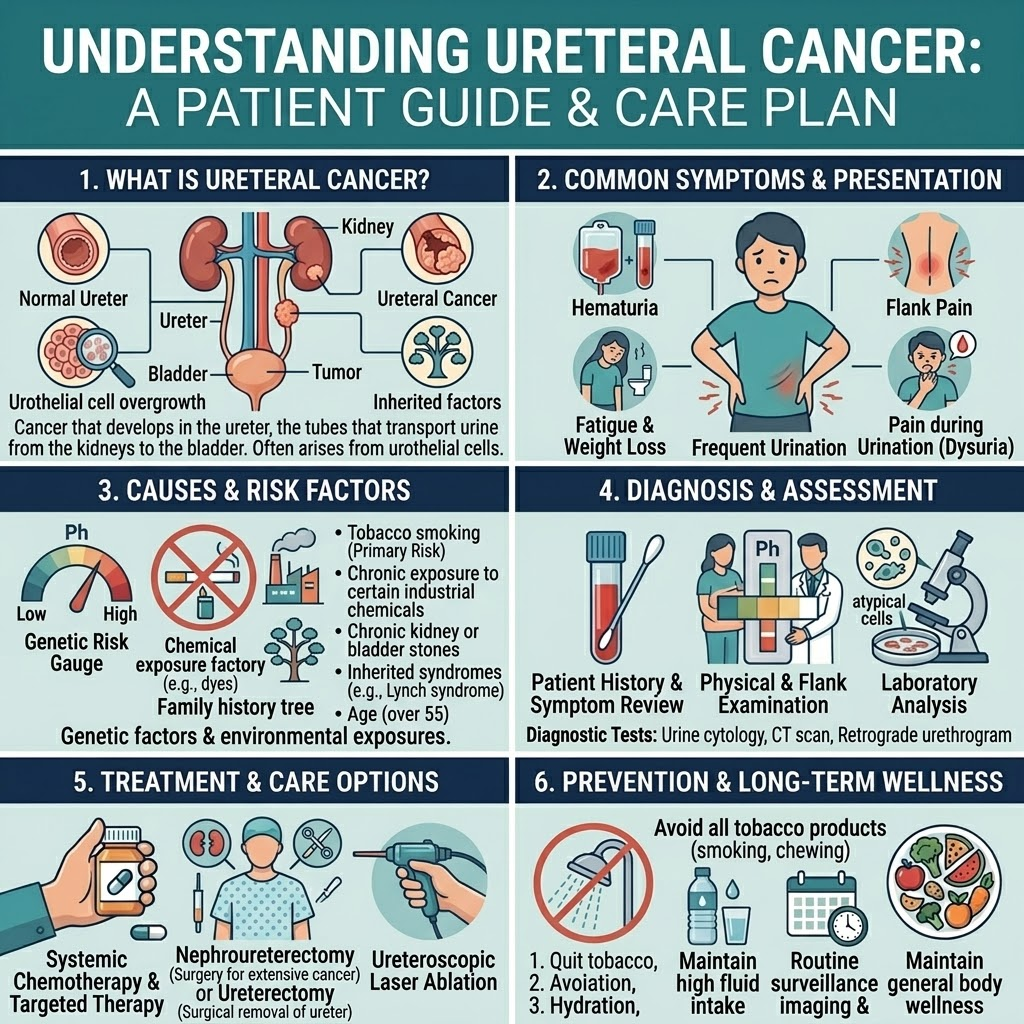
Ureteral cancer is a rare type of cancer that begins in the ureters, which are the tubes connecting your kidneys to your bladder. These tubes carry urine from the kidneys to be stored in the bladder. While uncommon, it is more frequently observed in older adults and individuals who have previously had bladder cancer. The cells lining the ureters are similar to those in the bladder, making people with ureteral cancer more susceptible to developing bladder cancer. Treatment typically involves surgery, with options for chemotherapy, immunotherapy, or targeted therapy in certain situations.
Understanding the Condition
Understanding Ureteral Cancer: A Guide for Non-Medical Persons
Understanding the Condition
Common Symptoms
Blood in the Urine: This is a common sign and can make your urine appear red, pink, or even a dark, cola-like color. Sometimes, blood may be present but not visible to the naked eye.
Pain During Urination: You might experience discomfort or pain when passing urine.
If you experience any concerning and persistent symptoms, it's important to consult with your primary care doctor. They may refer you to a specialist such as a Urologist (a doctor specializing in urinary tract conditions) or a Urologic Oncologist (a doctor specializing in cancers of the urinary system).
Preparations Before Your Visit
Before your appointment, gather your medical history, including any past illnesses, surgeries, and current medications (prescription and over-the-counter). Be prepared to discuss your symptoms in detail: when they started, how often they occur, and if anything makes them better or worse. Write down any questions you have for the doctor so you don't forget them.
Book a doctor visit near me
Consultation Guide
Back Pain: Some individuals may experience pain in their back or side, particularly if the tumor causes a blockage in the ureter.
Consultation Guide
Which Specialist to Meet
Avoid Tobacco Use: If you don't smoke, don't start. If you do smoke, seek support to quit. Smoking is a significant risk factor for ureteral and other urinary tract cancers.
Handle Chemicals Safely: If your work involves exposure to industrial chemicals, always follow safety guidelines, wear protective gear, and minimize contact to reduce your risk.
Diagnostic Procedures
These tests check for the presence of blood in the urine (urinalysis) and may look for cancer cells (urine cytology).
What to Expect
You will be asked to provide a urine sample, usually by urinating into a sterile cup. This is a quick and painless procedure.
Imaging Scans (CT, MRI, Ultrasound)
These advanced imaging techniques create detailed pictures of your urinary tract, including the kidneys, ureters, and bladder, to identify any tumors or blockages.
What to Expect
You will lie on a table that slides into a large machine. You might receive an injection of a special dye (contrast material) to make the urinary tract show up more clearly. The scan itself is painless but requires you to lie still for several minutes.
Ureteroscopy and Biopsy
A ureteroscopy involves inserting a thin, flexible tube with a camera through the urethra and bladder into the ureter to visually inspect its lining. If an abnormal area is found, a small tissue sample (biopsy) will be taken for further examination.
What to Expect
This procedure is typically performed under sedation or general anesthesia. You will lie on your back, and the doctor will gently insert the scope. You won't feel pain during the procedure due to the anesthesia. Afterwards, you might experience some discomfort or blood in the urine for a short period.
Treatment Options
Ureteral cancer is a rare type of cancer that begins in the ureters, which are the tubes connecting your kidneys to your bladder. These tubes carry urine from the kidneys to be stored in the bladder. While uncommon, it is more frequently observed in older adults and individuals who have previously had bladder cancer. The cells lining the ureters are similar to those in the bladder, making people with ureteral cancer more susceptible to developing bladder cancer. Treatment typically involves surgery, with options for chemotherapy, immunotherapy, or targeted therapy in certain situations.
Surgical Procedures
Radical Nephroureterectomy: This is the most common surgery, involving the removal of the entire affected kidney, the entire ureter, and a small part of the bladder where the ureter connects. This helps ensure all cancer cells are removed and prevents them from spreading to the bladder. (Duration: Recovery typically takes several weeks to a few months, depending on the individual and surgical approach.)
Medication and Therapies
Chemotherapy: These medications kill fast-growing cancer cells throughout the body. It may be given before surgery to shrink a tumor (neoadjuvant therapy) or after surgery to destroy any remaining cancer cells (adjuvant therapy). (Duration: Typically administered in cycles over several months, with treatment breaks in between.)
Immunotherapy: This treatment uses medications to help your body's immune system fight cancer. It can be used when cancer has spread or returned after initial treatment. (Duration: Administered in cycles, often over several months to a year or more.)
Targeted Therapy: These drugs specifically target weaknesses in cancer cells, often by blocking certain proteins or pathways that allow cancer cells to grow and survive. It is typically used for advanced cancer. (Duration: Can be ongoing for months or years, depending on the specific therapy and response.)
Regular Follow-Up Appointments: After treatment, regular check-ups with your doctor are crucial to monitor for any signs of recurrence or the development of new cancers, especially bladder cancer, given the close relationship between the two.
Prevention & Long-Term Wellbeing
Unexplained Weight Loss: Losing weight without making any changes to your diet or exercise routine.
Persistent Tiredness: Feeling unusually and consistently fatigued, even after rest.
Segmental Ureterectomy: For very small or low-grade tumors located in the lower part of the ureter, only the affected section of the ureter may be removed. The remaining healthy ends are then reconnected or reattached to the bladder. (Duration: Recovery is generally shorter than radical nephroureterectomy, often a few weeks.)
Prevention
Eat a Healthy Diet: Include a variety of colorful fruits and vegetables in your daily diet. Their natural compounds (antioxidants) may help protect against certain cancers.
Long-Term Monitoring and Support
Maintain a Healthy Lifestyle: Continue healthy habits such as a balanced diet, regular physical activity, and adequate hydration to support overall health and recovery.
Manage Stress and Seek Support: Coping with cancer can be challenging. Utilize support systems, such as family, friends, support groups, or mental health professionals, to manage stress and emotional well-being.
Tags & Topics
Notice an error or need an update?
Help us keep medical information accurate. Report incorrect info or suggest an edit.


