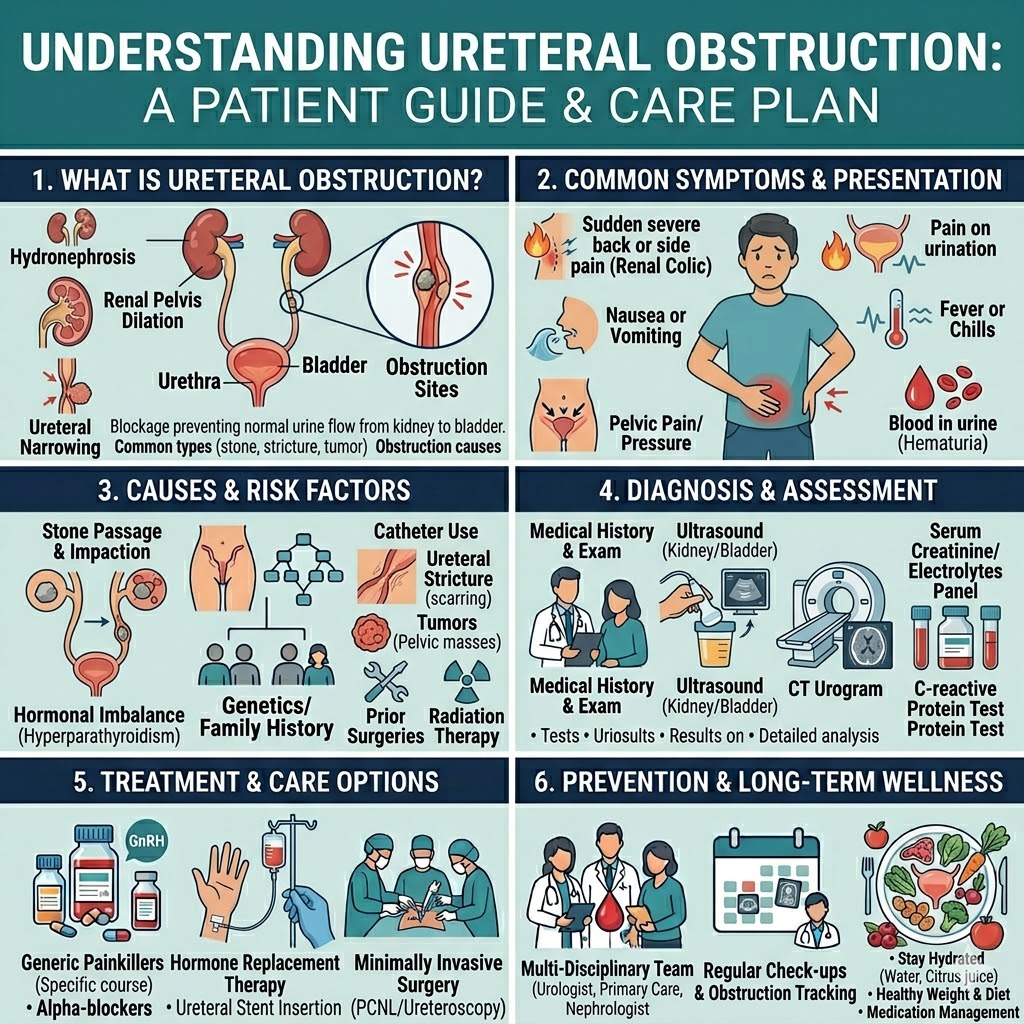
Ureteral obstruction occurs when one or both of the thin tubes, called ureters, that transport urine from the kidneys to the bladder become blocked. This blockage prevents urine from flowing freely, causing it to back up and potentially damage the kidneys. While it is a common and treatable condition, if left unaddressed, mild symptoms like pain and fever can escalate rapidly to severe complications, including significant kidney damage or life-threatening infections. Early diagnosis and treatment are crucial to prevent serious health issues.
Understanding the Condition
Ureteral Obstruction: Understanding Blockages in the Urinary Tract
Understanding the Condition
Ureteral obstruction occurs when one or both of the thin tubes, called ureters, that transport urine from the kidneys to the bladder become blocked. This blockage prevents urine from flowing freely, causing it to back up and potentially damage the kidneys. While it is a common and treatable condition, if left unaddressed, mild symptoms like pain and fever can escalate rapidly to severe complications, including significant kidney damage or life-threatening infections. Early diagnosis and treatment are crucial to prevent serious health issues.
Common Symptoms
No Symptoms: Sometimes, a ureteral obstruction may not cause any noticeable signs or symptoms, especially if it develops slowly or is partial.
Changes in Urine Output: You might notice less urine produced than usual, or difficulty passing it.
Pain: Pain can occur in the side, back, abdomen, or groin. Severe pain might be accompanied by nausea, vomiting, fever, or chills, requiring immediate medical attention.
Blood in Urine: Visible blood in the urine, or microscopic blood detected through tests, can be a symptom.
Urinary Tract Infections (UTIs): Frequent or recurring infections, often with pain or burning during urination and fever, may indicate a blockage.
High Blood Pressure: Occasionally, an obstruction in the ureter can contribute to elevated blood pressure.
Difficulty Urinating: Straining or struggling to pass urine can be a sign of a blockage.
Consultation Guide
Which Specialist to Meet
For initial evaluation, consult your primary care physician. If a ureteral obstruction is suspected, you will likely be referred to a urologist, a specialist in urinary tract issues, or potentially a nephrologist, a kidney specialist, if kidney function is significantly affected.
Preparations Before Your Visit
Before your visit, gather your medical history, including any past illnesses, surgeries, and a list of all current medications, vitamins, and supplements. Be prepared to describe your symptoms in detail, noting when they started, what makes them better or worse, and any changes in your urine. Write down any questions you have for the doctor.
Book a doctor visit near me
Your doctor will ask about your symptoms and medical background, then perform a physical check for tenderness or swelling in your abdomen or back.
You'll answer questions about your health and symptoms. The doctor will gently press on your abdomen and back during the examination.
Monitor for Recurrence: Be aware of symptoms that might indicate a new obstruction or complication. Promptly report any concerns to your healthcare provider.
Consultation Guide
A urine sample is tested for infection, blood, or other signs of urinary tract problems that could be caused by a blockage.
You lie on a table that slides into a large, donut-shaped scanner. The dye is injected into a vein, which may cause a warm sensation. Images are taken as the dye moves through your system, requiring you to remain still.
Cystoscopy and Ureteroscopy
A thin, flexible scope with a camera is inserted. Cystoscopy examines the bladder; ureteroscopy extends further into the ureter and kidney to visualize or directly treat blockages, stones, or take tissue samples.
Maintain Hydration: Drinking plenty of fluids, especially water, helps keep urine diluted and can reduce the risk of kidney stone formation, a common cause of obstruction.
Manage Underlying Health Conditions: Work with your doctor to manage conditions like high blood pressure, diabetes, or other chronic diseases that can contribute to kidney problems or ureteral obstruction.
Regular Medical Check-ups: If you have known risk factors or a history of urinary tract issues, regular visits to your healthcare provider can help detect potential problems early.
Diagnostic Procedures
Physical Exam and Medical History
What to Expect
What to Expect
You'll provide a sterile urine sample for laboratory analysis.
These tests assess kidney function by measuring waste products and can indicate infection or how well your kidneys are working.
What to Expect
A small blood sample will be drawn from a vein in your arm, typically with minimal discomfort.
Uses sound waves to create images of your kidneys, bladder, and ureters, helping detect blockages or swelling without using radiation.
What to Expect
Gel is applied to your skin, and a handheld device is moved over the area to create images on a monitor. It's generally a painless procedure.
A detailed X-ray scan of the urinary tract using an injected dye to highlight the kidneys, ureters, and bladder, revealing their structure and how urine flows. A slight, manageable risk of allergic reaction to the dye exists.
What to Expect
What to Expect
Cystoscopy typically involves local anesthetic gel in the urethra, with mild pressure. Ureteroscopy often requires sedation or general anesthesia due to its more advanced nature.
Kidney Health Monitoring: If kidney damage occurred, ongoing monitoring of kidney function through blood and urine tests may be necessary, often involving a kidney specialist (nephrologist).
Treatment Options
Medications
Infection Treatment: Antibiotics are prescribed to treat any urinary tract infections associated with the obstruction, preventing further complications. (Duration: Typically 3-14 days, depending on infection severity.)
Medications to Aid Stone Passage: Certain medications can help relax the muscles in the ureter, making it easier for small kidney stones to pass naturally. (Duration: Usually a few days to several weeks, until the stone passes.)
Minimally Invasive Procedures
Ureteral Stent Placement: A thin, hollow tube (stent) is temporarily placed in the ureter to bypass the obstruction and allow urine to flow from the kidney to the bladder, relieving pressure. (Duration: Typically a few weeks to several months, requiring removal or replacement.)
Nephrostomy Tube Insertion: In severe cases, a tube is inserted through the skin directly into the kidney to drain urine externally, relieving pressure and protecting kidney function. (Duration: Temporary, until the obstruction can be resolved internally.)
Shockwave Lithotripsy (SWL): Uses shock waves from outside the body to break kidney or ureteral stones into smaller pieces that can pass more easily in the urine. (Duration: Typically a single outpatient procedure, with stone passage over days to weeks.)
Ureteroscopy with Stone Removal/Biopsy: Using a thin scope, the doctor can directly remove smaller stones, break larger ones with a laser, or take tissue samples from the ureter or kidney. (Duration: Usually a single outpatient or inpatient procedure.)
Surgical Procedures
Open, Laparoscopic, or Robotic Surgery: For complex blockages, larger stones, tumors, or congenital abnormalities, surgery may be necessary to remove the obstruction, reconstruct the ureter, or re-implant it into the bladder. These approaches can be traditional open surgery or less invasive (laparoscopic/robotic) techniques. (Duration: A single procedure, with recovery time varying from weeks to months.)
Adhere to Treatment Plans: Follow your doctor's instructions for any prescribed medications, follow-up appointments, or lifestyle changes to ensure the obstruction is fully resolved and to monitor kidney health.
Prevention & Long-Term Wellbeing
Home Remedies and Lifestyle Adjustments
Pain Management and Hydration: Over-the-counter pain relievers can help manage discomfort. Drinking plenty of fluids, as advised by your doctor, can sometimes help small kidney stones pass and promote kidney health. (Duration: Ongoing as needed; short-term for acute pain.)
Prevention Strategies
Tags & Topics
Notice an error or need an update?
Help us keep medical information accurate. Report incorrect info or suggest an edit.


